-
Project Description
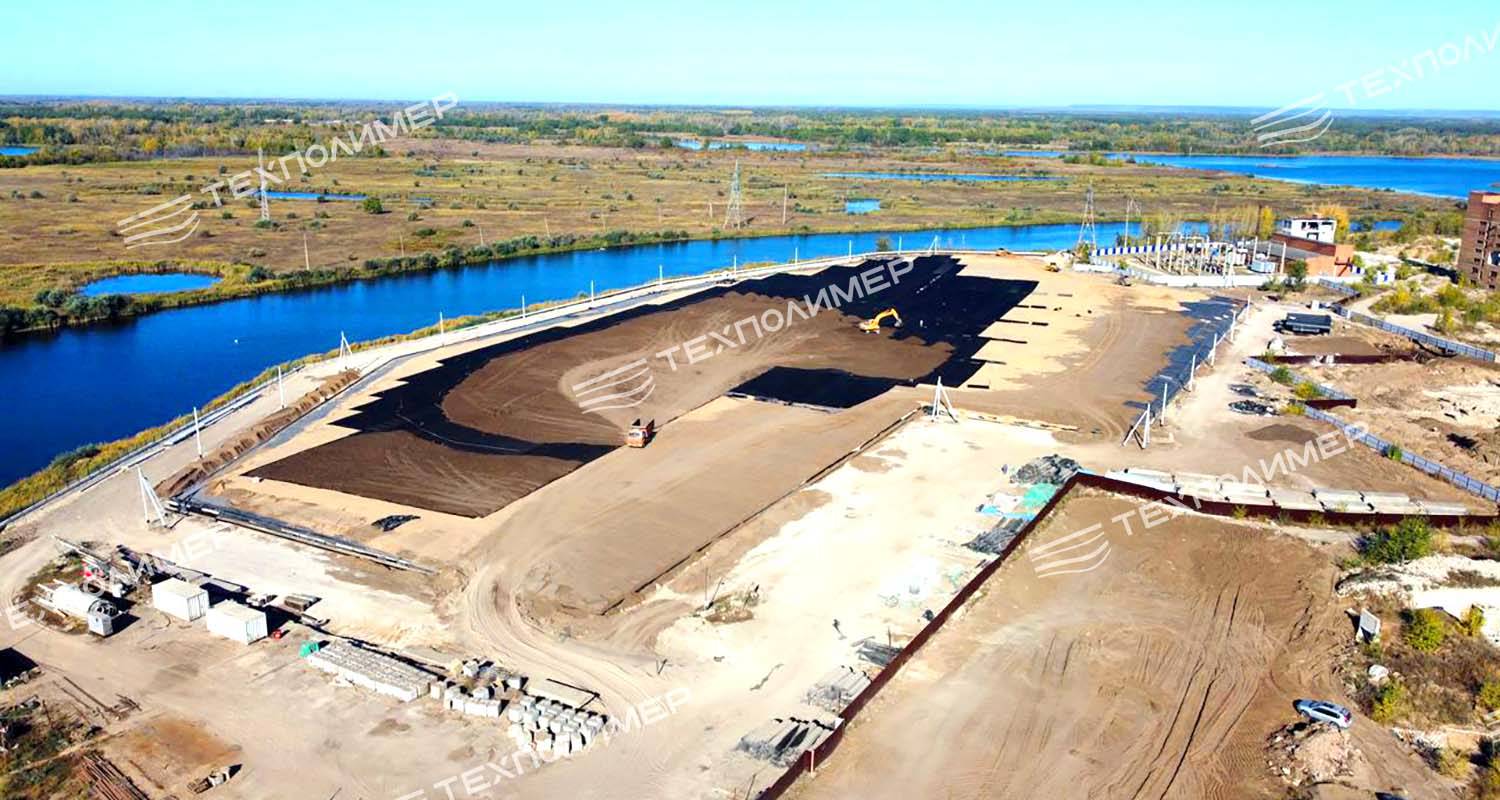
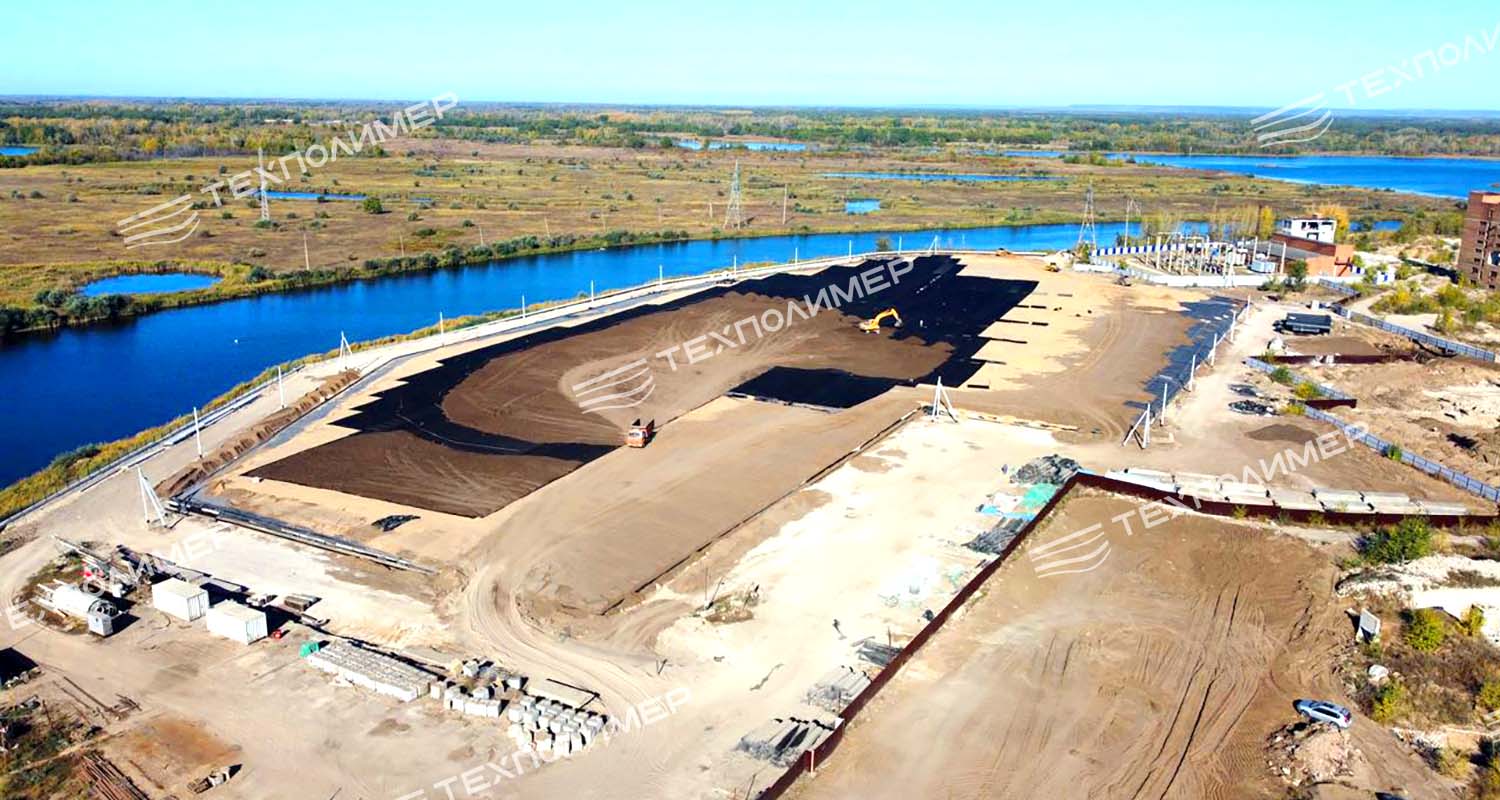
More than 400,000 tonnes of hazardous waste have accumulated at the site of the Srednevolzhsky Chemical Plant, which opened in 1911 and ceased operations in 2005.
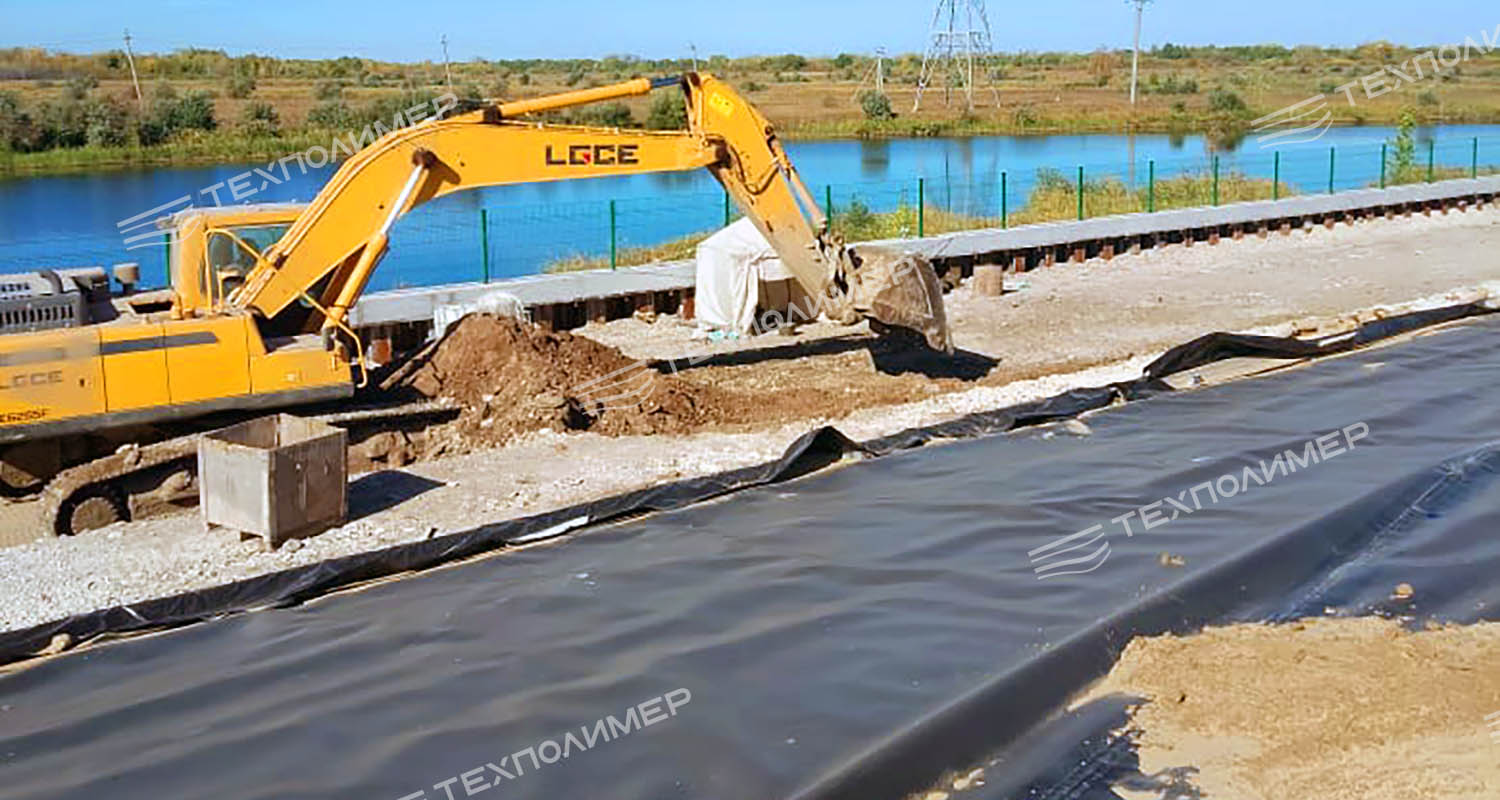
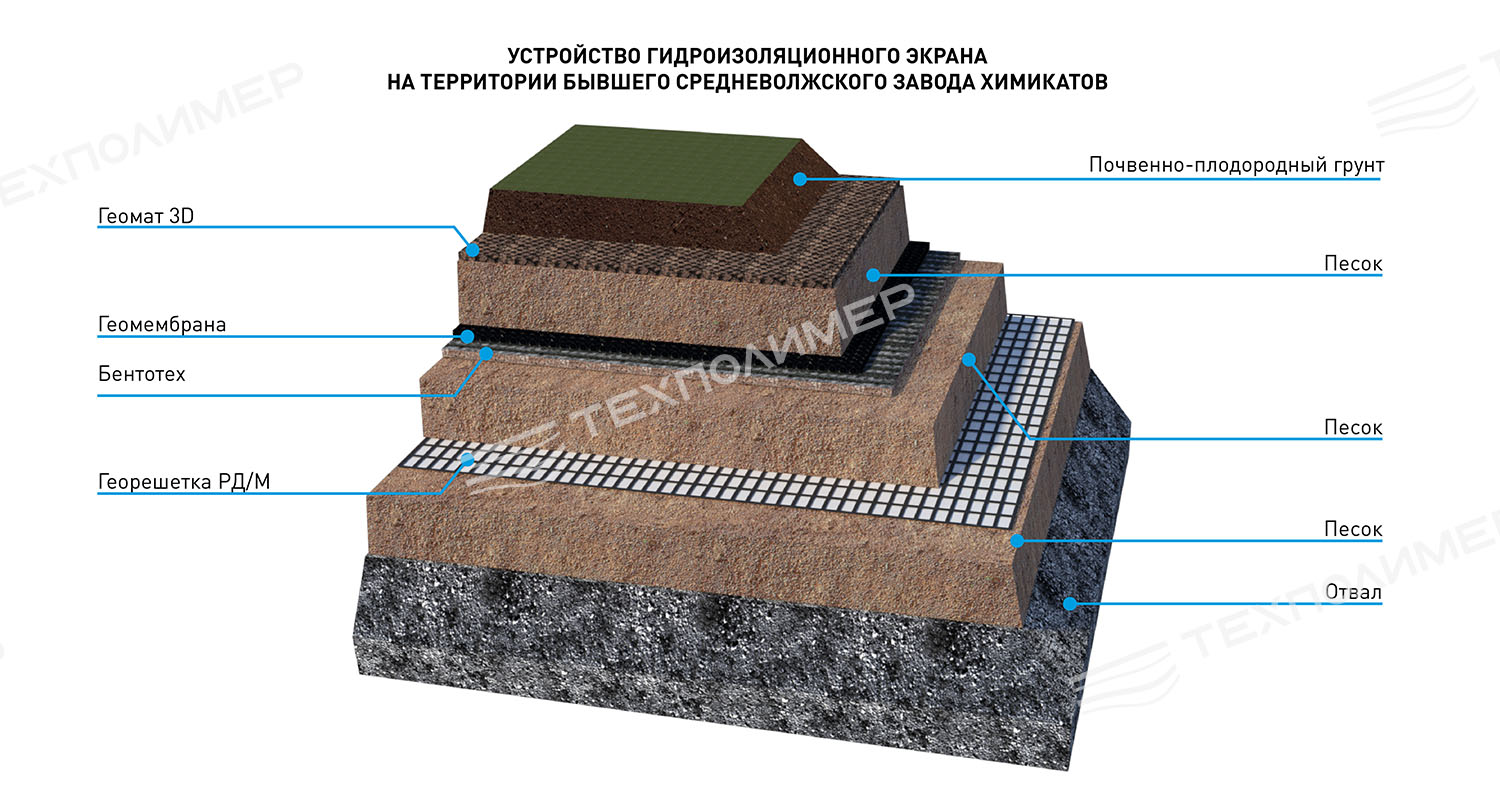
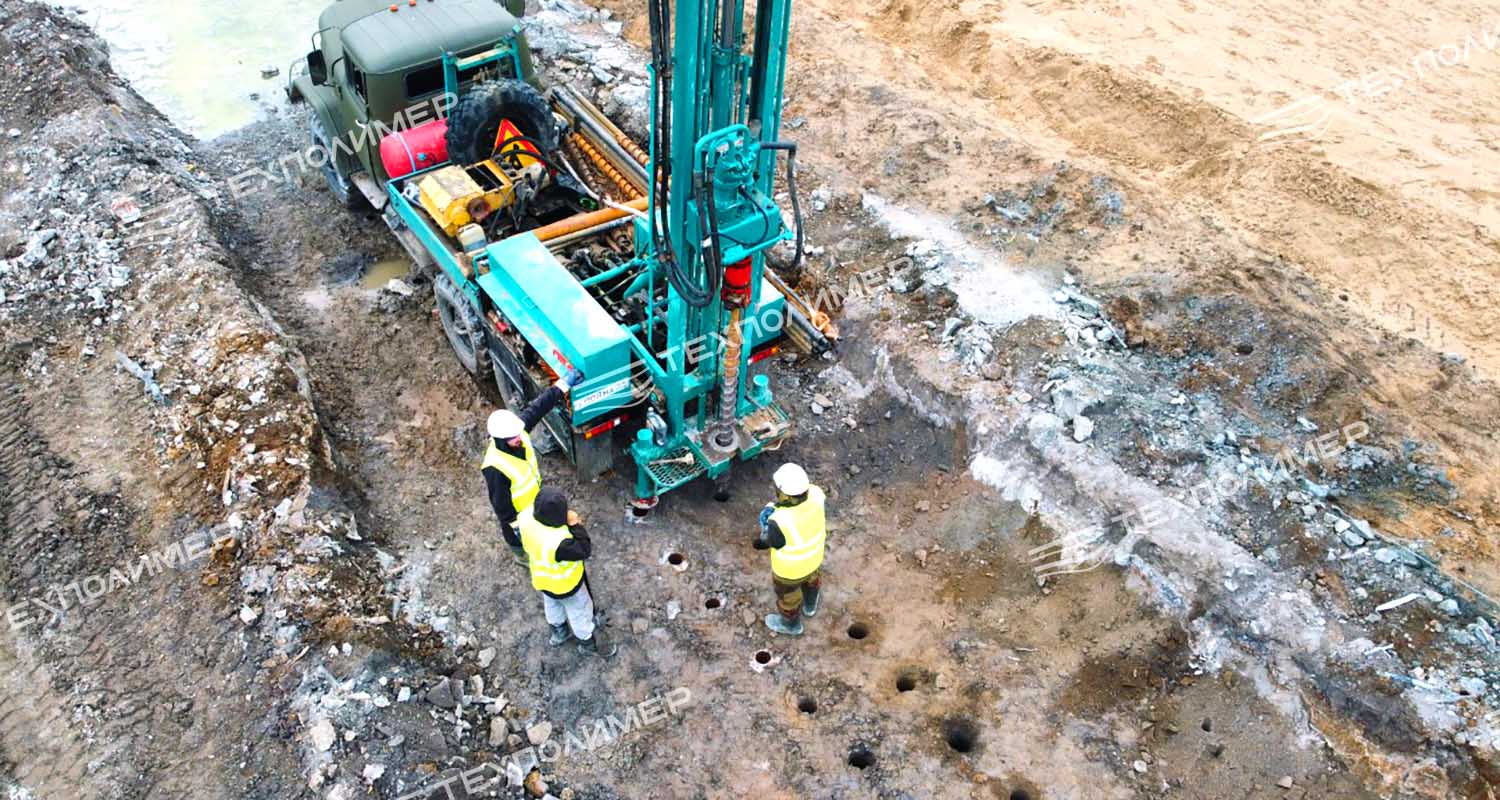
Technical SolutionsTo protect the environment from the risk of pollutants being washed out from the site, jet grouting technology (Jet-grouting) was used, consisting of more than four thousand piles drilled into the natural layer of dense Neogene clays, and a waterproofing screen was installed. It consists of eight multifunctional layers (from bottom to top):
Layer No. 1: levelling layer of sand, used to prepare the base for installation of the impermeable screen;
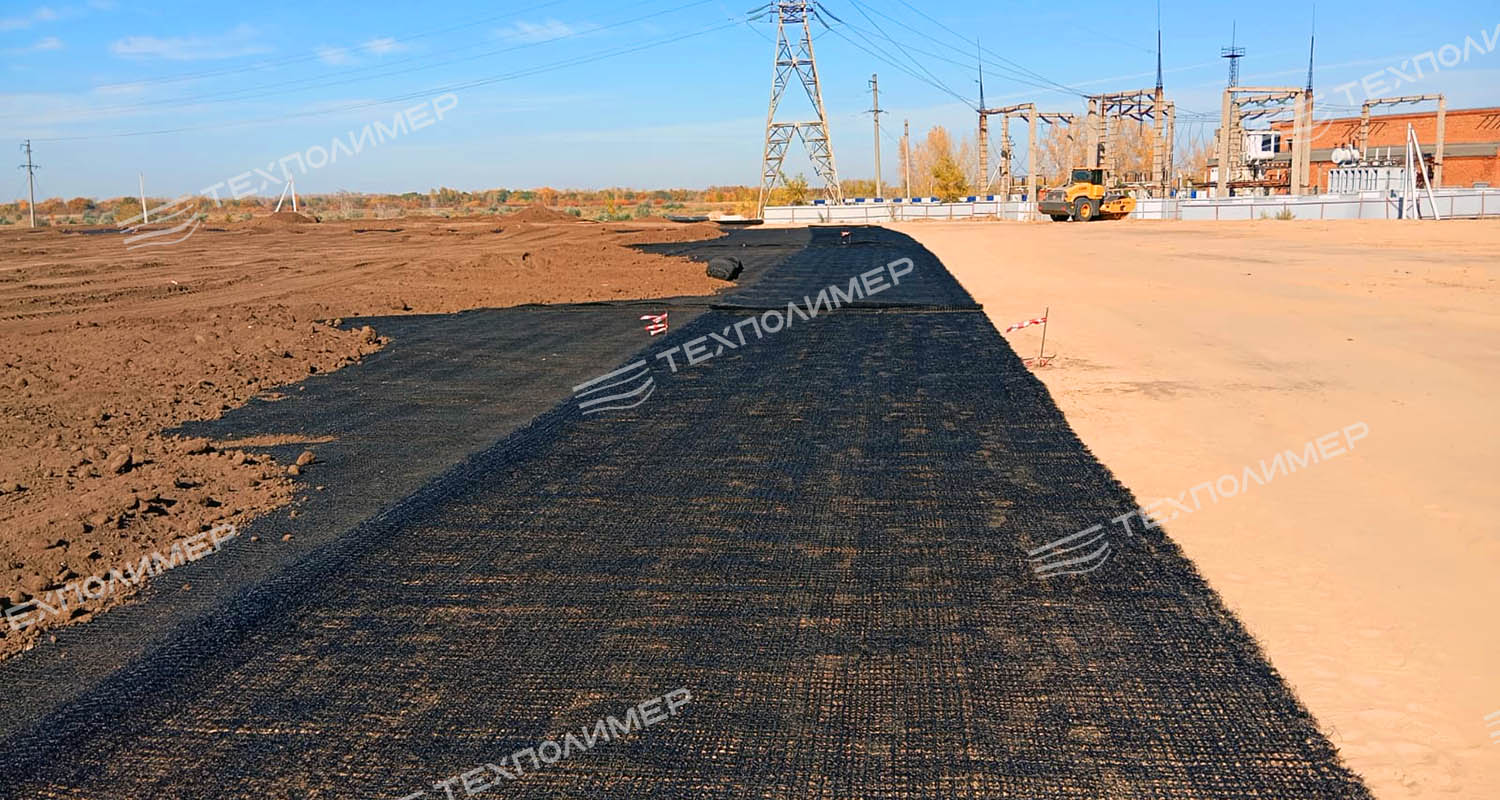
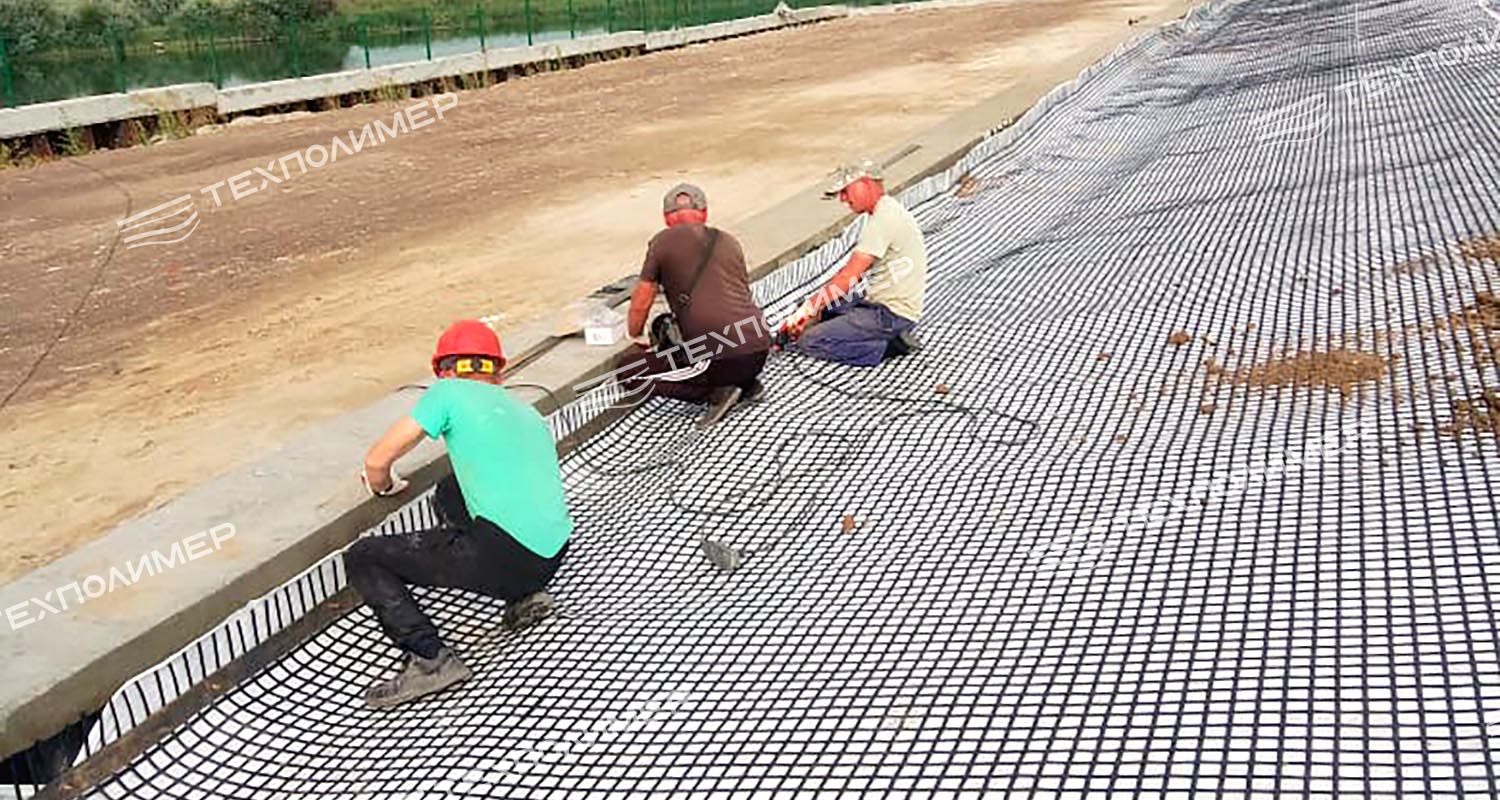
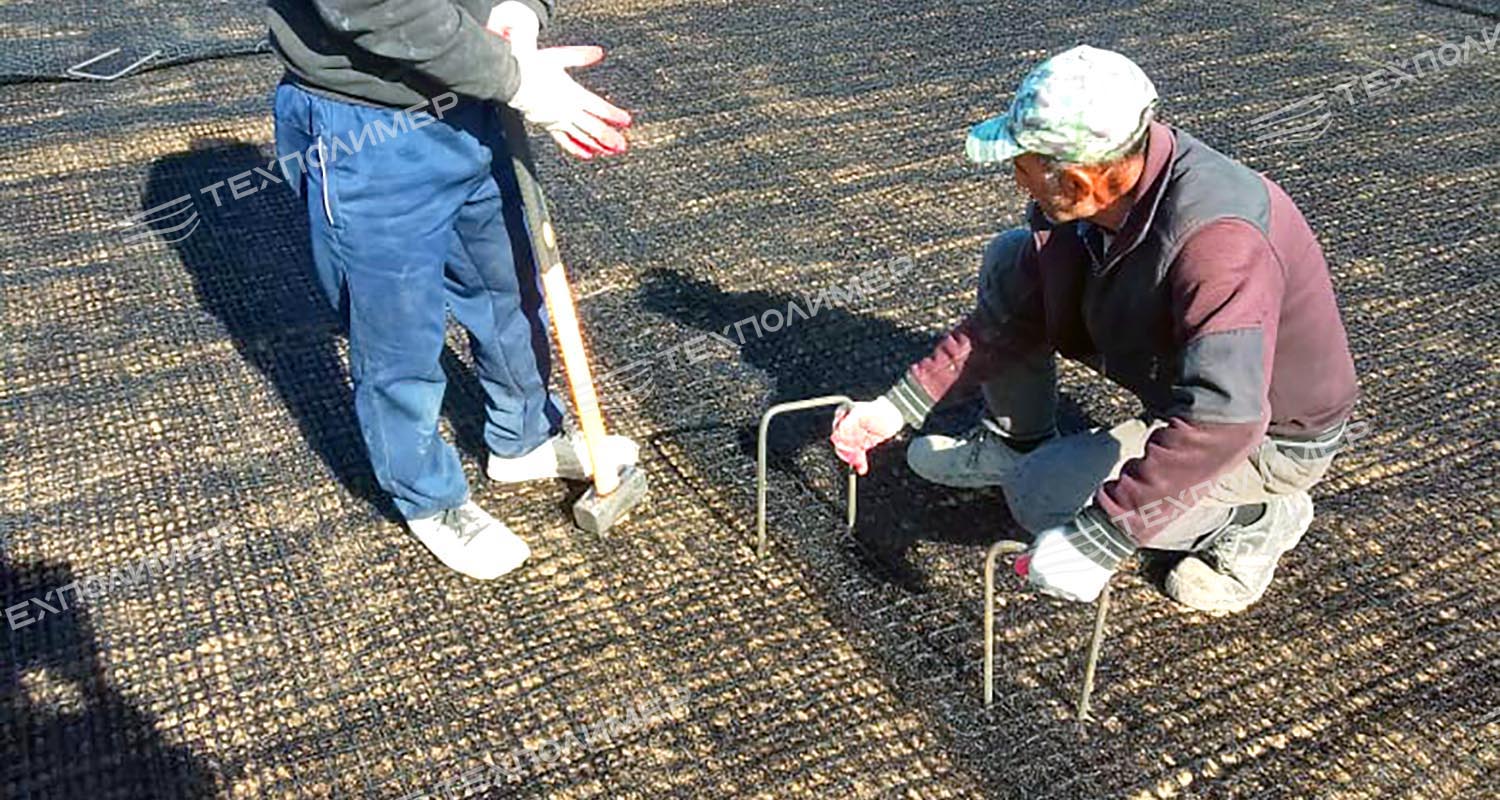
Layer No. 2: reinforced road geogrid RD-60/M is used to prevent uneven soil settlement;
Layer No. 3: levelling layer of sand — an inert material used to fill the geogrid; together, they prevent shifting and deformation of the base;
Layer No. 4: bentonite mat Bentotech ASL-100 — used to isolate waste from atmospheric precipitation and localise leaks in the event of a geomembrane rupture;
Layer No. 5: geomembrane type 4/2 — a textured on both sides polymer sheet used to isolate waste from atmospheric precipitation through hermetic welding;
Layer No. 6: protective layer of sand, used to protect the screen from UV radiation and provide ballast;
Layer No. 7: erosion-control mat reinforced with a polyester-fibre geonet with a polymer coating GeomAT 3D GMA — used to secure the upper layer of fertile soil;
Layer No. 8: fertile soil — used to strengthen the root system of grasses sown to form a turf layer.
-
Videos
-
Gallery
-
Reclamation of Degraded Land at the Site of the Former Chemical Plant in Chapayevsk