Aerodrome Construction
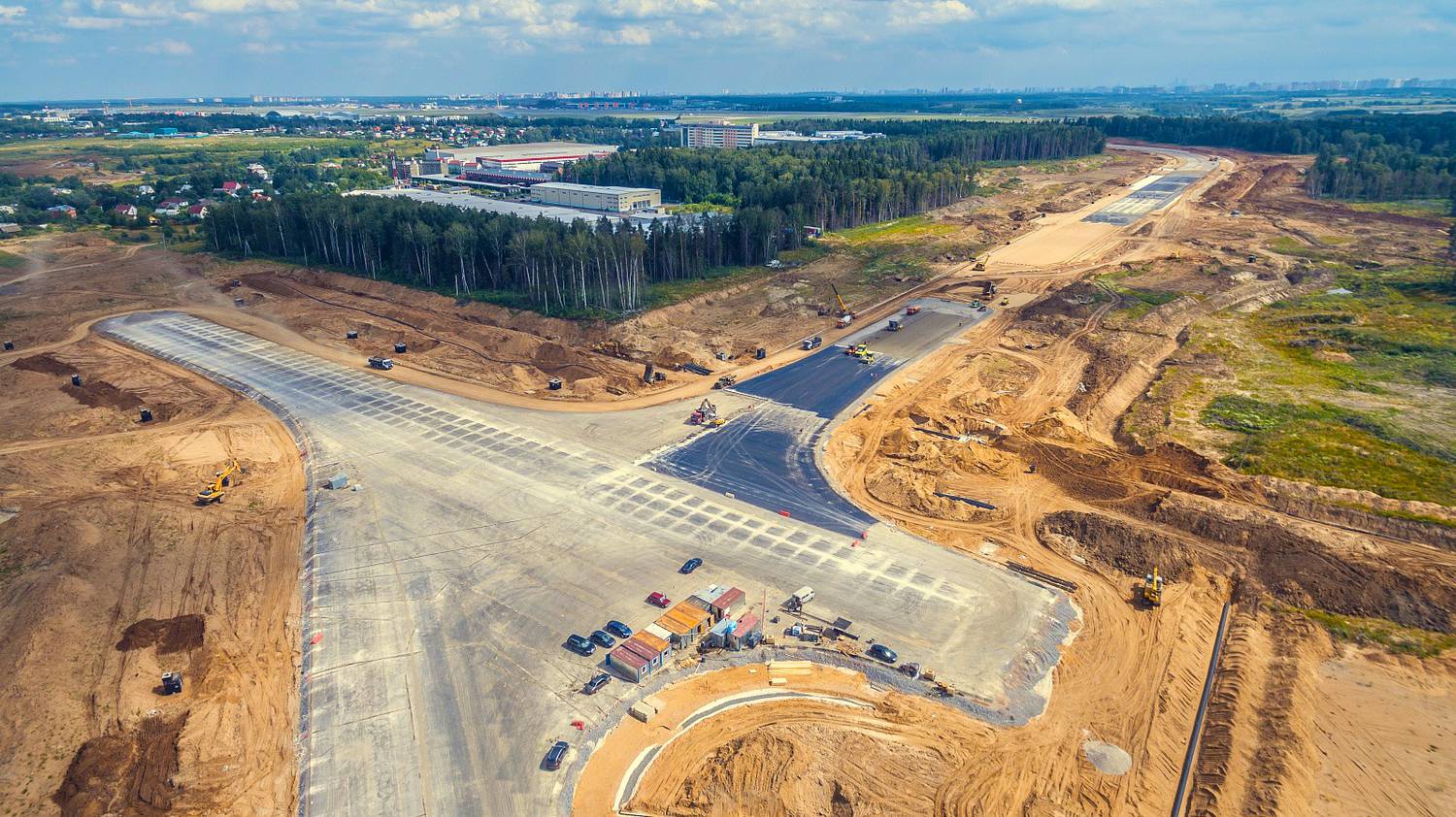
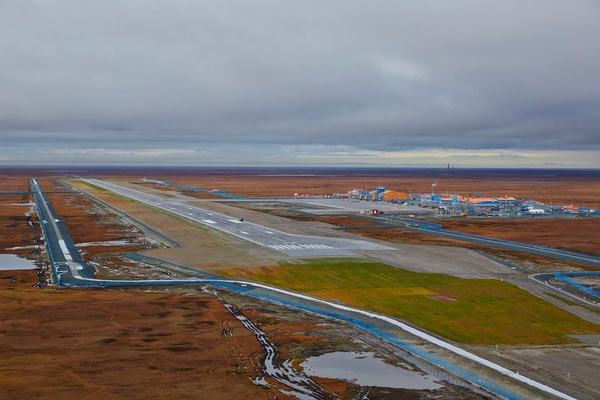
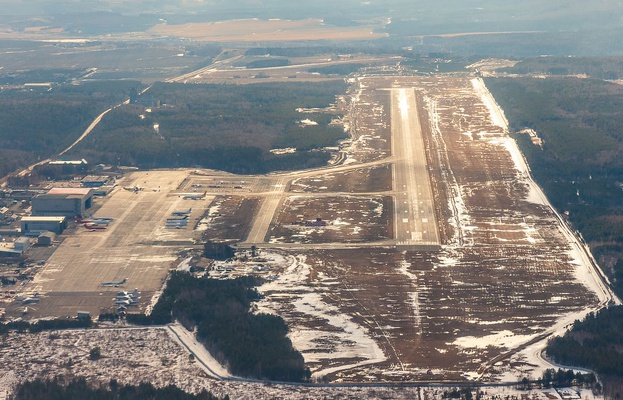
An aerodrome is a complex integrated system designed to enable the landing, take-off, movement, parking and maintenance of air transport. Within this system, geosynthetic materials support tasks such as runway construction even in challenging climatic conditions and the recovery of aircraft that have overrun the runway.
Standard Solutions
-
ReinforcementProduct Types
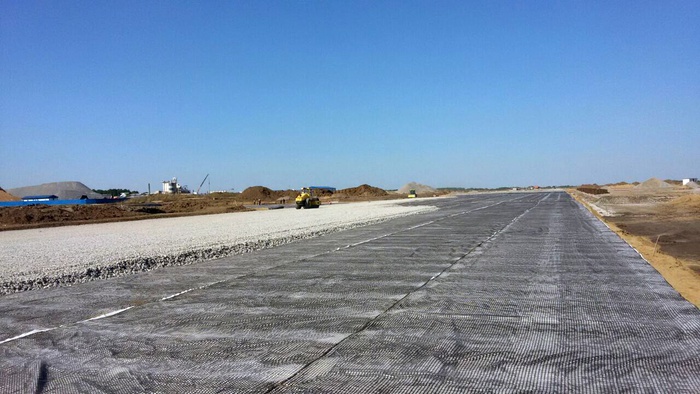
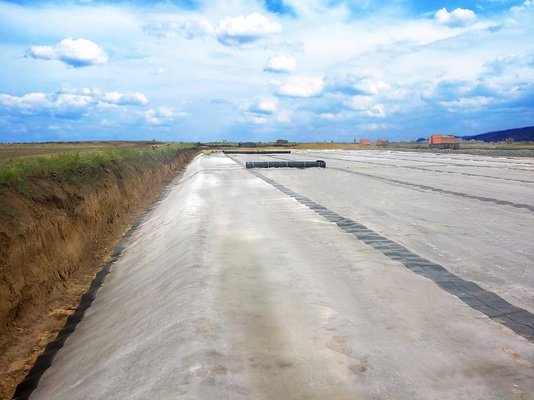
Geosynthetics for runway construction
Runway pavement must withstand not only high dynamic loads during aircraft take-off and landing, but also constant thermal and mechanical loads from the exhaust gases of aircraft engines. It must be resistant to de-icing chemicals and withstand prolonged static loads while aircraft are parked.
The use of waterproofing, reinforcing and drainage geosynthetic materials in runway construction ensures a high level of structural solutions and environmental compliance:
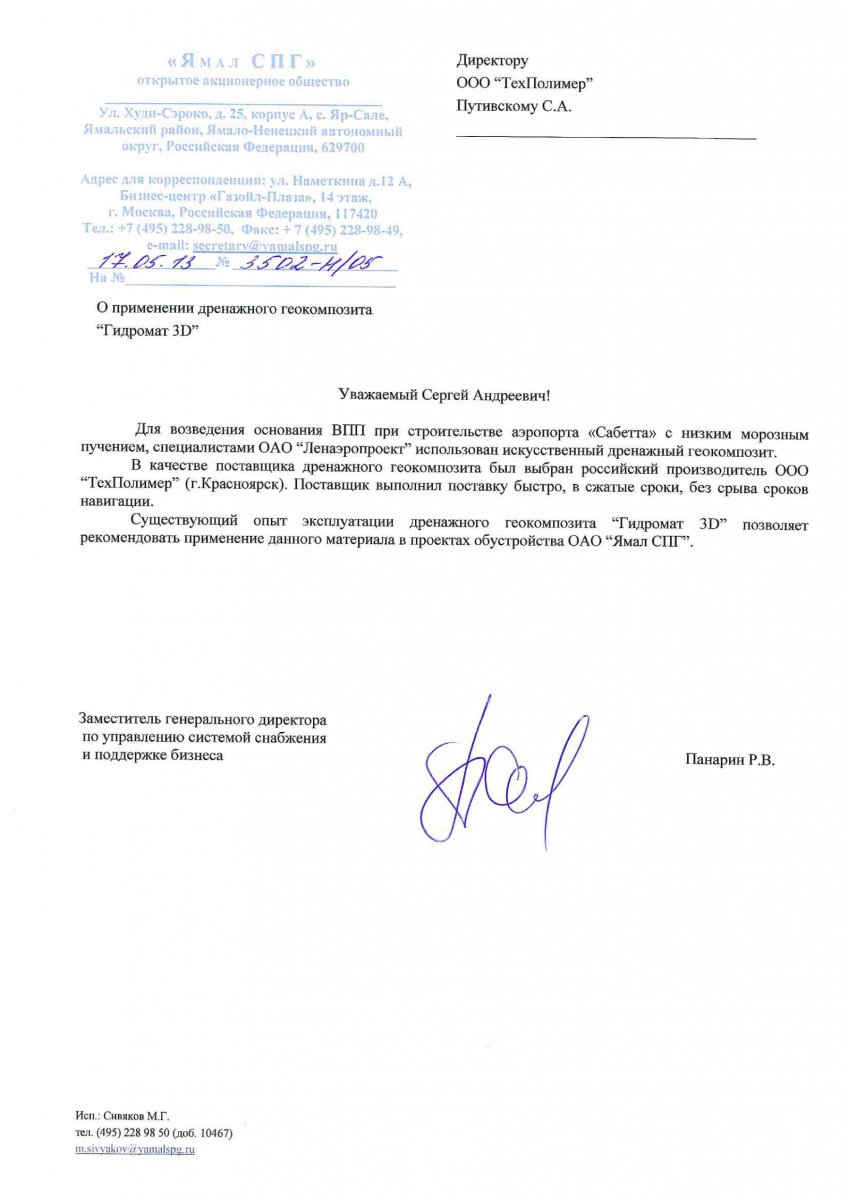
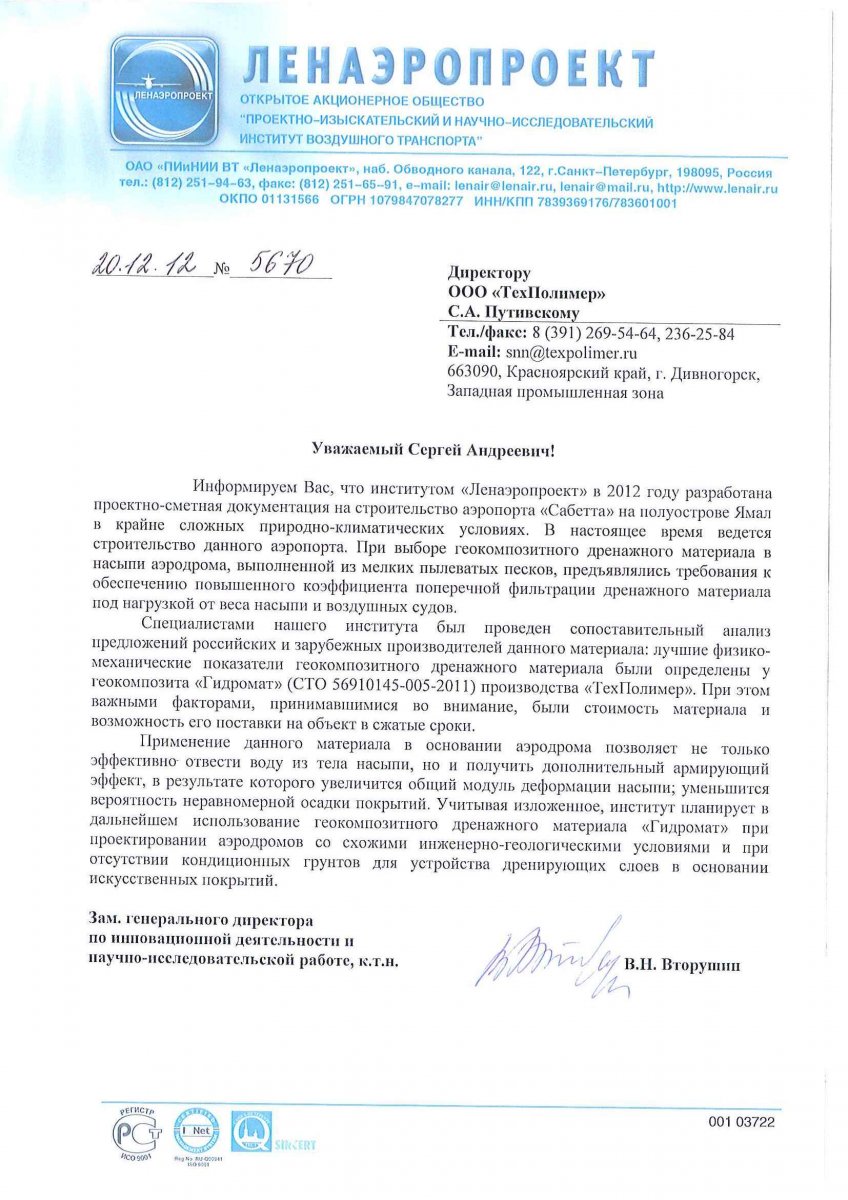
- Hydromat is used for layer drainage to remove water from the runway embankment;
- Geomembrane Type 5 — thermally bonded to geotextile — serves as a capillary break layer in the embankment structure;
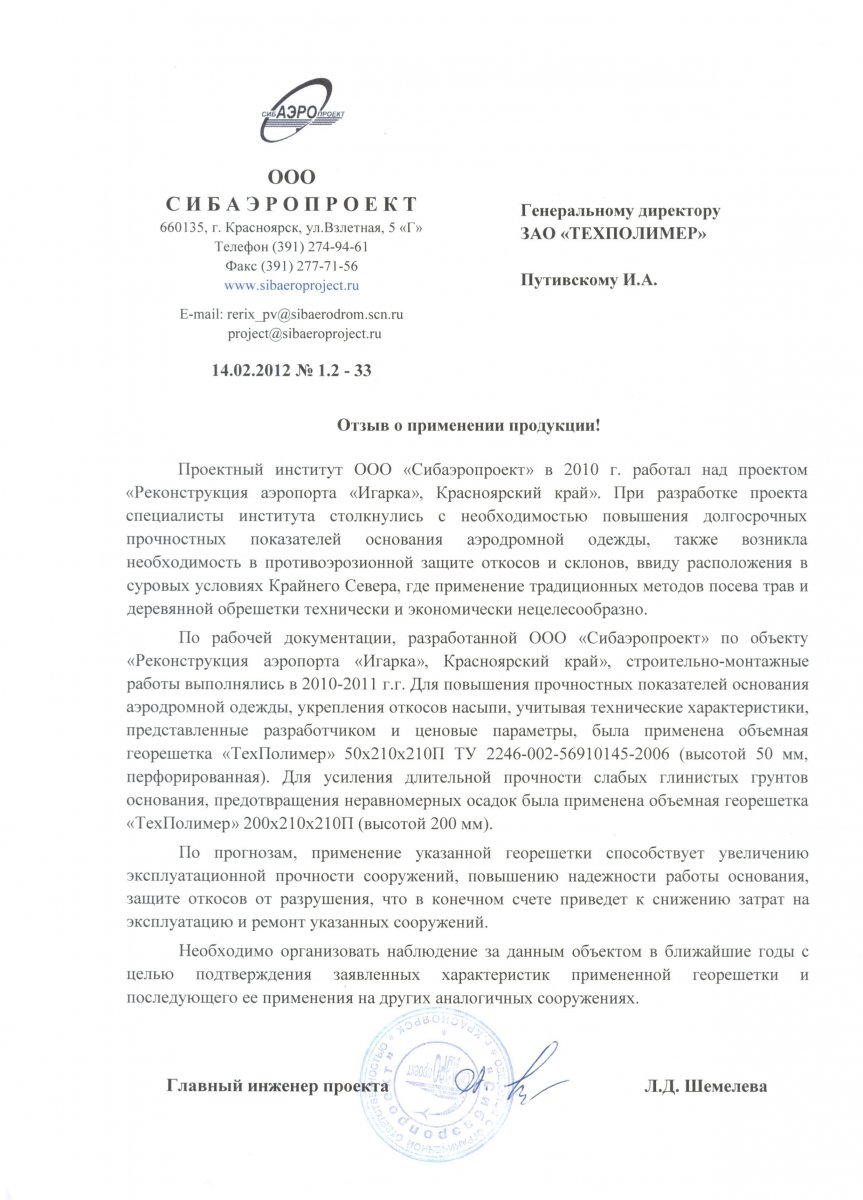
- The geocell reinforces the sloped sections of runways, aprons and aircraft parking areas:
- Reinforcing grids increase the resistance of concrete pavement to cracking;
- Structural solutions using concrete lining are applied for the construction of drainage ditches.
Advantages of using geosynthetics:
The service life of the pavement is extended under various climatic conditions and high dynamic loads. Maintenance intervals are increased. The reliability of the pavement structure is improved. The time and costs required to construct runways are reduced.
Emergency aircraft evacuation
Aircraft overruns beyond the runway are far from uncommon. Their evacuation is a labour-intensive set of operations that results in considerable time and costs for airports and airlines.
If an aircraft has left the runway and is on unprepared ground, the main task is to prepare a temporary site for lifting and preparing it for transport, as well as to construct a temporary road for the actual evacuation.
One of the most effective solutions to these tasks is the use of mobile road plates, «TEXPOLIMER». The plates are made of high-molecular-weight UHMWPE 500. Their internal cross-rib structure reinforces the plates while reducing their weight. They do not conduct electrical charges and provide a safe platform for carrying out the work.
Technology advantages:
- Compared with conventional PDN plates, «TEXPOLIMER» mobile road plates are lightweight, easy to install and can be reused multiple times (at least 20 times);
- The plates can be delivered by almost any mode of transport: road, rail or air (aircraft or helicopter);
- The plates can be used both for aircraft access and as sites for positioning equipment of various dimensions required for evacuation operations;
- The time and financial costs of evacuating aircraft that have overrun the runway are reduced.