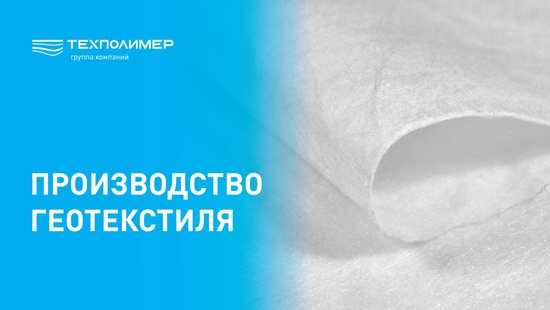
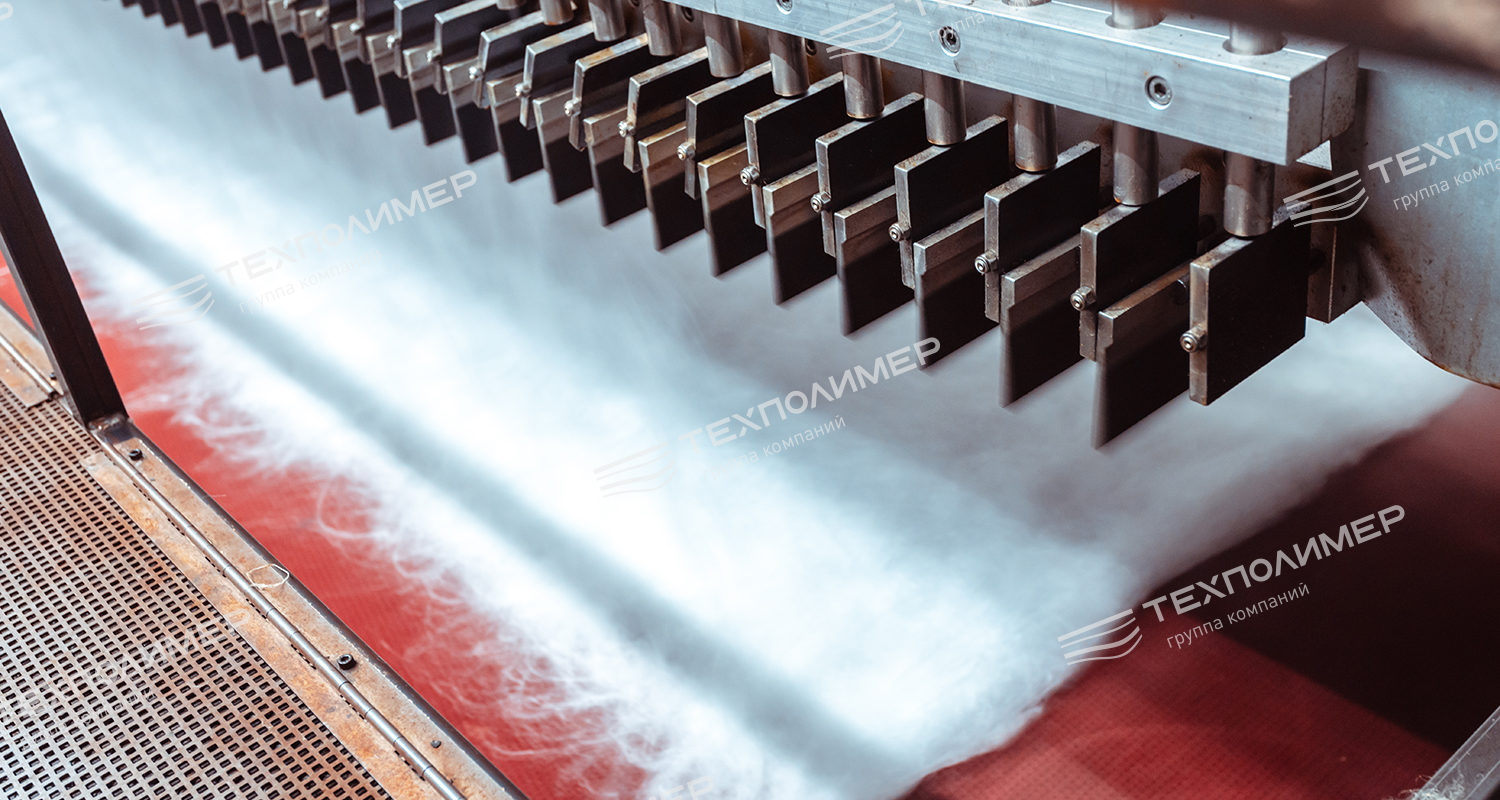
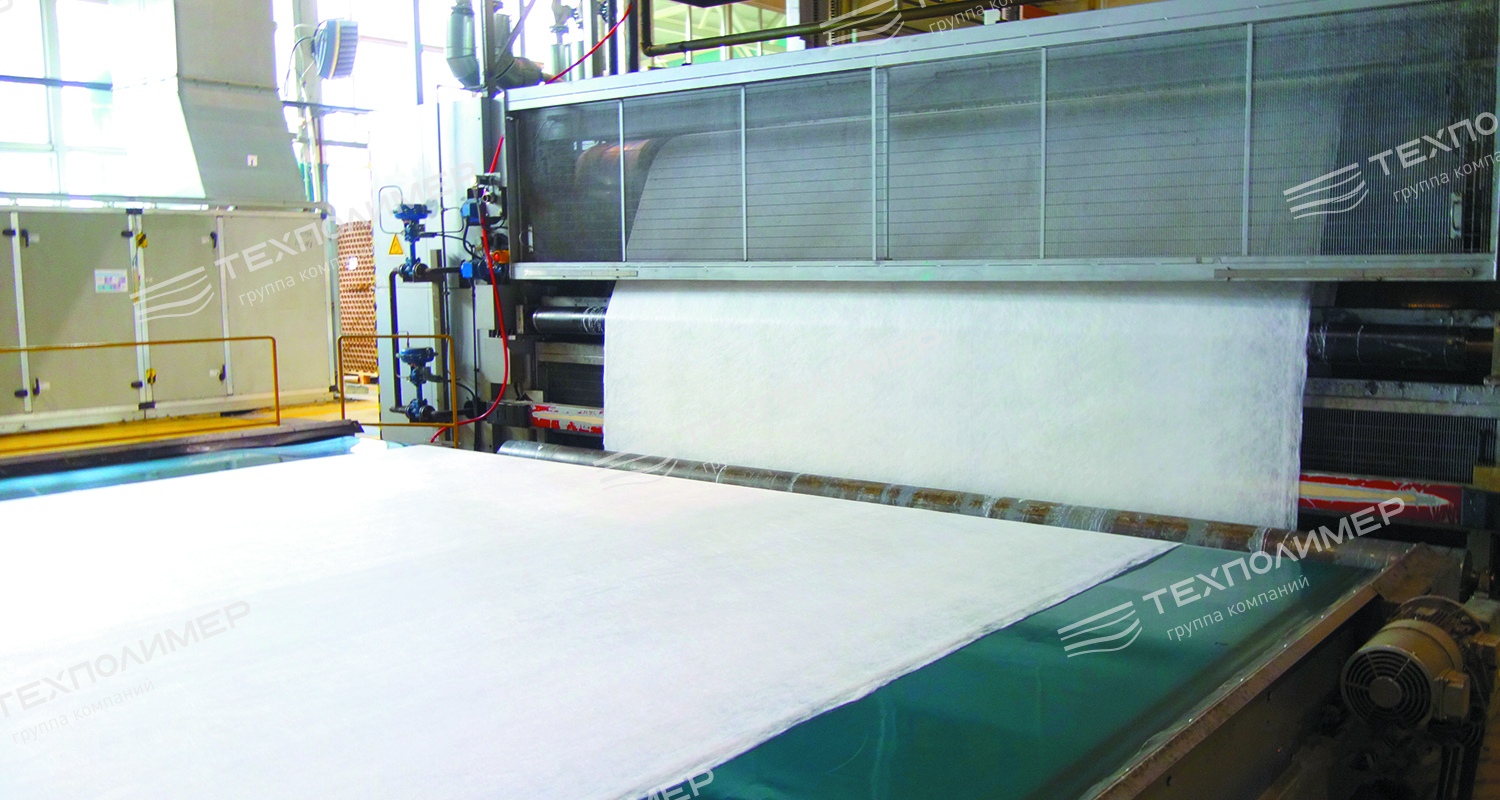
Geotextile is a high-strength nonwoven fabric made of polymer fibres. The material is used in the construction of roads and railways, drainage structures, soil and slope stabilisation, and as a protective layer for geomembranes.
Needle-punched nonwoven geotextile offers excellent filtration and drainage properties, high resistance to chemicals, temperature fluctuations and rotting.
Thermally bonded nonwoven fabric has high tensile and puncture strength, making it highly effective for reinforcement. It evenly redistributes loads when reinforcing soil foundations and slopes and reliably protects geomembranes.
Geotextile is manufactured in several types depending on the production method:
- Type I — manufactured using the needle-punching method
- Type K — produced using spunbond technology followed by web formation using the needle-punching method with additional thermal bonding; it has higher physical and mechanical properties compared with other geotextile types
- Type L — lightweight geotextile, manufactured using the needle-punching method
- Type C — manufactured using the needle-punching method followed by thermal bonding (calendered)
Geotextile is divided into grades depending on its mass per unit area.
Geotextiles of Types I, K and C are manufactured from polypropylene fibre (PP). Type L geotextile is manufactured from polyester fibre (PES), polypropylene fibre (PP), and a blend of polyester and polypropylene fibres.
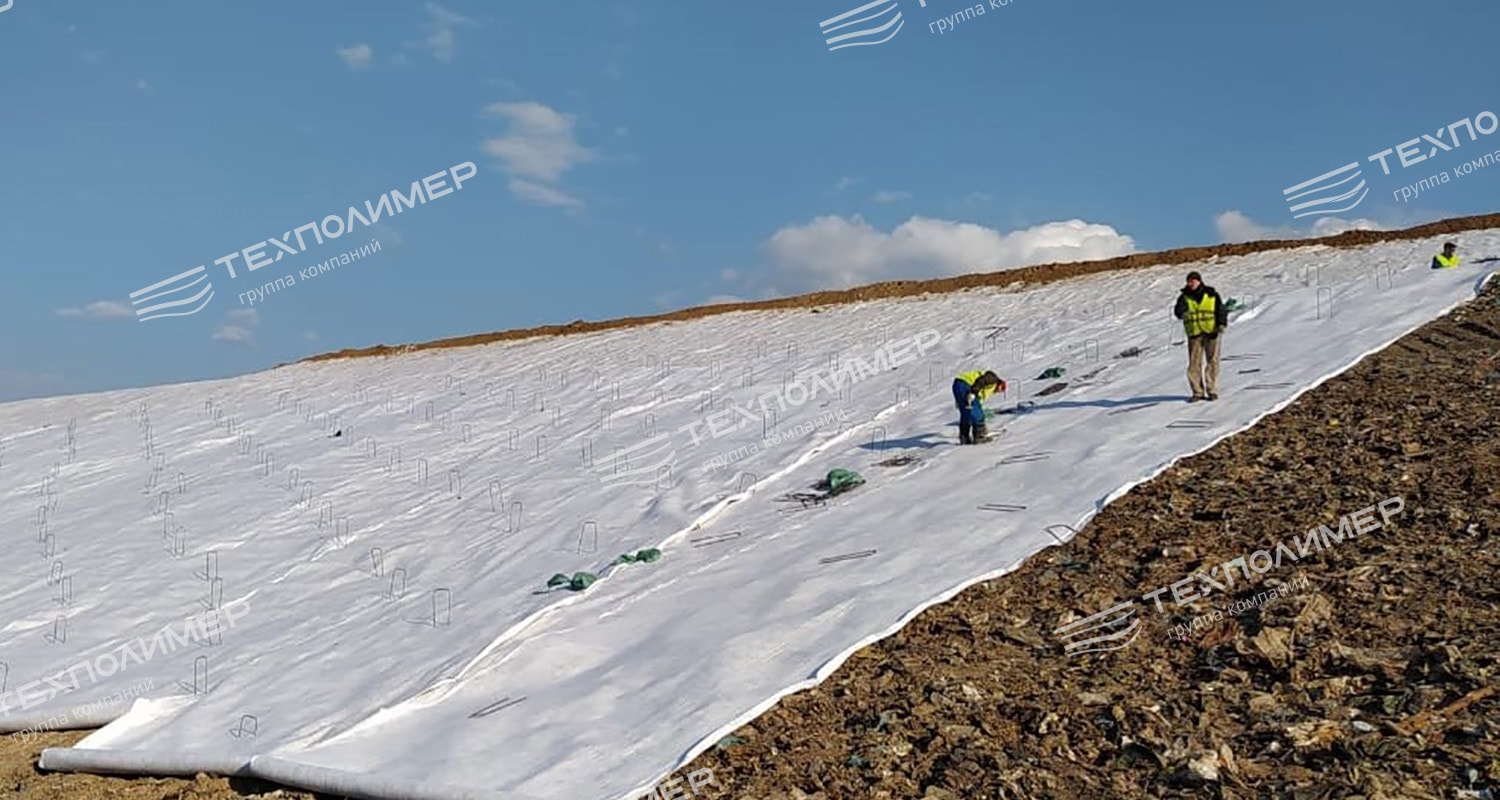
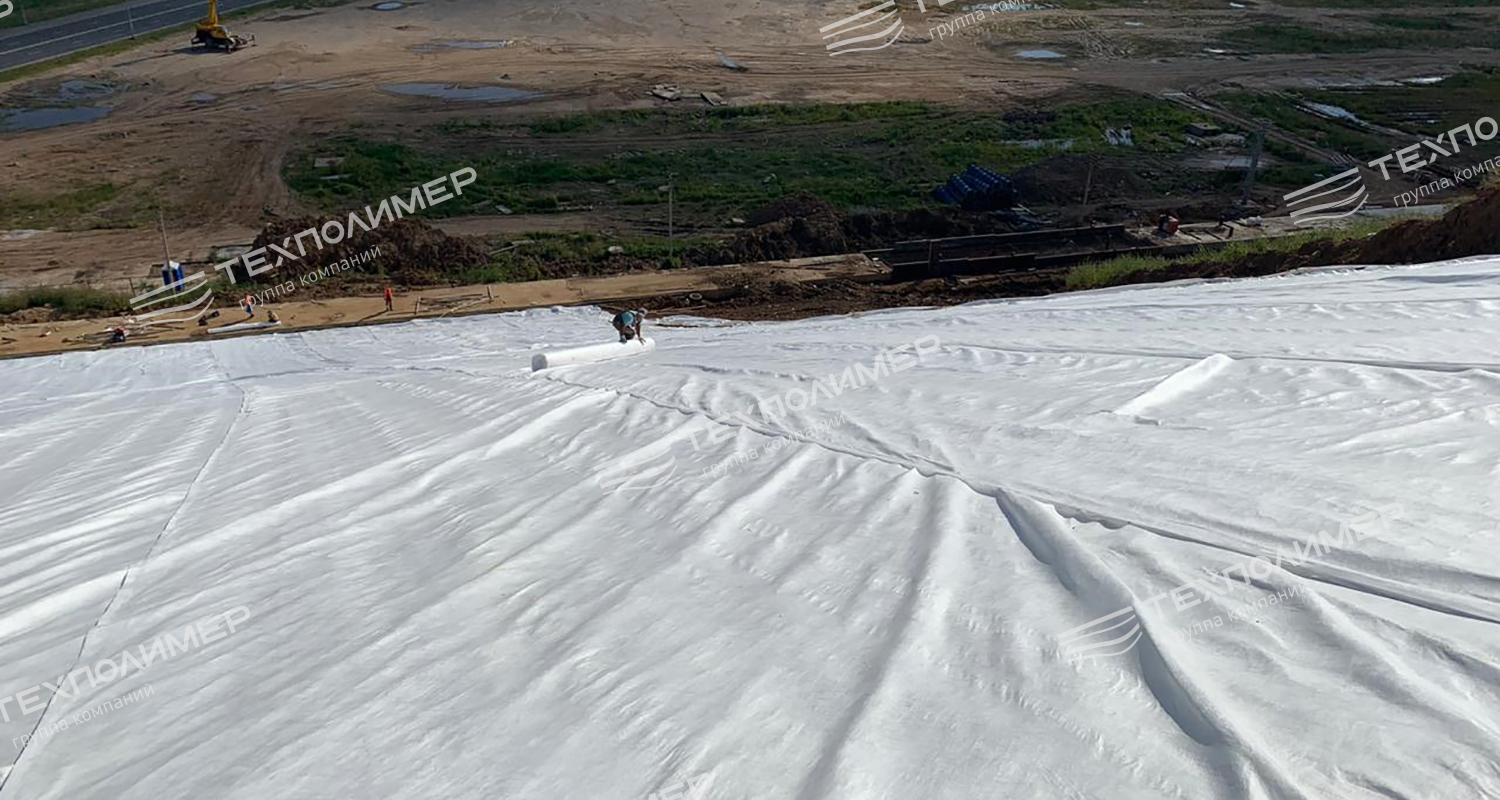
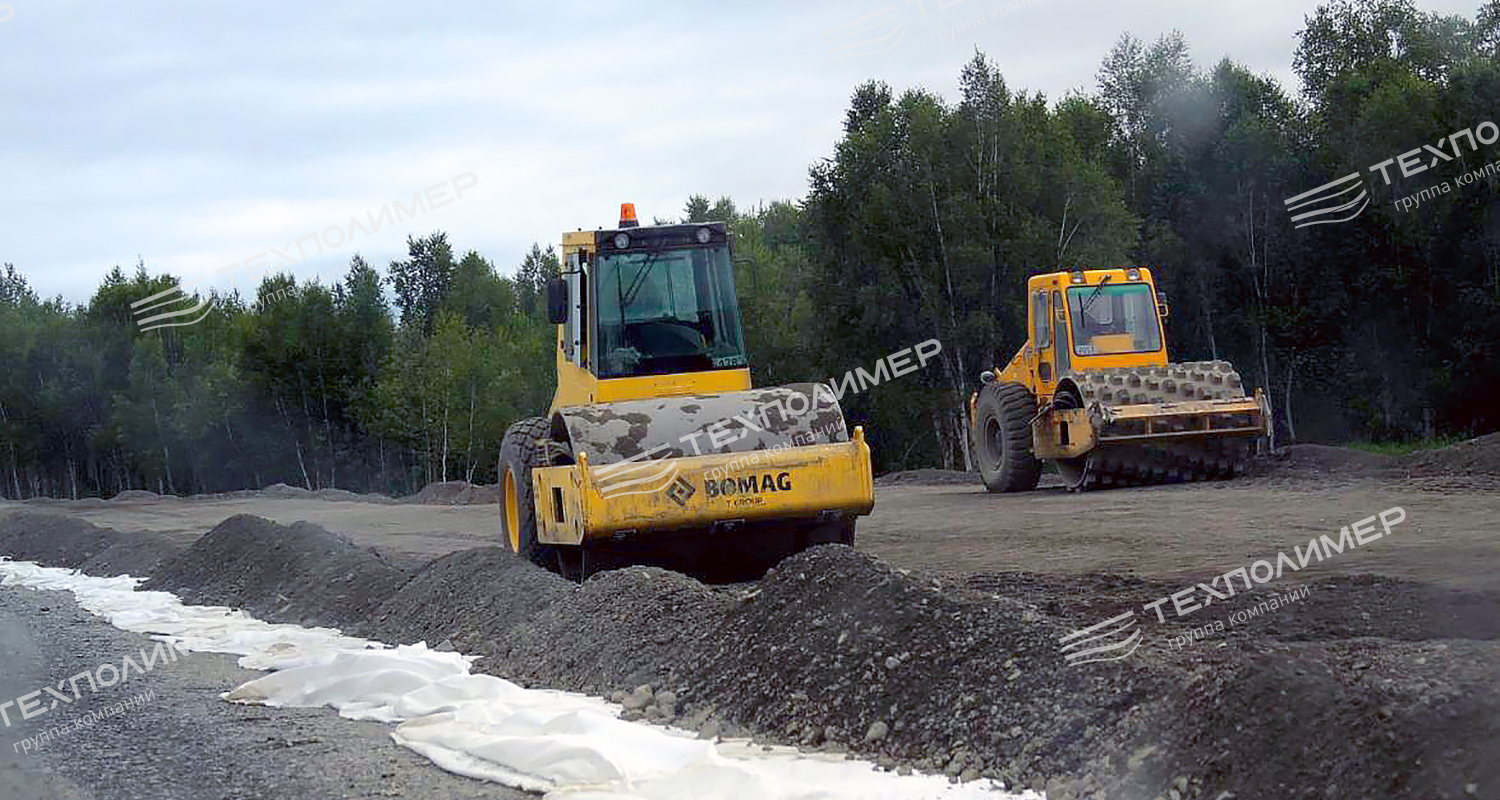
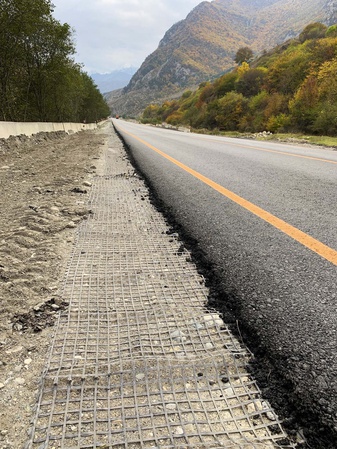
The areas of application for geotextiles are determined by their properties — primarily their high tensile strength. The material serves as a protective, reinforcing and drainage layer in road pavement structures, beneath precast slabs, and in the foundations of embankments, wells and sludge storage facilities. Nonwoven needle-punched fabric distributes both dynamic and static loads, which is why it is used to reinforce slopes and as an underlay for gabions and geogrids.
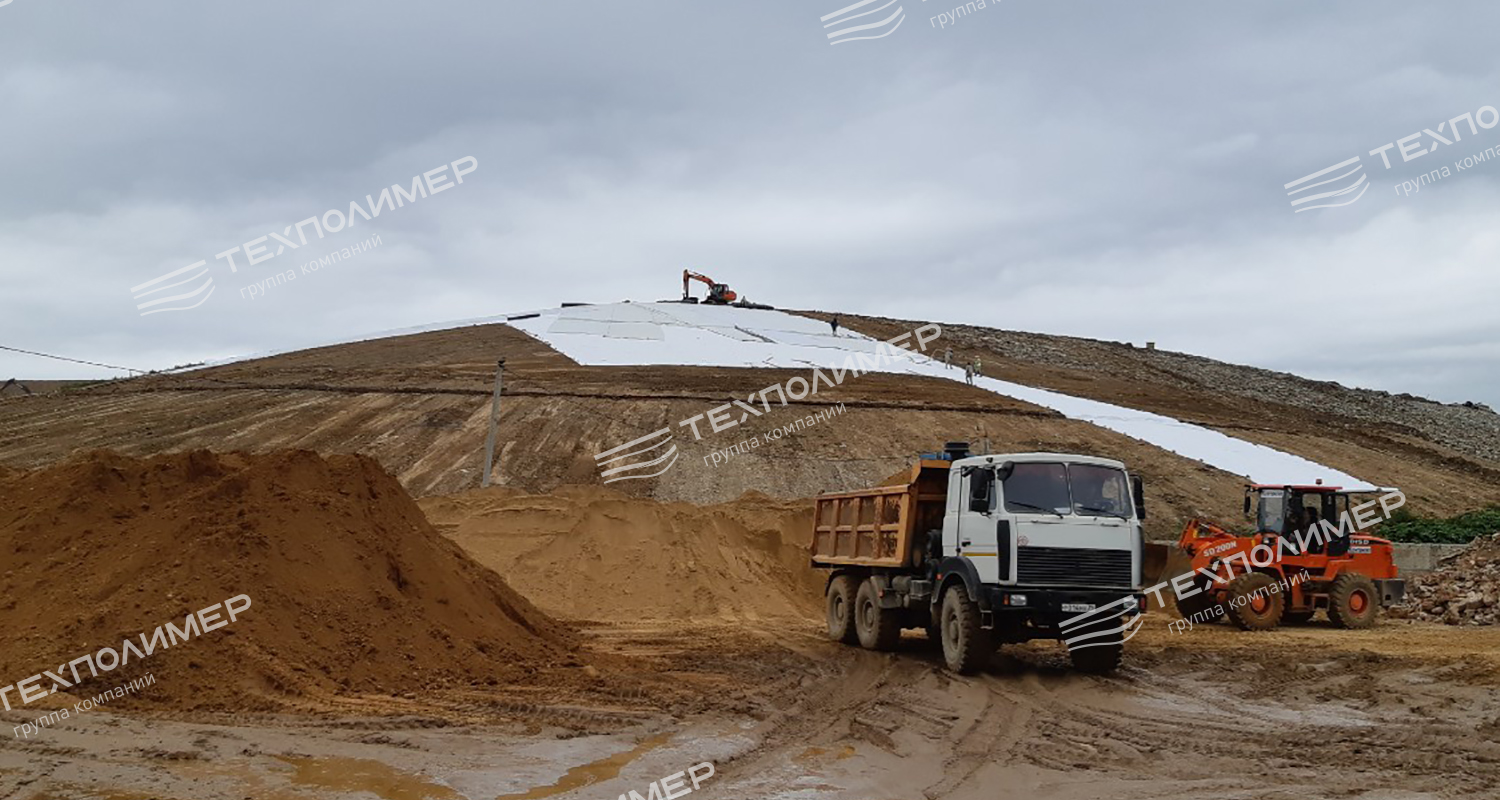
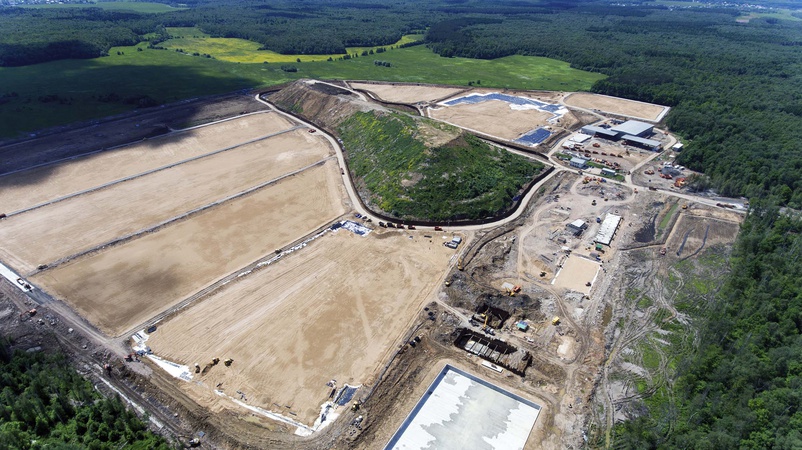
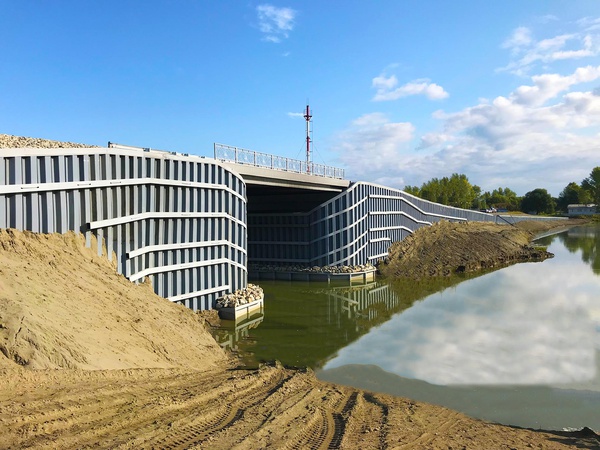
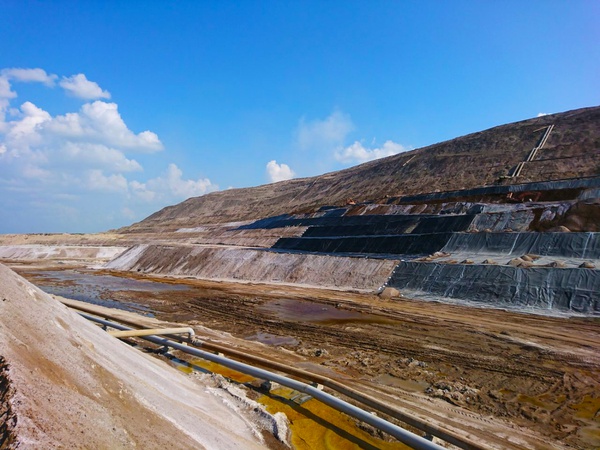
Thanks to its drainage properties, nonwoven geotextile is suitable for constructing hydraulic structures, bank protection systems and other drainage structures. Its filtration properties allow nonwoven fabric to be used in the construction of municipal and industrial waste landfills and other environmentally significant facilities.
Operating temperature range: from minus 60 °С to plus 60 °С.
| Technical specifications of geotextiles, STO 56910145-009-2014 | ||||||
|
Parameter |
T-200-К | Т-250-К | Т-300-К | Т-350-К | Т-400-К | Т-450-К |
| Mass per unit area, g/m2, +20/-10 % | 200 | 250 | 300 | 350 | 400 | 450 |
| Thickness at a load of 2 kPa | 1,2-2,0 | 1,3-2,2 | 1,6-2,4 | 1,8-2,6 | 1,9-2,8 | 2,1-3,0 |
| Tensile strength in the longitudinal/transverse direction, kN/m, min. | 11,0/11,0 | 14,0/14,0 | 16,0/16,0 | 18,0/18,0 | 19,5/19,5 | 23,0/23,0 |
|
Elongation at maximum load in the longitudinal/transverse direction, %, max. |
100/100 | |||||
| Static puncture resistance (CBR method), kN, min. | 1,6 | 2,0 | 2,2 | 2,7 | 2,9 | 3,1 |
| Filtration coefficient perpendicular to the plane of the sheet at a pressure of 2 kPa, m/day | more than 40 | |||||
| Specifications for geotextiles with other mass per unit areas or of other types are available upon request | ||||||

Buy nonwoven fabric from the manufacturer
"TEXPOLIMER" — a leading manufacturer of geosynthetic materials in Russia. We have been operating since 1994 and supply materials to leading companies, including "Роснефть", "Газпром", "Росатом", "РЖД" and others. We handle the full range of work — from design through installation and commissioning.
The price of nonwoven fabric depends on its grade and the supply volume. We ship products in any volume throughout Russia and beyond.
-
Documentation
-
Gallery
-
-
Completed projects
-
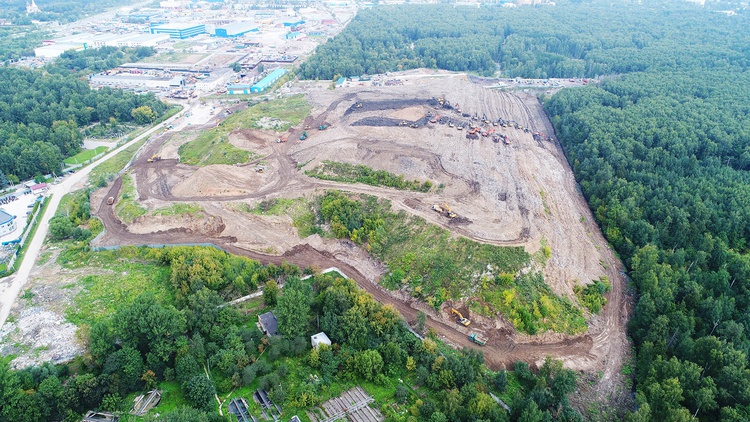 Remediation of the Dolgoprudny MSW Landfill
 -
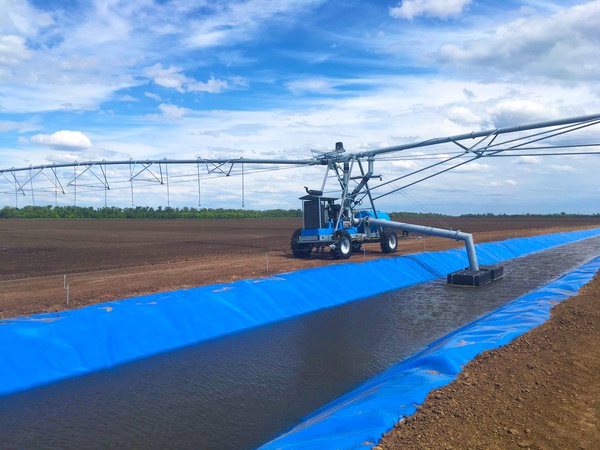
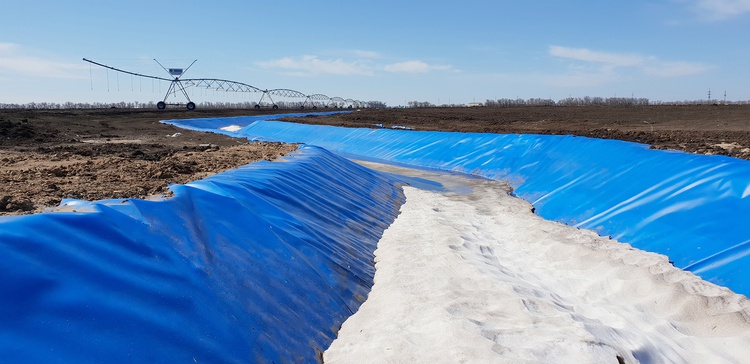 Seepage barrier for an irrigation canal
 -
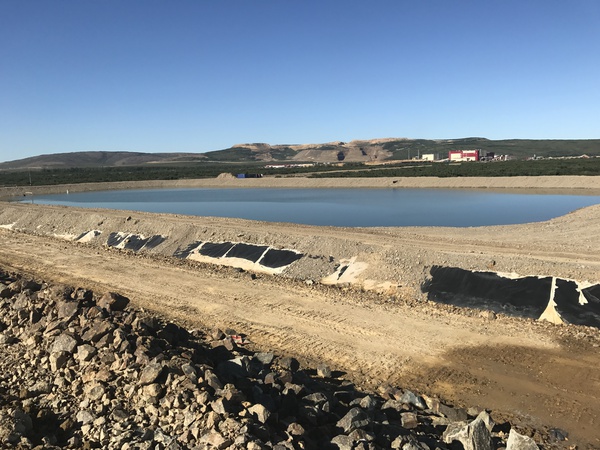 Waterproofing of the base and slopes of a settling pond
 -
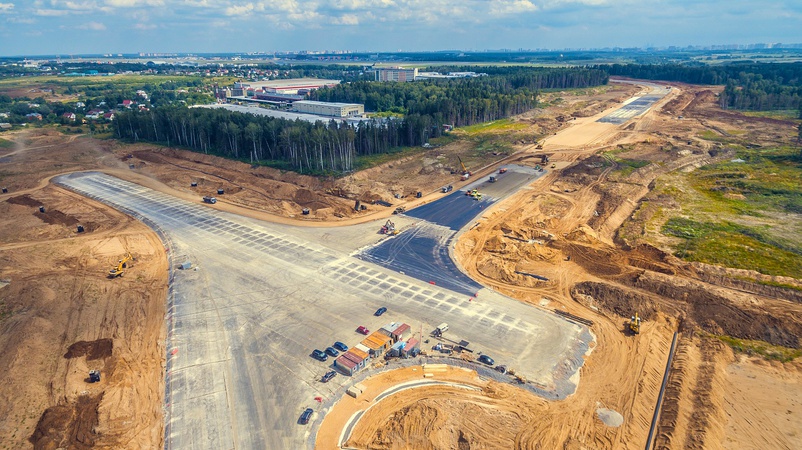
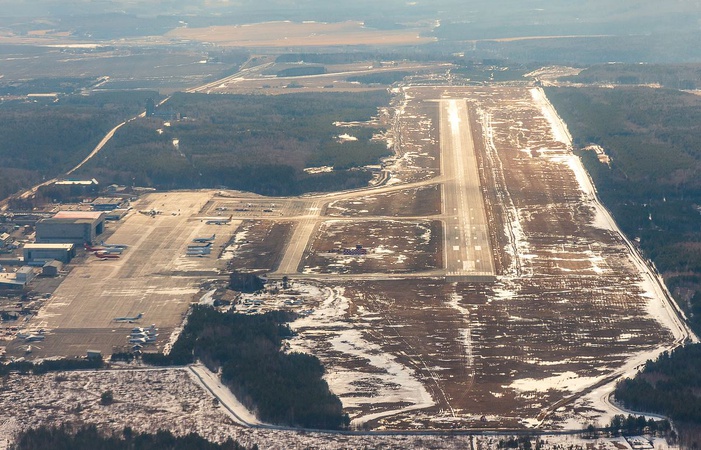 Construction of the Runway at Krasnoyarsk International Airport
 -
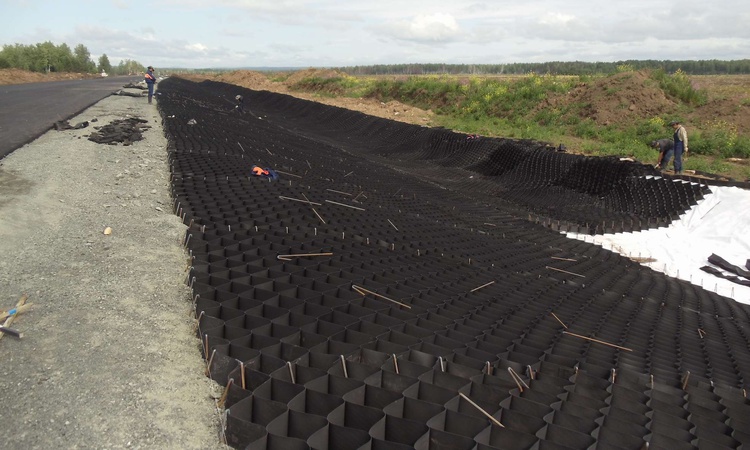 Federal M53 “Baikal” Highway Novosibirsk–Kemerovo–Krasnoyarsk–Irkutsk
 -
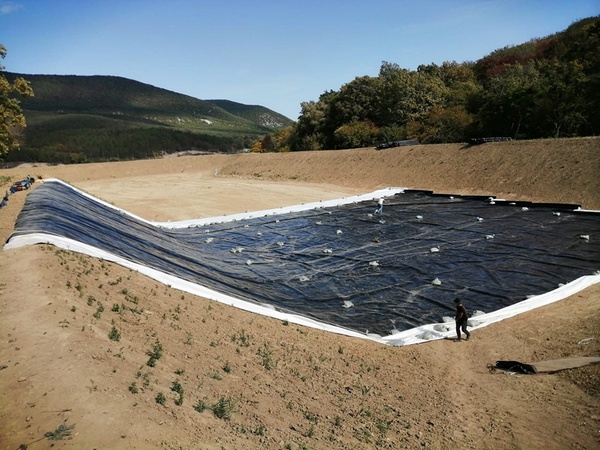 Water storage pond for garden irrigation, Republic of Crimea
 -
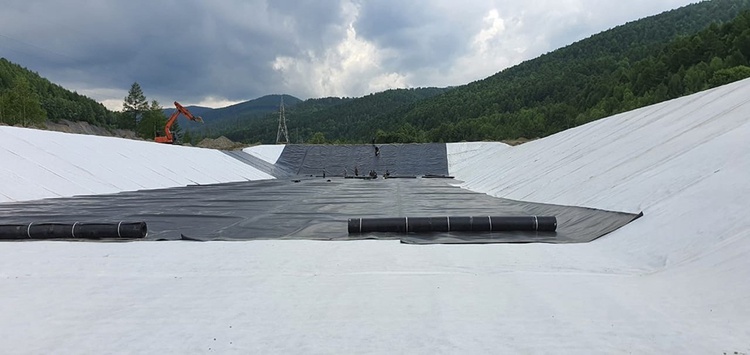 Storage ponds at a tin-mining enterprise
 -
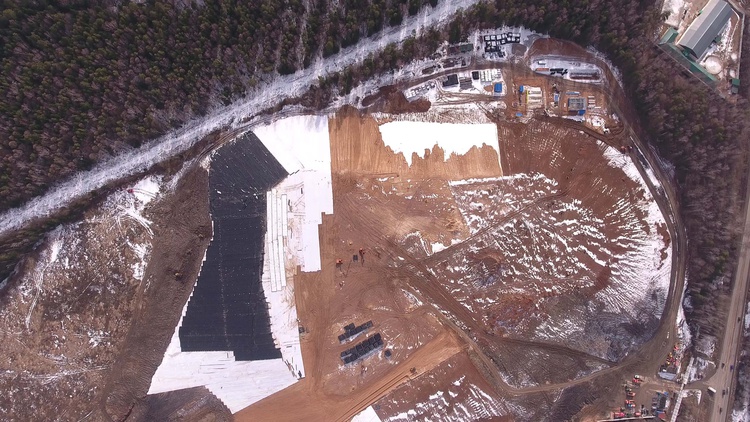 Remediation of the Kulakovsky MSW landfill in the Moscow Region
 -
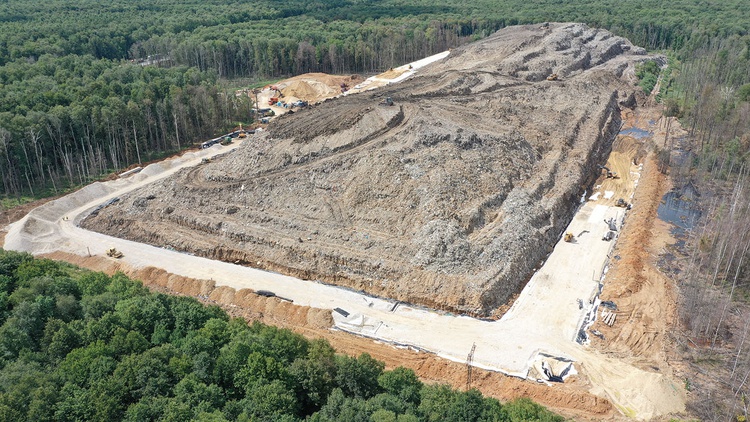 Landfill reclamation at the “Syanovo” MSW landfill
 -
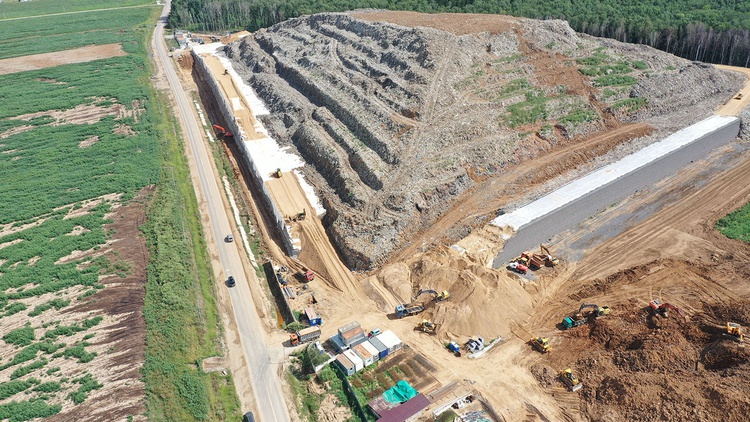 Remediation of the Kaurtsevo MSW landfill
 -
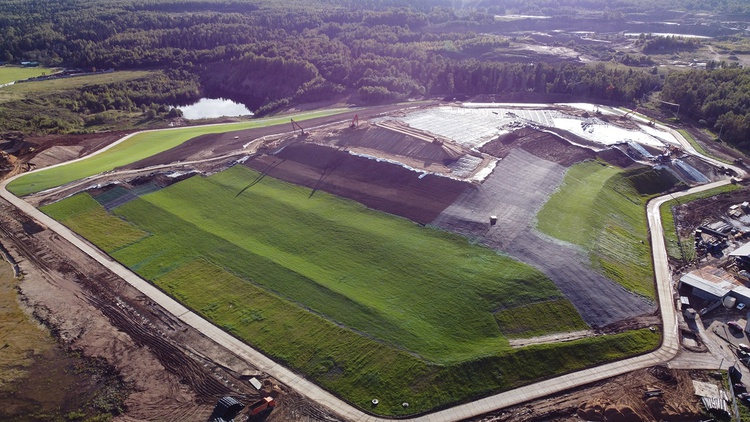 Reclamation of the Parfenovo MSW Landfill
-