When constructing motorways, railway tracks, bridges, overpasses and hydraulic structures, as well as landscaping areas, strengthening structures and protecting them from adverse external factors are among the key priorities. The optimal solution is determined based on the geological characteristics of the area to be reinforced, the operational load on the facility, the local climatic conditions, the loads acting on the structure, the slope angle and other factors.
To protect structures from erosion and install reinforcements in road construction, a technology using “TEXPOLIMER” concrete-filled mats «TEXPOLIMER» (STO 56910145-031-2020) is applied. In practice, this technology has demonstrated high effectiveness.
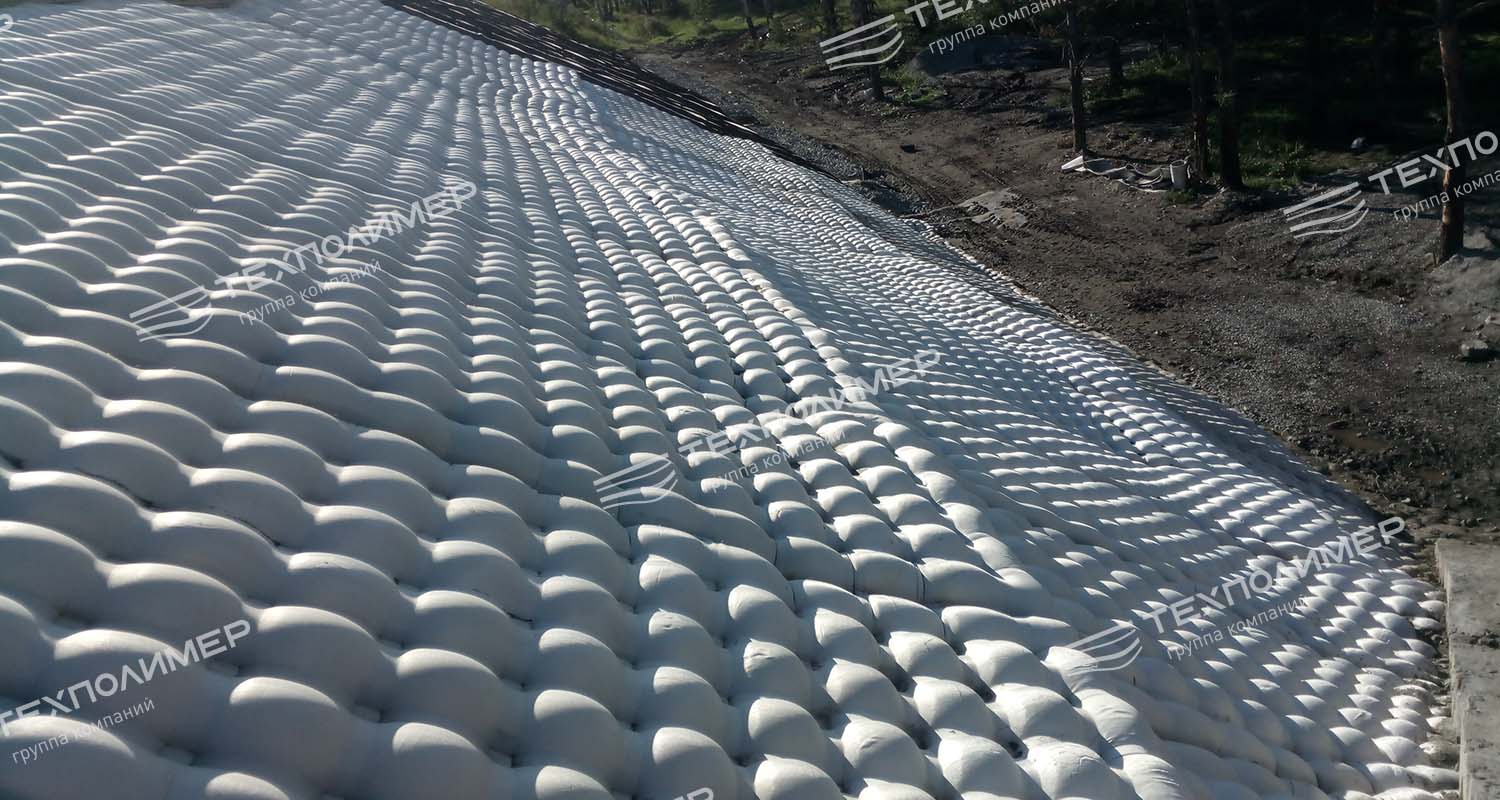
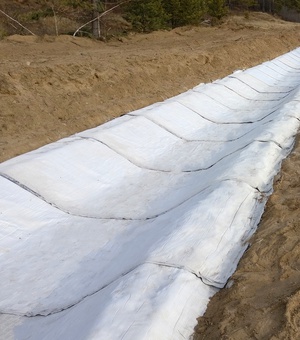
Concrete-filled mats (CFMs) are an enclosed shell with fixing points at specified intervals. These points reduce the hydraulic pressure of the injected mixture and regulate the mat thickness after filling.
The technology operates as follows: a mixture based on mineral binders, ready for injection, is introduced under pressure into the concrete-filled mat; excess air and moisture are displaced through the fabric pores, ensuring uniform filling of the mat. This makes it possible to achieve high mixture density and accelerated early-strength development.
Light weight, compactness during transportation and the possibility of installation below the waterline without prior dewatering are undeniable advantages of concrete-filled mats. Their installation also does not require significant labour. The mats are laid directly on the ground, with minimal base-preparation requirements, while the flexible woven CFM shell ensures close contact with the surface of the area being reinforced.
Manufactured from woven textile fabric, the mats are resistant to adverse external factors, ultraviolet radiation and chemically aggressive environments. The material is environmentally safe and has a long service life.
Concrete-filled mats are universal in application: they protect linear facilities, engineering and hydraulic structures from external destructive factors; protect flood-prone embankments and bridge cones; provide erosion protection and local and overall stability of embankment slopes; and protect banks, dams, channels and other structures. CFMs are effectively used on slopes with a gradient of 1:1.5 or steeper.
The effectiveness of the practical application of this technology has been confirmed by monitoring studies conducted by independent specialists during facility operation, as well as by a number of pilot-scale tests.
In 2020, this technology was used to reinforce the embankment slope on the M5 “Ural” motorway, km 1777+000, where significant erosion deformation had occurred. This consisted of planar washing away of slope soil by water flowing from the carriageway.
Photo: embankment washout
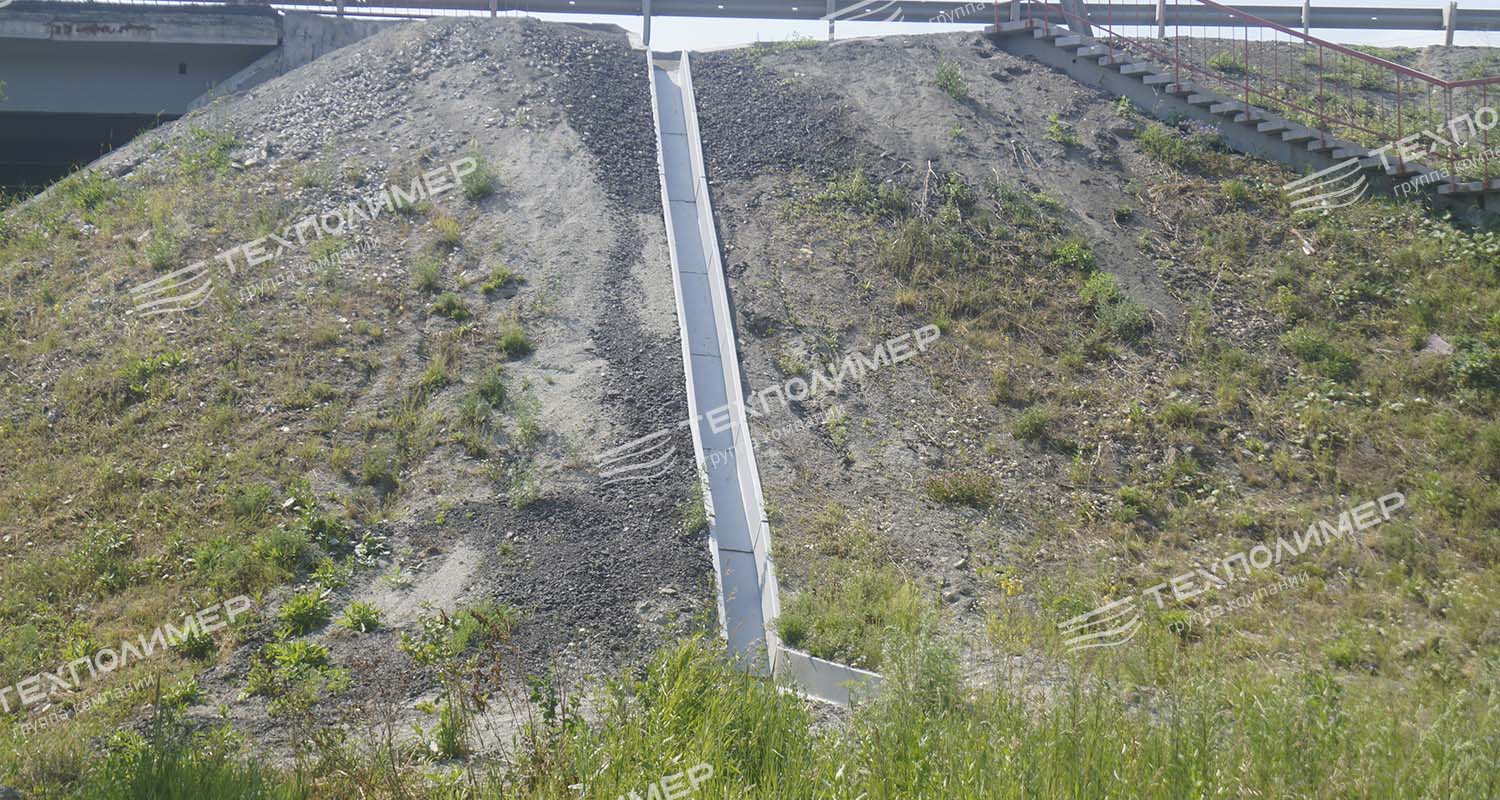
To eliminate these adverse effects, specialists from the engineering centre of the TEXPOLIMER Group developed a solution for reinforcing the slope with CFM-1 0.2×2×6 concrete-filled mats, STO 56910145-031-2020.
The slope reinforcement process at this facility comprised several stages.
At the first stage specialists eliminated the soil washouts, graded the slope and compacted the embankment base.
Within the reinforcement area, the embankment was divided along the slope length into three tiers, with horizontal anchor trenches installed to secure each row of mats. Anchor trenches were made along the embankment toe and crest to secure the mats and connect the reinforcement to the existing structures.
Photo: CFM installation
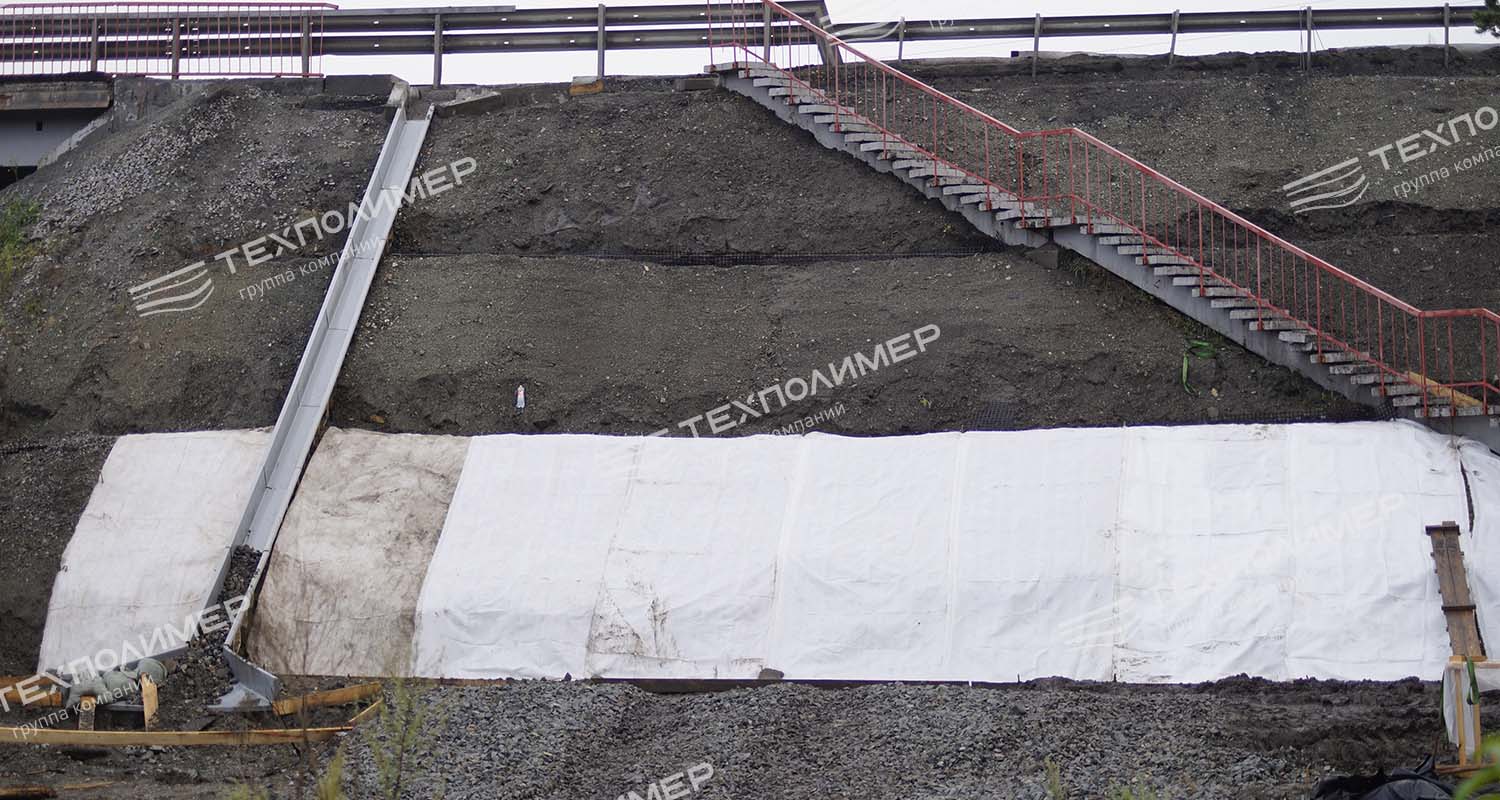
The second stage involved preparing the concrete-filled mats for installation. At the reinforcement area, standard-size CFMs (2×6 m) were first stitched together into panels (6×12 m), which were then secured to the slope, starting with the bottom row. The injection mixture was introduced into the CFMs through cuts in the upper part of the mat using flexible hoses connected to a concrete pump truck.
Each mat was filled from the bottom, gradually raising and withdrawing the hoses from the mat.
After the bottom tier had been filled and the concrete mixture in the mats had gained strength, the horizontal ledges were backfilled and work proceeded to the next tier. After the upper tier was closed, the upper part of the concrete-filled mat was connected to the existing road surface using concrete fabric.
The final stage involved installing a drainage channel along the slope crest using T8 concrete fabric (STO 56910145-025-2017), constructing a monolithic shoulder and placing a stone riprap layer along the embankment toe.
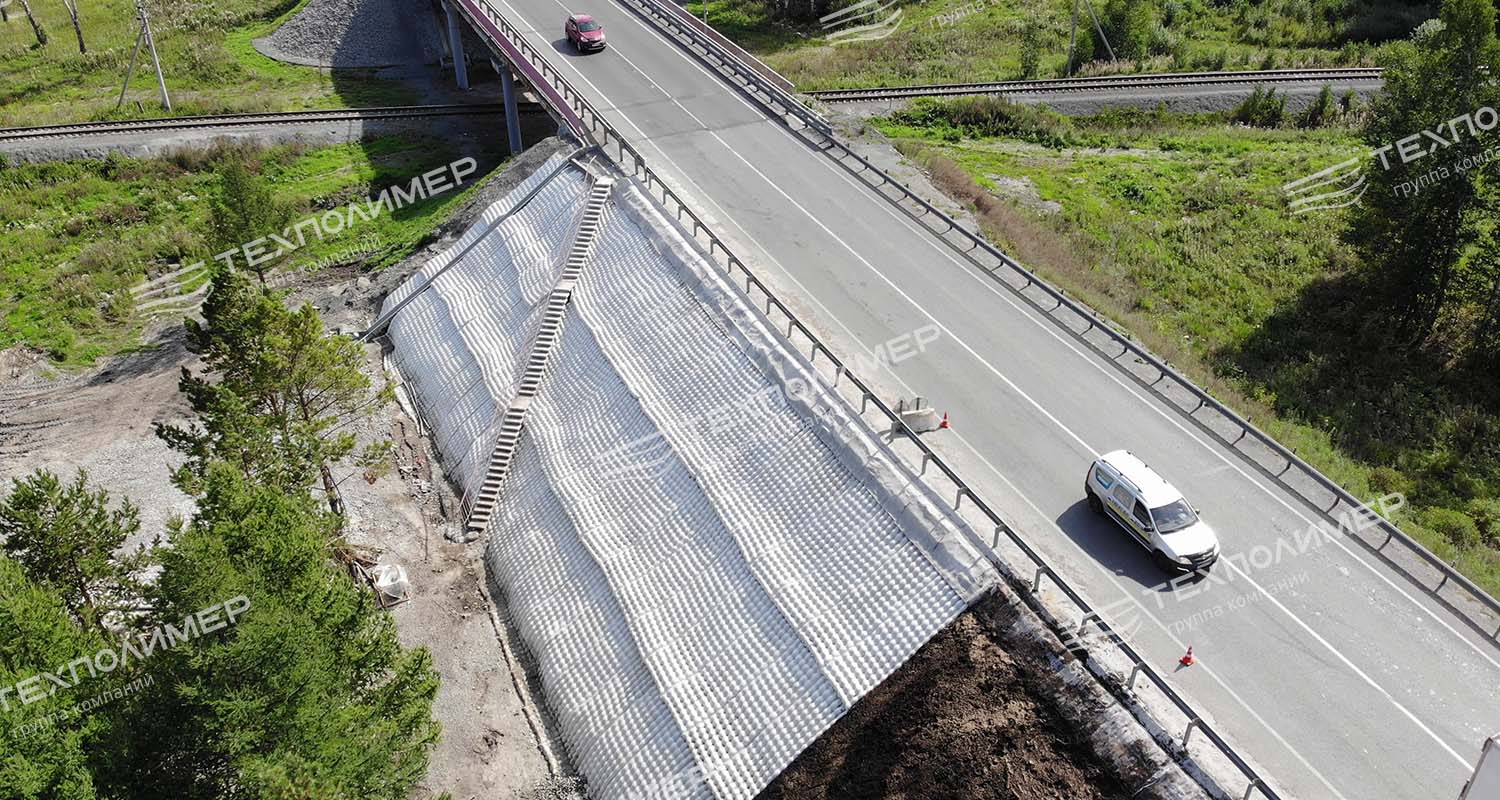
As a result, a structure resistant to atmospheric factors was completed within a short period, reliably protecting the slope of the M5 “Ural” motorway from erosion. The structure is environmentally safe and has a finished aesthetic appearance. This example confirms not only the modern nature of the approach to the tasks, but also the effectiveness of the technology and the high quality of the work performed.
The condition of the reinforcement at the described pilot section is currently monitored every six months.
Photo: completed reinforcement.
Link to the original article