Technogenic formations created through the hydraulic placement of beneficiation tailings are formed in artificial and natural containment areas—tailings storage facilities created as a result of rock excavation or by enclosing the ground surface with dams.
Unfortunately, the geometric parameters of tailings storage facilities require the continuous raising of dams and the maintenance of stable hydraulic conditions at the facilities. In addition, tailings storage facilities are high-risk facilities, as their operation may result in the contamination of groundwater and surface water, as well as air pollution caused by wind erosion.
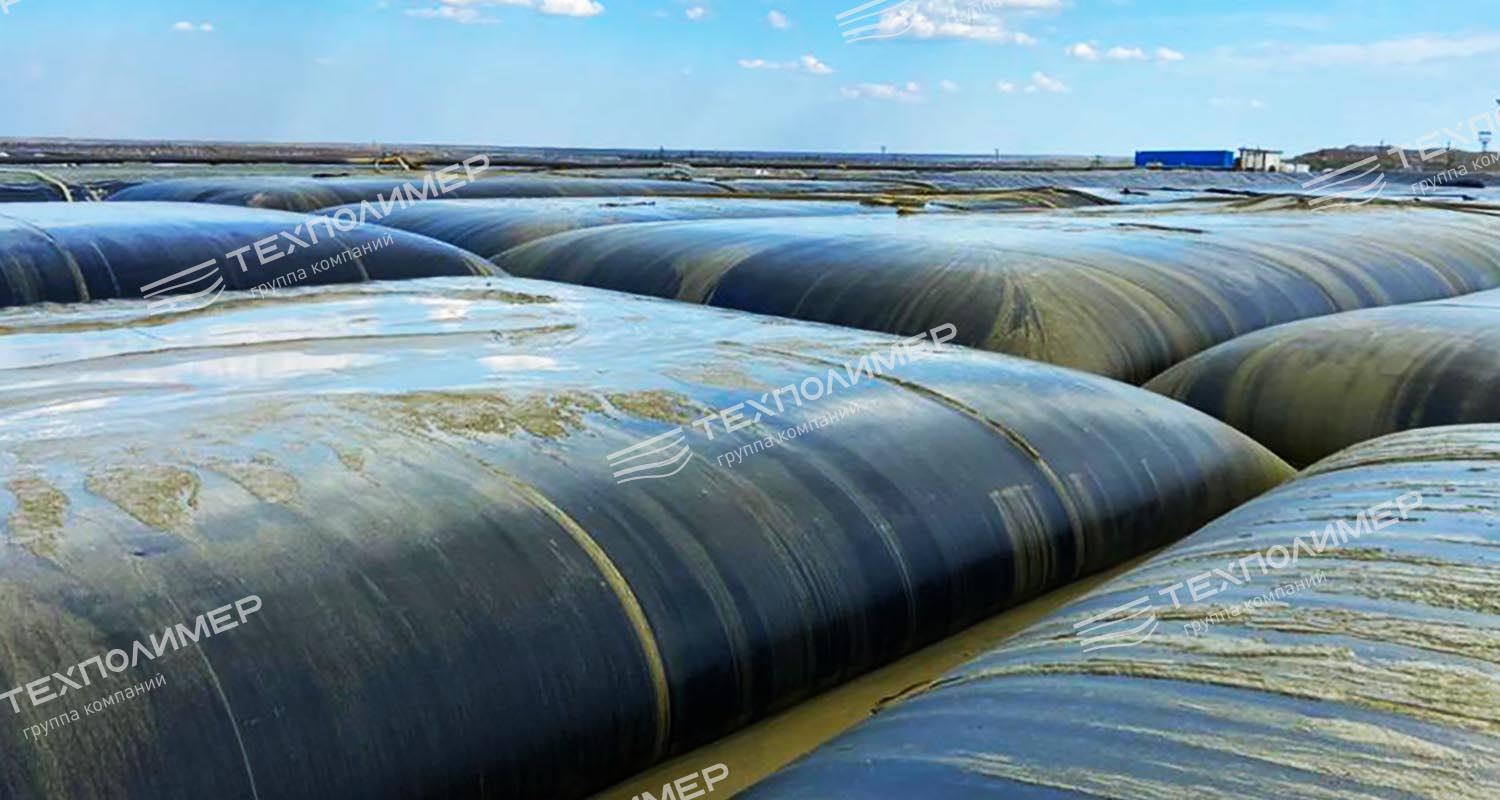
One environmentally friendly method of placing dispersed beneficiation waste may be the storage and dewatering of tailings products in geotextile containers – geotubes.
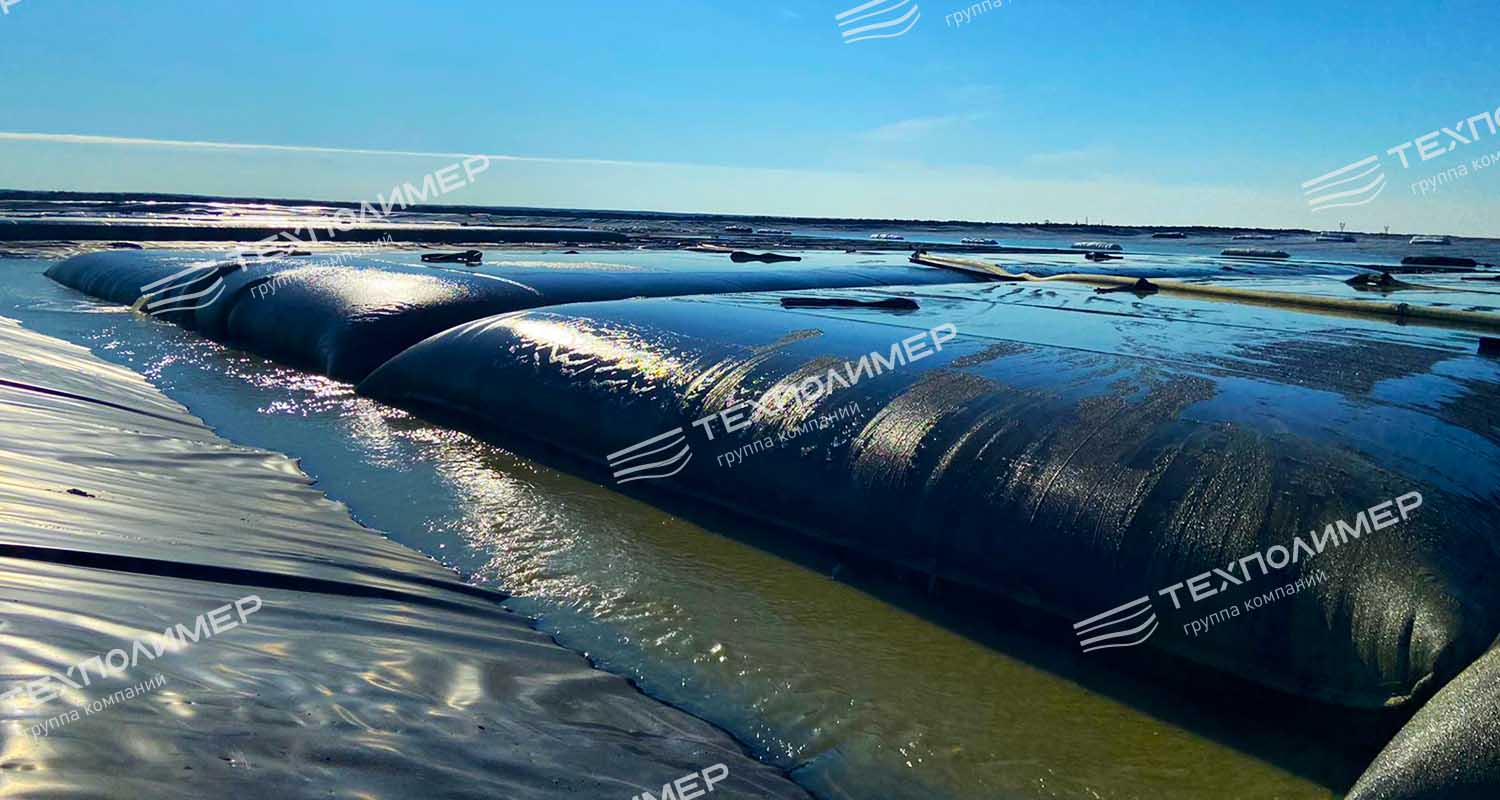
Geotubes are manufactured from high-strength filtration fabric resistant to high internal loads, mechanical damage, ultraviolet exposure and low temperatures.
Geotubing of tailings could become a viable alternative to mechanical dewatering methods for tailings products at beneficiation plants and a solution to the problem of air pollution caused by wind erosion. Dewatered tailings will not be subject to wetting and washout from the internal volume of the geotubes by precipitation, thereby significantly reducing the negative impact on the environment.
Placing geotubes in several tiers makes it possible to store dewatered tailings compactly for an unlimited period and requires several times less space than traditional technologies.