
Grigory Levashov, PhD in Engineering, Director of the Technology Transfer Centre at the Federal State Budgetary Educational Institution of Higher Education “SibADI”;
Olga Malankina, Chief Expert at the Department of Educational Programmes and Professional Qualifications of the Infrastructure and Educational Programs Foundation
Modern road construction is one of the areas where advances in scientific and engineering thinking are concentrated. Road professionals use advanced technologies, materials and equipment. To keep pace with technological progress, they have to continue learning throughout almost their entire professional career.
Educational programmes prepared by the country's leading technical universities help road industry specialists improve their professional level, acquire new knowledge and develop relevant skills with maximum efficiency and minimum time expenditure.
One important area of this work is training personnel to work with innovative materials, such as geocomposites, which are increasingly in demand in the road industry. They are used to address complex challenges, including the use of substandard soils to construct road elements, reinforcement of weak foundations, and erosion protection for embankment slopes.
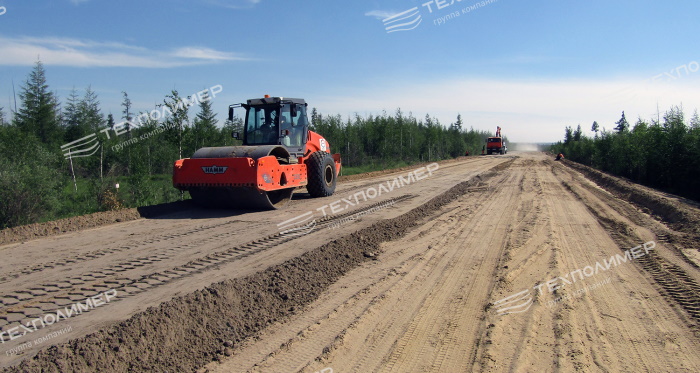
However, despite the active implementation of advanced high-technology composite materials, the problem of their improper use has still not been overcome. This situation is caused by a lack of experience among specialists who design, build or repair roads. This discredits the very idea of introducing new products, including road geosynthetics. After all, their use by unqualified personnel does not produce the results claimed by the companies that developed and manufactured them. As a result, a widespread perception emerges that purchasing them is a waste of money that could be allocated to other, more familiar purposes. This is why a number of manufacturers hold seminars for road industry professionals. However, this format currently appears to be aimed more at achieving their own corporate sales targets than at genuinely improving road professionals' knowledge of new products and teaching them how to use these products in practice.
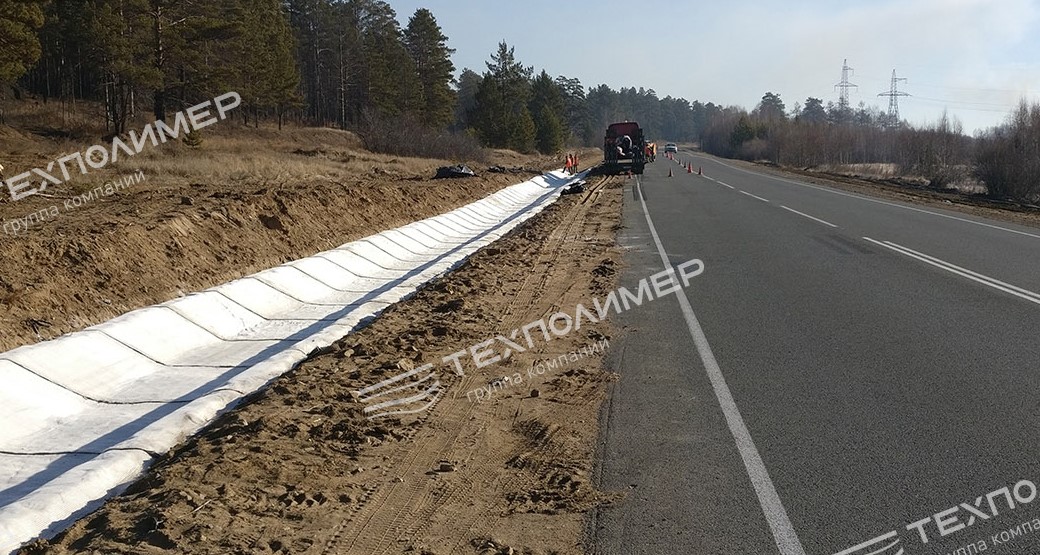
At the same time, businesses have access to various forms of financial support for developing and launching new products and technologies. Many marketing courses and training programmes are available, focusing on the professional development of sales department specialists. However, even in this form of interaction, the end consumer—the road professional—often remains in the «blind spot»: they know little about new developments and their advantages, do not trust them, and do not know how to use them. There are few tools for addressing this problem. In this context, the following statement by FIОP Director of Educational Programmes and Professional Qualifications Stanislav Nisimov may be cited: when an educational programme is developed as a marketing tool, it identifies information gaps and the educational needs of potential customers—people who make or influence decisions about purchasing a product.
Among Russia's development institutions, the ROSNANO Foundation for Infrastructure and Educational Programmes (ФИОП) has proposed a way to address the lack of understanding and ability to use domestically produced high-technology products. This challenge can be addressed by organising comprehensive professional development for potential consumers, combining theoretical training with practical classes. An example of this approach is the request from Krasnoyarsk-based TEXPOLIMER Group, Russia's largest manufacturer of geosynthetic materials. In response, in 2020 ФИОП launched a project to develop a professional development programme for road industry employees, training them to use composite geosynthetic materials effectively in road structures. The Siberian State Automobile and Highway University (SibADI), which has scientific expertise in this area and brought specialists from Avtodor Group into the project, became the centre for consolidating the efforts of the project participants.
The programme is designed to develop the missing competencies of specialists working for clients commissioning the construction and repair of roads, companies involved in road construction, and design organisation employees. Its distinctive feature is a modular structure that helps align understanding of geocomposites. To reduce time away from their main work, the course is delivered online; individual learning tracks then develop the professional knowledge required and experience in applying innovative materials at the trainee's workplace. The pilot group included specialists from six organisations involved in road design or construction in Omsk, Novosibirsk and Moscow.
Alexey Adyakimov, Head of Transport Infrastructure at TEXPOLIMER Group, commenting on the programme's importance for employee professional development and improved cooperation with road industry companies, noted that participation in this educational project enabled the company to establish a qualitatively different level of relations with potential partners. He emphasised that the main improvement resulted from raising the qualifications and competence of specialists at partner companies using materials manufactured by TEXPOLIMER Group, while the knowledge acquired enabled the effective use of geocomposite products, with an actual increase in the service life of road structures.
The project was also highly rated by specialists from Avtodor Group. Igor Astakhov, Deputy Chairman of the Management Board for Road Operations and Safety at Avtodor Group, described the programme in his address to participants of the VII International Scientific and Practical Conference «Innovative Technologies: Ways to Increase the Inter-Repair Service Life of Roads» as one of the significant innovations of 2020. In preparation for a meeting of the Interdepartmental Working Group on Technical Development under the Government Commission for Economic Modernisation and Innovative Development, the company submitted a report emphasising that, as noted in the document, this «educational programme is one of the key measures for introducing innovations in geosynthetic materials, while the cooperation mechanism between Avtodor Group, the Foundation for Infrastructure and Educational Programmes and SibADI deserves the status of «Best Practice in Cooperation with Universities».
