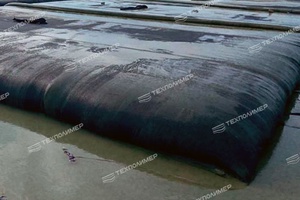
The technology for dewatering sludge in geotubes is technically quite simple and allows significant savings in material and labour resources compared with increasingly outdated methods of dewatering sludge under natural conditions.
One of the key elements of the technology is a high-strength woven container – geotube STO 56910145-016-2015, made of polypropylene threads and featuring unique filtration properties. Geotube dimensions are determined based on the required dewatering volumes and the size of the area allocated for the project.
TEXPOLIMER specialises in soil dewatering in geotubes: from manufacturing high-strength geotextile for sewing geotubes to carrying out construction and installation works on site or providing support throughout the project implementation.
Different types of soil require different approaches. Thanks to the experience of TEXPOLIMER specialists, projects involving geotubes can prevent problems such as water erosion of the soil beneath the geotube, damage to the geotextile, unintended rolling of geocontainers, formation of soil cones inside the geotube, and sand accumulation and clogging of the geotextile pores.
TEXPOLIMER’s practical experience is useful for selecting optimal solutions for the following types of tasks:
Clearance and environmental rehabilitation of natural and artificial water bodies
Periodic cleaning of water bodies using geotubes helps maintain the natural balance of lakes, rivers and ponds with slow water exchange, a tendency towards algal blooms and a decreasing surface area. Rehabilitation of water bodies includes dredging bottom sediments, pumping them into geotubes, storage and transportation to a municipal solid waste landfill.
Dewatering of wastewater sludge
Dewatering sludge in geotubes is a modern alternative to sludge drying beds with natural drying. It reduces sludge volume by 2–5 times, enables high work productivity, is environmentally friendly and allows dewatered sludge to be used for land reclamation.
Storage and dewatering of mine tailings
In the mining industry, dewatering tailings using the geotube method minimises environmental risks and allows treated process water to be reused. During dewatering, sludge moisture decreases from 75% to 45% over several weeks, and after the winter period it decreases to 25%. Multi-level placement of geotubes enables compact, long-term storage of dewatered sludge: it occupies several times less space than traditional tailings storage methods.