Journal "Hydrotechnics", No. 3, 2023
Author: Sergey Borisovich Zemlyakov
Position: Chief Specialist, CJSC "TEXPOLIMER"
Water-conveyance hydraulic structures (hereinafter, HWS) are constantly exposed to wave and ice loads, abrasive wear caused by suspended particles carried by the water flow, floating debris impact, as well as corrosive effects on the chemical structure of concrete and the reinforcement within the concrete. These factors are particularly pronounced during floods.
The operating conditions of HWS require careful monitoring of the condition of the structure as a whole and its individual components. If damage is detected, prompt restoration is required.
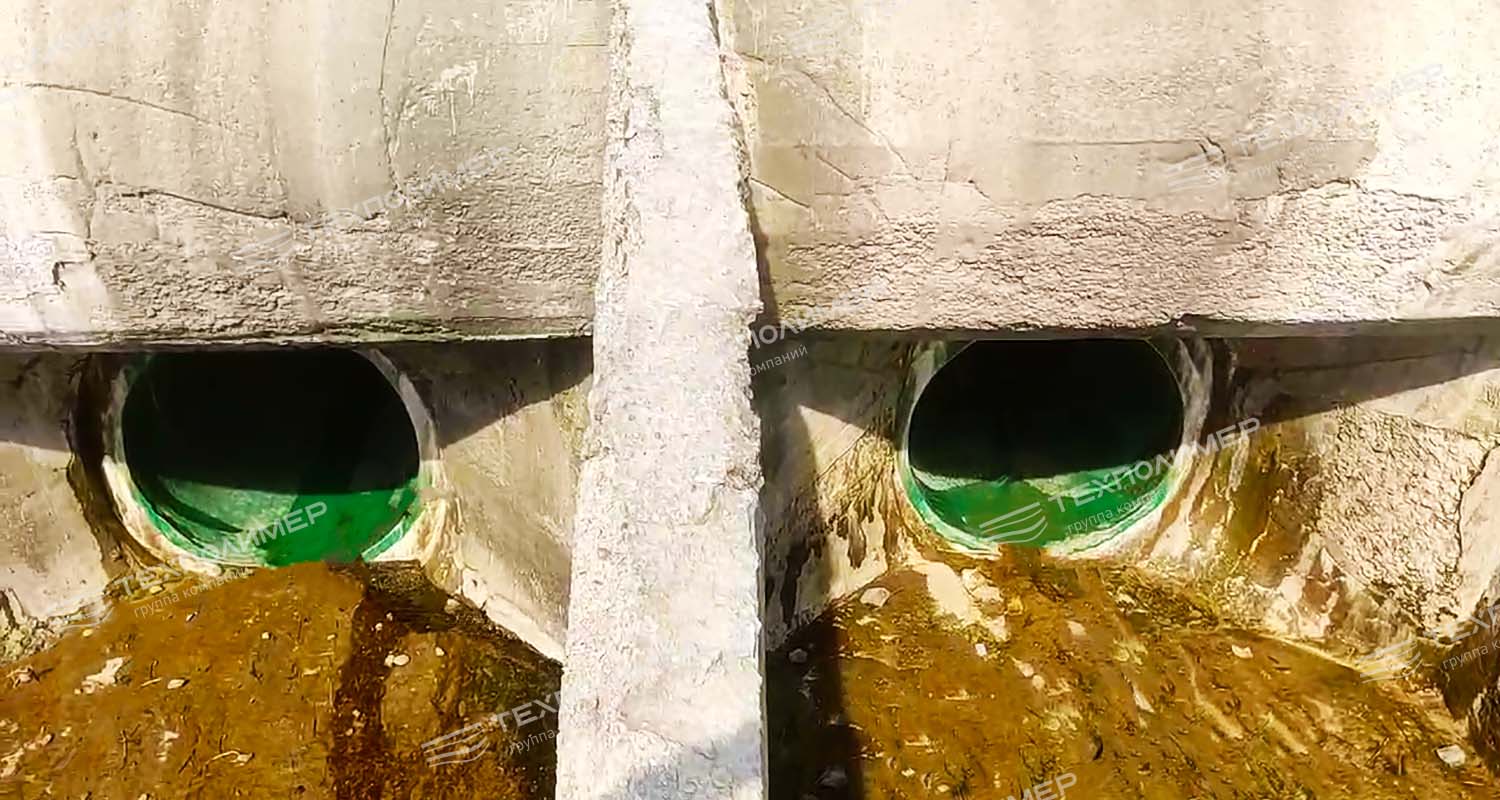
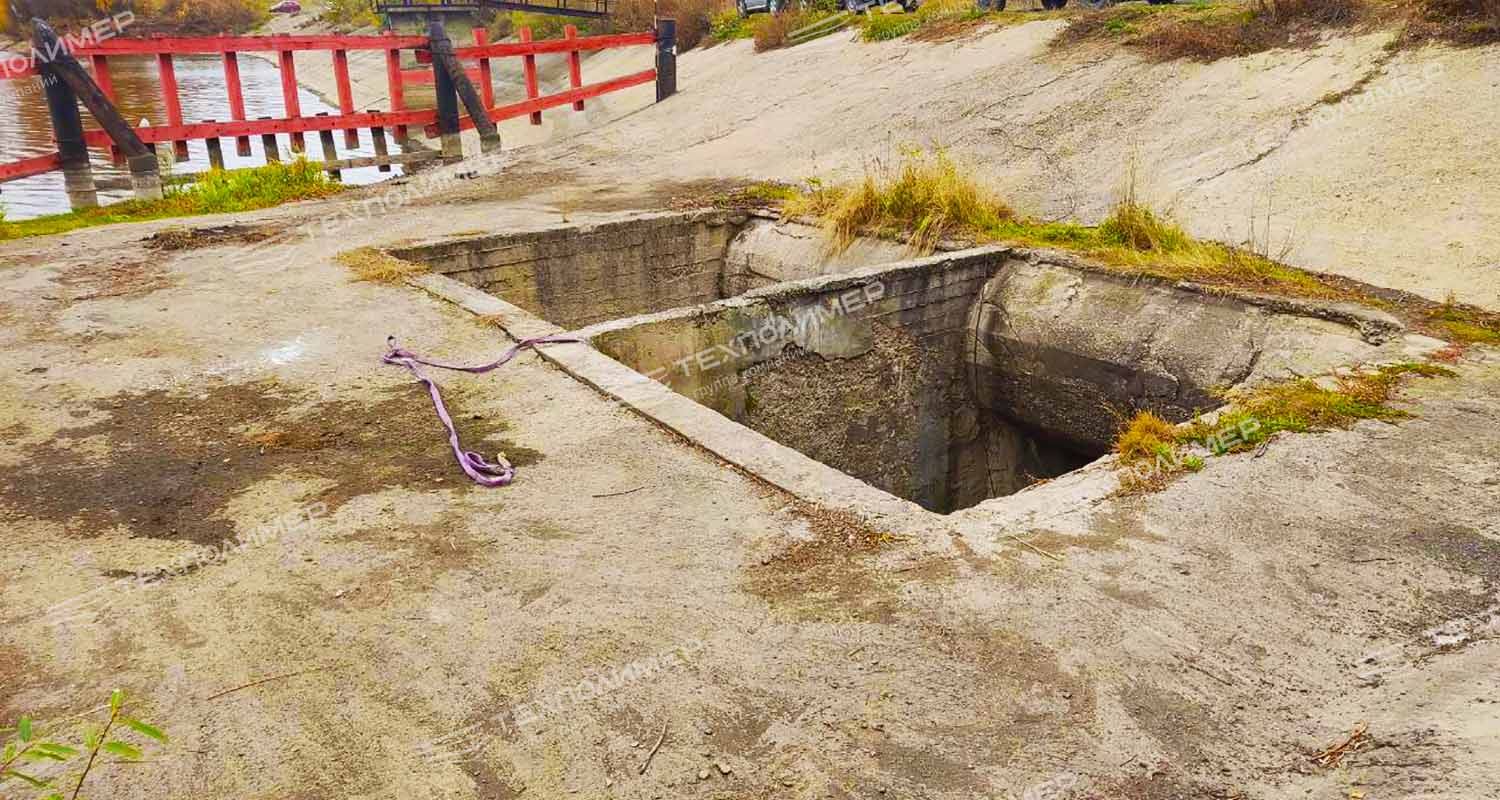
The facility before repair
In a market of constantly evolving technologies, the PipeArm technology for restoring water-conveyance structures offers a number of clear advantages over other solutions. It allows HWS repairs to be carried out without dismantling the structures and extends the service life of facilities by up to 50 years or more.
The PipeArm technology makes it possible to mitigate damage to joints between sections, the reinforcement cage and the protective concrete layer of existing structures. In addition, this restoration method provides complete watertightness of the internal surface of the structure, thereby increasing its corrosion resistance.
We will demonstrate the advantages of the PipeArm technology using the example of the major repair of the water-conveyance pipe of the flood spillway at the hydraulic structure of a pond on the Chesnokovka River in the Kemerovo Municipal District.
HWS information
According to the original design documentation prepared in 1971 by Zapsibgiprovodkhoz in Novosibirsk, the HWS is a tubular-bucket spillway consisting of an intake bucket, a water-conveyance pipe made of two parallel lines of pipes, each with a diameter of 1500 mm, a headwall with an energy-dissipation wall, and channel reinforcement at the outlet.
The facility entered operation in 1979.
In 2022, the water-conveyance pipe operated in three modes: pressure, semi-pressure and free-flow, and required major repair.
Selection of technical solutions for major HWS repair
Based on the results of engineering surveys conducted from December 2021 to March 2022, the following operating conditions of the structure were identified and had to be taken into account when developing the design solutions:
- The dam body is saturated up to the phreatic surface level, and active pressure leaks are present in the pipe body; the major repair had to be performed while the HWS remained in operation.
- Some sections of the left water-conveyance line were in an emergency condition. Specifically, longitudinal structural cracks along a section, accompanied by loss of geometry and load-bearing capacity, had to be eliminated.
- In semi-pressure mode, there is a high probability of cavitation. The design solution had to be resistant to cavitation and protect the pipe body from damage.
- The design solution had to ensure complete watertightness of the internal pipe surface.
Rehabilitation of the pipe body using the PipeArm technology, with permanent formwork made of a polymer protective liner and injectable high-strength, non-shrink casting compound, makes it possible to address all the project requirements.
The completed design documentation received a positive expert review from the Kuzbass State Expert Review Administration.
Implementation of technical solutions
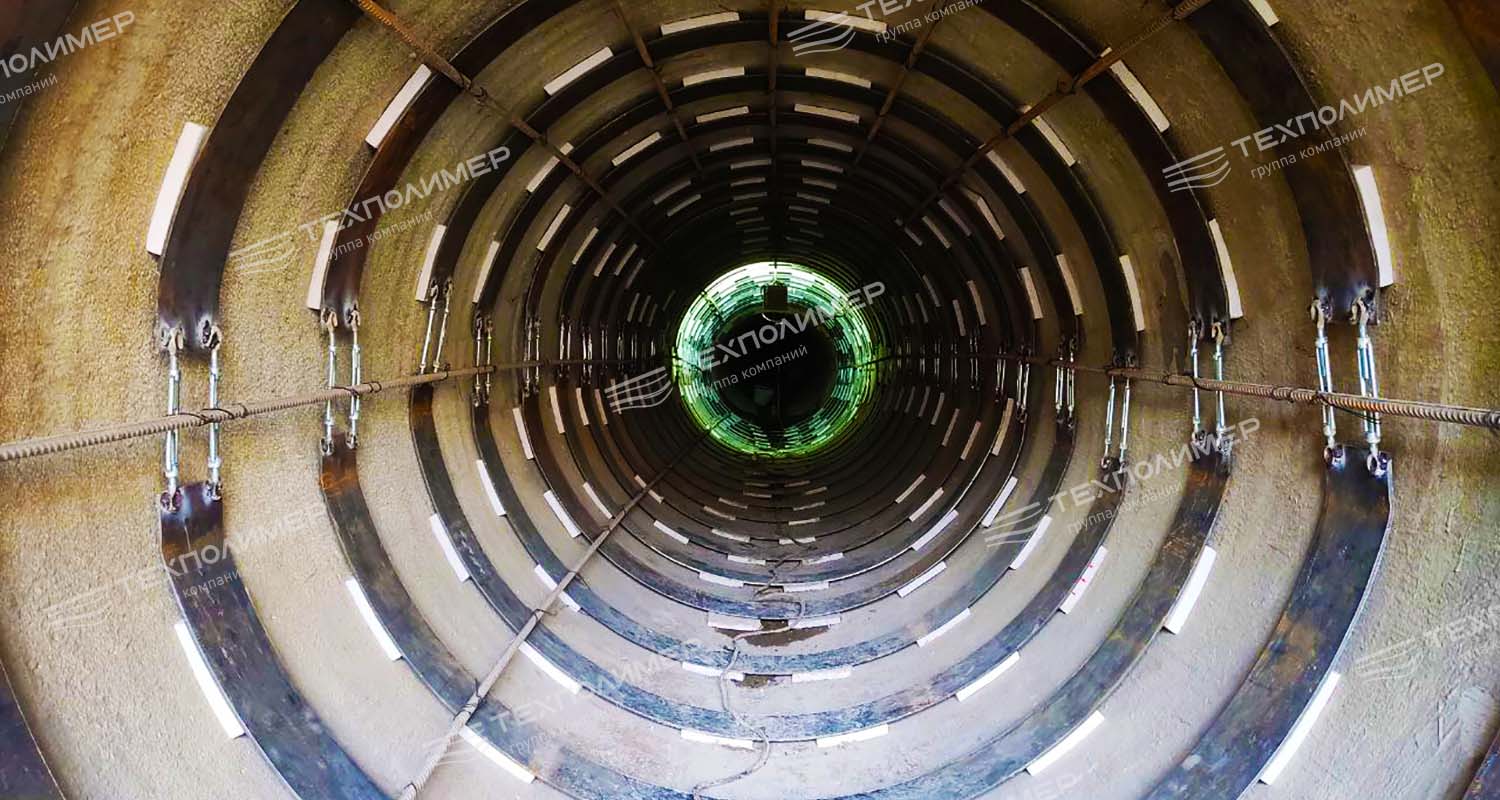
- Before work began, spacer rings were installed at 450 mm intervals to ensure safety and improve the reliability of the structure.
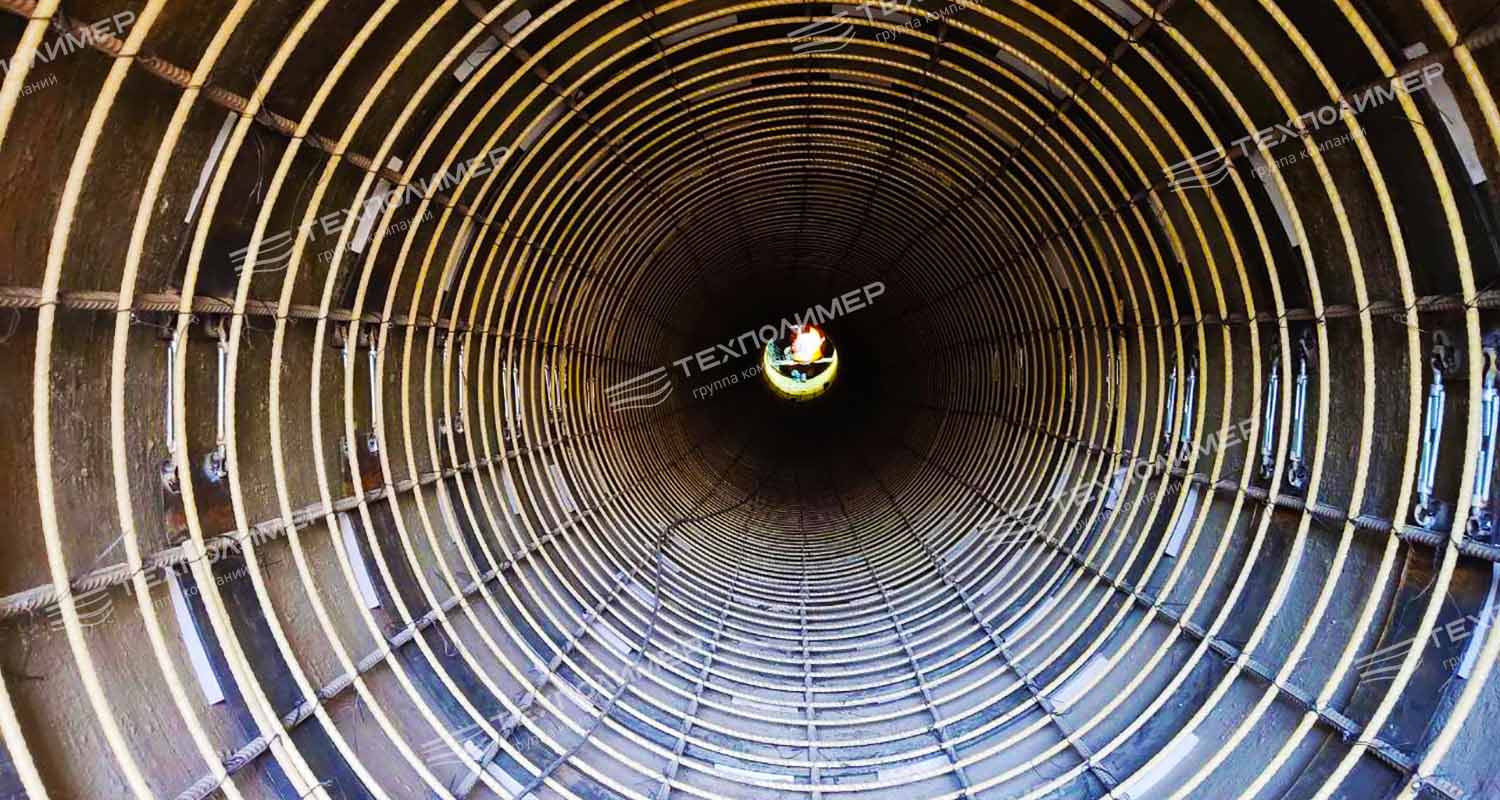
- An additional reinforcement cage was installed inside the pipe: longitudinal A400 reinforcement with a diameter of 16 and transverse circular A400 reinforcement with a diameter of 10 at 100 mm spacing.
- A lining made of a polymer protective liner, with longitudinal and transverse extrusion welds, was installed over the reinforcement cage inside the pipe body. High-strength, non-shrink injection compound IS-21, manufactured in accordance with TU 23.51.12-010-56910145-2017 and based on a mineral binder, was injected into the space between the pipe body and the polymer liner. Monolithic integration of the structure securely connects the reinforcement cage and the polymer liner components.
The major repair implemented using the PipeArm technology
|
Indicators |
Before repair |
After repair |
|
Pipe opening, m |
2 openings with a diameter of 1.5 |
2 openings with diameters of 1.165 and 1.310 |
|
Pipe length, m |
29,26 |
29,26 |
|
Pipe body material |
Reinforced concrete, steel |
Reinforced concrete, steel |
The facility after repair
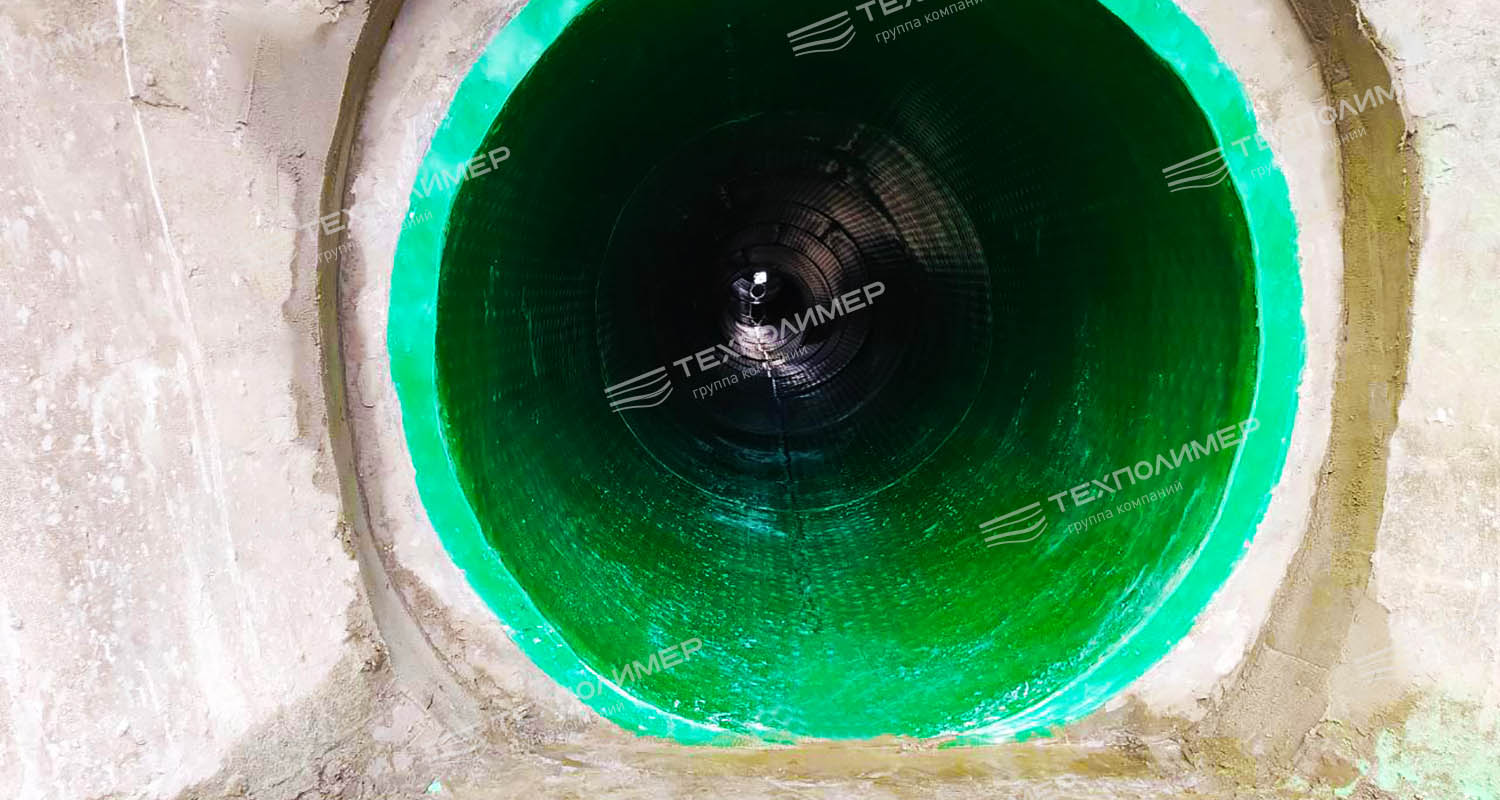
The reduction in the diameter of the water-conveyance pipe is offset by the low surface roughness coefficient of the polymer liner made of V-LOCK anchor sheet TU 2246-003-56910145-2014. The design discharge capacity of the flood spillway water-conveyance pipe was determined by hydraulic calculation as 55.2 m3/s after the cross-section was modified, which is sufficient to handle the design flow during a flood.
As a result of the major repair, the customer received a water-conveyance pipe resistant to corrosion, abrasive wear and aggressive water exposure.
The major repair of the HWS took 61 days.
During the spring flood of 2023, the repaired water-conveyance pipe performed its function without any issues. The PipeArm restoration technology once again demonstrated its practical effectiveness.
The facility after the floods