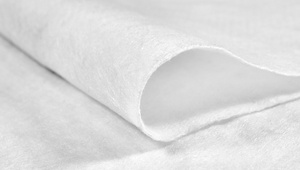
A persistent misconception still exists in the engineering community: «the higher the geotextile density, the better it is for separating layers». This statement is fundamentally incorrect and can lead to critical errors in the design and implementation of infrastructure projects.
Why is density a secondary indicator?
Imagine that you are choosing not geotextile, but concrete based only on density, while ignoring strength class (B), frost resistance (F) and water resistance (W). Density (g/m²) is only an indirect parameter that does not answer the key question: how will the material behave under actual load? The same applies to geosynthetics: their «working strength» is determined not by grams per square metre, but by physical and mechanical properties, the main ones being tensile strength and elongation at maximum load, resistance to punching (static and dynamic), and chemical resistance.
Production technology determines properties
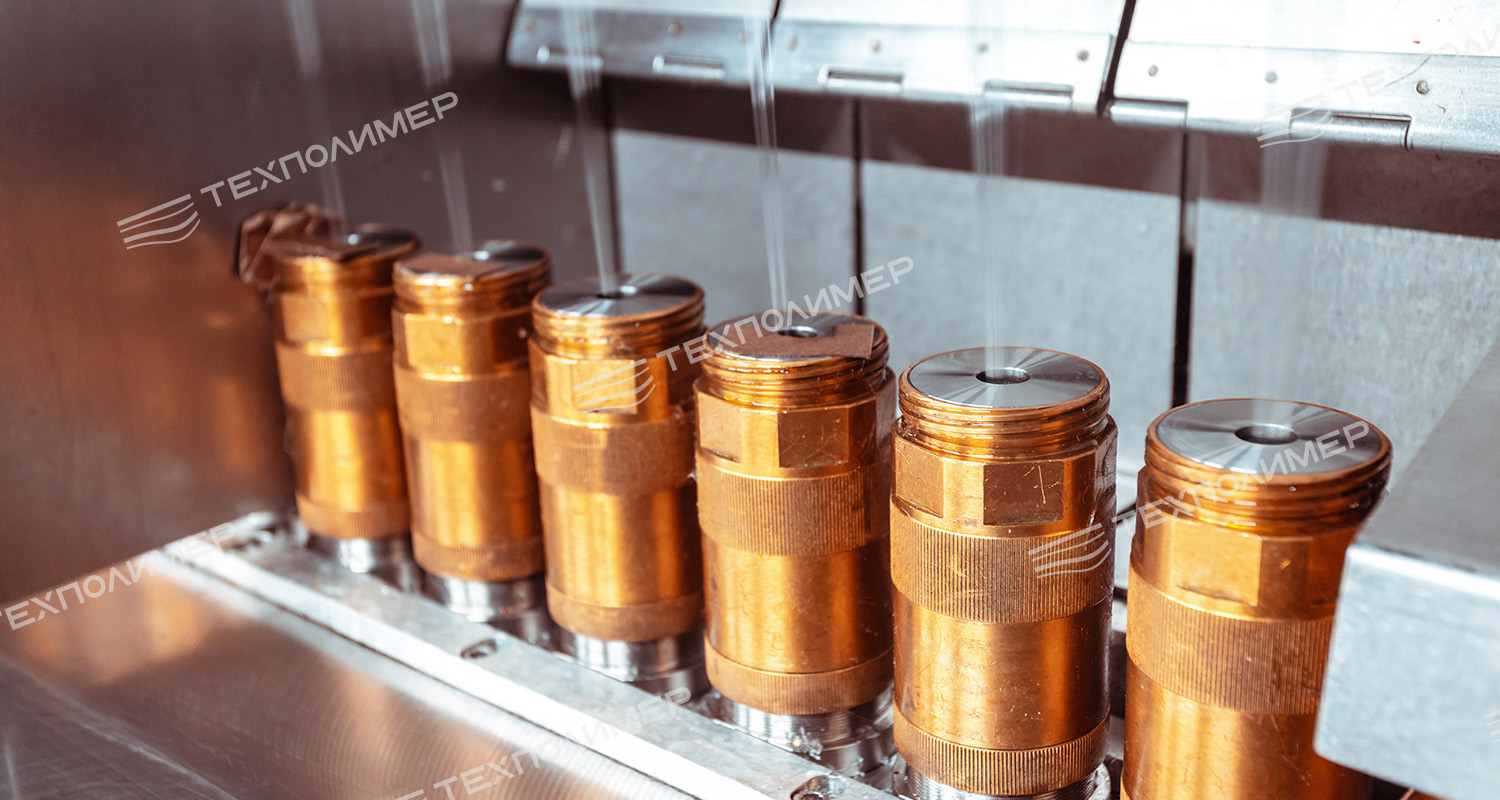
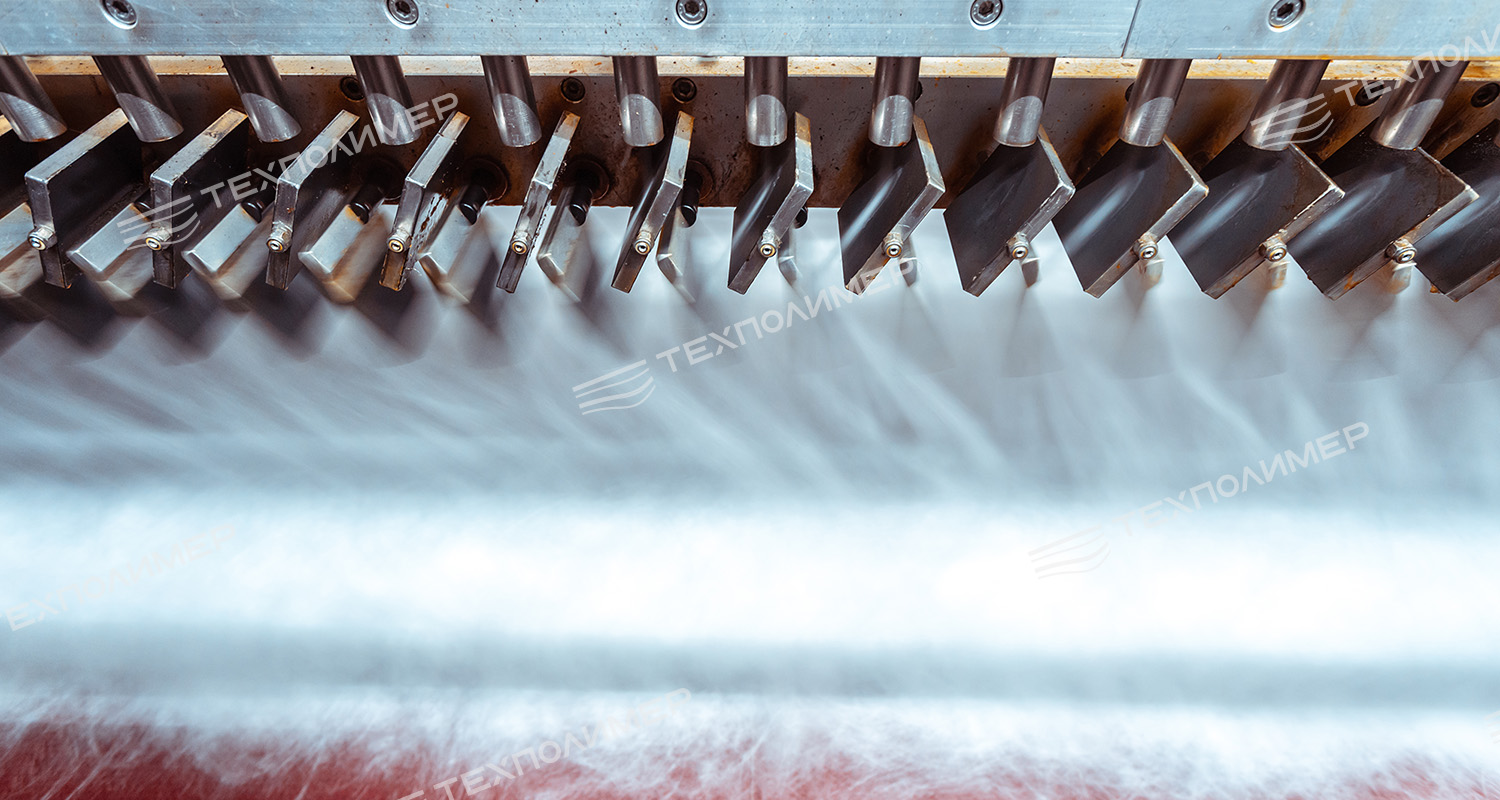
The key to understanding lies in the production method. For example, at the TEXPOLIMER plants, Type K geotextile is produced using spunbond technology, followed by web formation using the needle-punched method with additional thermal bonding. This unique hybrid method combines the advantages of three structures:
- From spunbond technology — it enables the production of continuous polymer monofilaments that form an isotropic web with uniform load distribution.
- From the needle-punched method — the material retains high filtration capacity and elasticity, meaning it does not turn into a clay seal and does not obstruct drainage.
- From thermal bonding — the textile gains increased tensile strength and resistance to punching, so it performs effectively both during installation and throughout service life when the subgrade settles.
As a result, Type K geotextile has physical and mechanical properties that often exceed those of materials with a similar density produced using standard technology. This clearly demonstrates that the decisive factor is not the weight per square metre, but the internal structure determined by the technologies used.
An engineering approach to selection
When designing critical facilities, the following parameters should be considered:
- Tensile strength (kN/m)
- Elongation at maximum load (%)
- Filtration coefficient (m/day)
- Resistance to punching (kN)
Textile selection is also based on an analysis of the conditions: the type and particle-size distribution of the materials being separated, the magnitude of dynamic and static loads, and the aggressiveness of the environment.
Conclusion
Using geotextile selected solely by density is designing blindly. A modern engineering approach requires analysis of the complete set of physical and mechanical properties of the material, confirmed by testing. True reliability is established not in grams, but through the proper matching of the material to its functions within the structure.