The technology of sludge dewatering in geotubes is technically quite simple, but relatively new and requires a professional approach to implementation.
One of the key elements of the technology is a high-strength woven container – geotube with unique filtration characteristics.
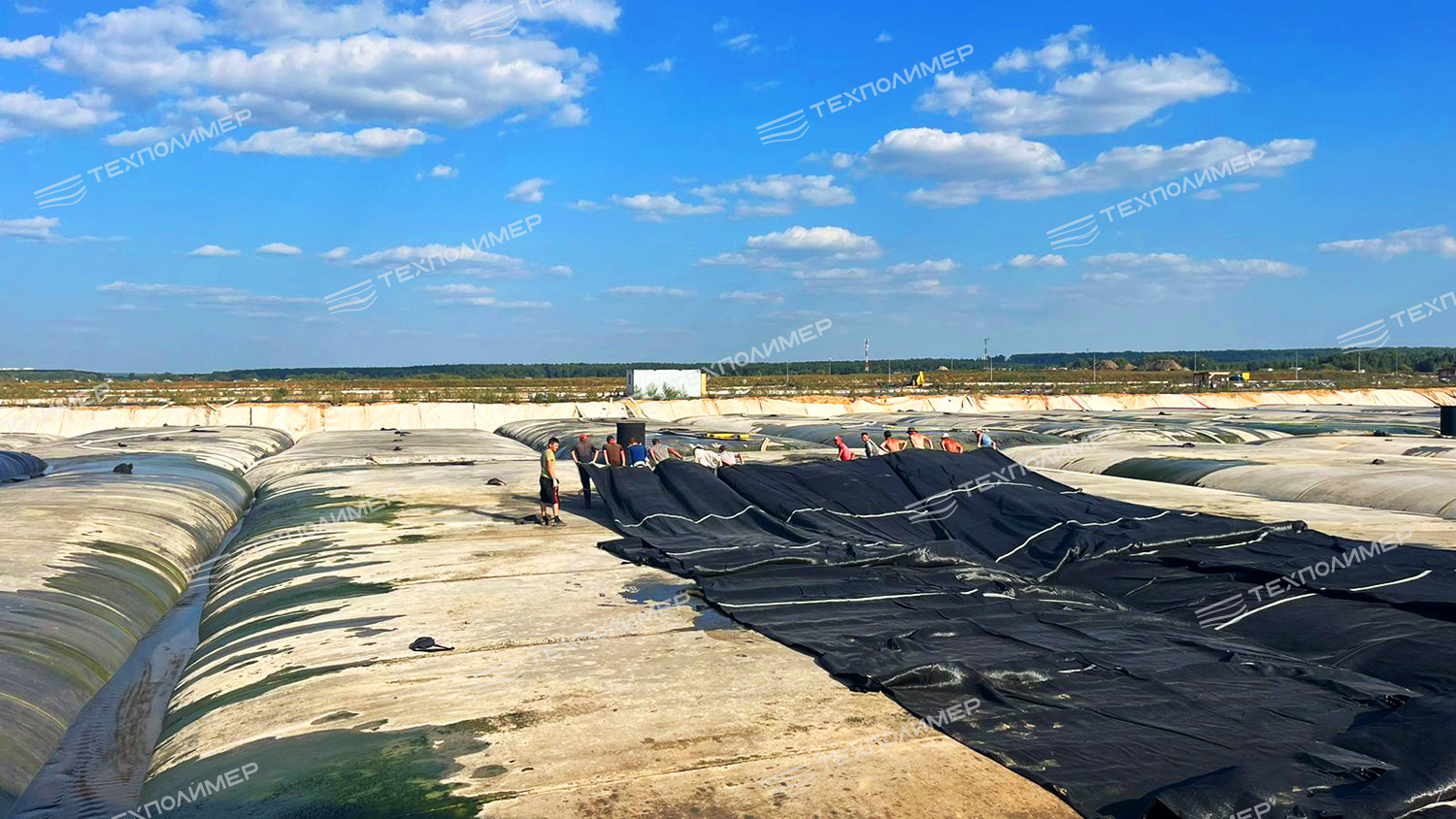 Photo 1
An improper approach to dewatering different types of soil in geotubes can result in consequences such as water erosion of the soil beneath the geotube, damage to the geotextile, unintentional rolling of the geocontainers, formation of soil cones inside the geotube, and sanding and clogging of the geotextile pores.
TEXPOLIMER specialises in soil dewatering in geotubes: from manufacturing high-strength geotextile for sewing geotubes to carrying out construction and installation works on site or supporting the implementation of the project as a whole.
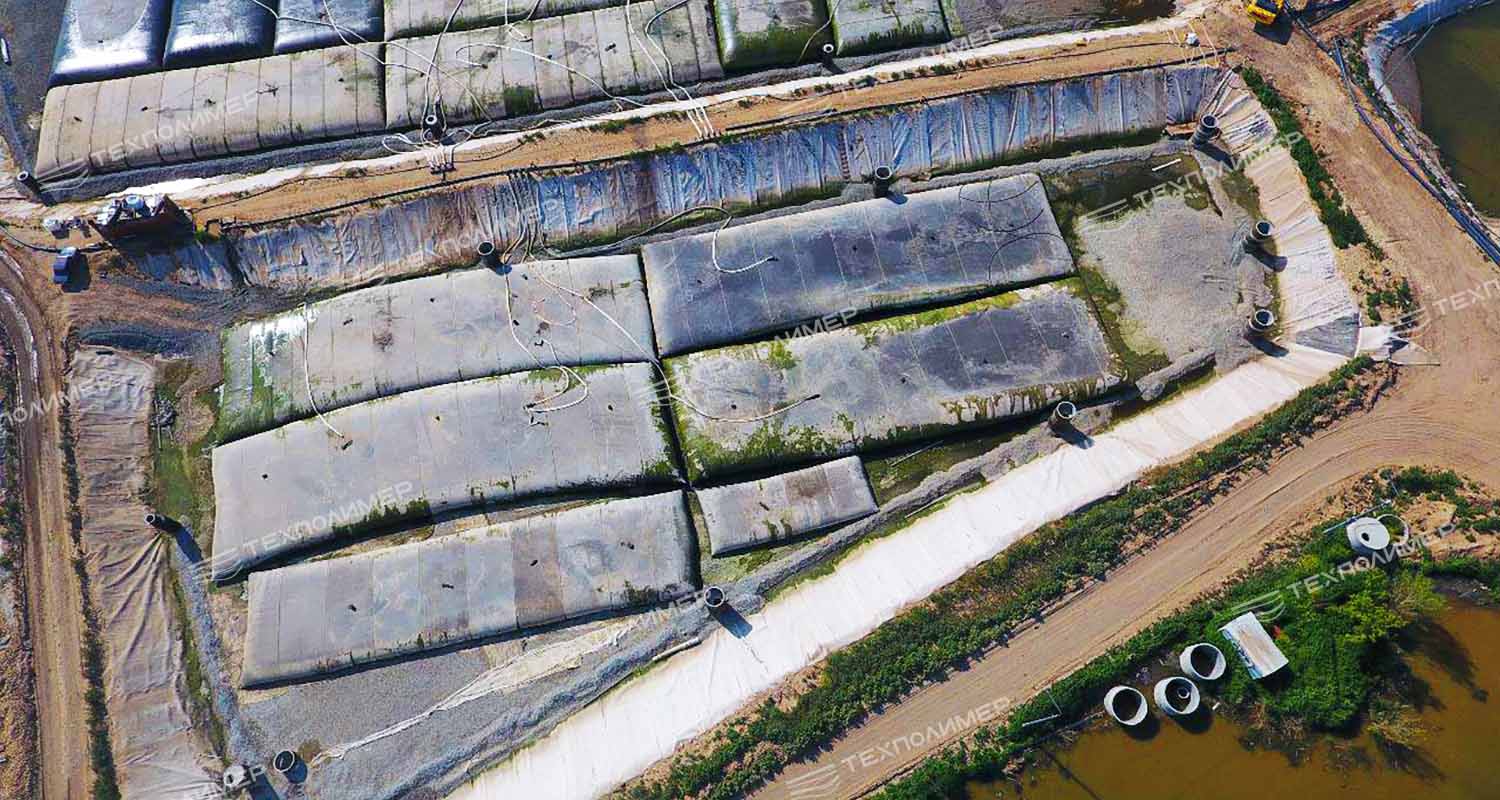 Photo 2
It is recommended to follow simple rules when organising work with geocontainers:
- The area for laying the geotubes must be graded without exceeding the permissible slope, and the foundation must be carefully prepared. This will prevent the geocontainers from rolling unintentionally and being damaged.
- Use of a waterproofing layer made of geomembrane. The waterproofing will protect against soil erosion beneath the geotube when filtrate flows down its wall.
- Geotube layout. Geotubes may be placed in several tiers, which will save substantial storage space (see Photo 1).
- Connection of feed hoses. Geotubes are connected to the slurry pipeline using lay-flat hoses. If the pressure in the pipeline is insufficient, work must be carried out with the gate valve fully open and using one hose, to prevent hose sanding or the formation of soil cones inside the geotube. If the slurry pump cannot create the required pressure even with one hose, small geotubes should be selected.
- Geotube size selection. The size is limited only by the working area. In addition, it is not necessary to use geotubes of the same size (see Photo 2).
- To prevent clogging of the geotextile pores, a flocculant solution must be used. However, coarse sand can be pumped into geotubes without flocculant. TEXPOLIMER specialists recommend selecting different flocculants for different soils and, based on laboratory tests of the soil samples, calculating the optimum solution dosage.
Thanks to the professional experience of TEXPOLIMER specialists, problematic situations at the site can be prevented.