S. A. Putivsky, Director of TEXPOLIMER LLC;
B. V. Trushin, Candidate of Geological and Mineralogical Sciences, Director of Spetsgeoekologiya CJSC;
A. N. Davydyak, Candidate of Technical Sciences, Director of Gidroproekt LLC
Readers may be interested to learn that the authors of this article are the heads of the organisations that will design and subsequently carry out the reclamation of the Kuchino landfill, which has made headlines across the country. The article may be regarded as a kind of business card for their future activities or even a statement of intent.
The issue of reclaiming MSW landfills is becoming increasingly important: landfills where waste has been disposed of for decades are reaching capacity and closing. In the vast majority of cases, waste disposal facilities were established spontaneously in exhausted quarries, various excavations and pits—without regard to environmental protection requirements. In particular, the geological structure, hydrogeological and landscape-geochemical conditions, the prevailing socio-economic situation and the cultural and historical character of the region were not taken into account. Protective engineering measures were not implemented either before the start of operations or during the operation of most landfills.
The largest waste disposal and burial facilities were established near modern megacities. At the time they were created, the main environmental requirements were the absence of major watercourses at the site and sufficient distance from residential areas. Clay soils at the landfill base served as the impermeable barrier. During their long period of operation, they lost their insulating properties under the impact of leachate, resulting in pollutants penetrating into groundwater. All this contributes to the intensive adverse impact of MSW landfills on the environment and, as a result, significant environmental damage has accumulated at virtually every site.
Over time, major megacities—primarily Moscow and the cities of the Moscow Region—developed and expanded rapidly, especially during the residential construction boom of the late 1990s. The expansion of residential areas led to a sharp increase in the population living in the territory and, consequently, to an increase in the amount of waste generated. As a result, Russia has developed a system of interconnected accumulated problems:
- landfills are located dangerously close to places where people live and work and have a significant adverse effect on human health and the environment due to the increase in their area and the growth in MSW volumes, which in some cases exceed the design capacity;
- land resources near major cities are used inefficiently, in most cases with violations of the boundaries of the allocated areas;
- there are no regulatory documents governing the technology for reclaiming landfills and constructing new waste disposal facilities (specialised literature dates back to the late 1980s);
- the lack of regulatory documents prevents comprehensive control over the activities of design, construction and, most importantly, operating organisations at these facilities;
- the acute shortage of modern waste disposal and processing complexes with transport and administrative infrastructure is becoming more severe.
Comprehensive reclamation of waste disposal facilities is a solution to these problems and also makes it possible to create a site for modern waste-processing plants. In our view, reclamation should be understood as a set of measures for the environmental and economic restoration of degraded land.
The interstate standard GOST 17.5.1.02-85 «Environmental protection. Lands. Classification of disturbed lands for reclamation» provides for several areas of land reclamation depending on their subsequent use in the national economy. For the reclamation of MSW landfills, the recreational, environmental protection or sanitary-hygienic reclamation area should be selected.
Biological reclamation by flattening the slopes of the landfill body and sowing grass is not an independent type of reclamation for landfills and cannot be considered separately from the technical stage, which uses special protective systems and measures to minimise the landfill's adverse impact on the environment, soil and groundwater. This is particularly relevant to landfills that have been operated since the 1960s and contain waste belonging not only to hazard classes IV and V. Thus, the priority is the technical neutralisation of hazardous chemical and biochemical processes occurring in the landfill body, including the formation of leachate and biogas.
The main objective in neutralising these processes is to prevent leachate formation, which results from the wetting of waste by atmospheric precipitation or groundwater entering the landfill body. To minimise the entry of new volumes of water into the waste mass, artificial multifunctional impermeable barriers must be installed both on the landfill surface and around its perimeter.
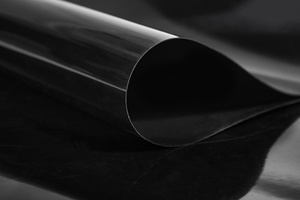
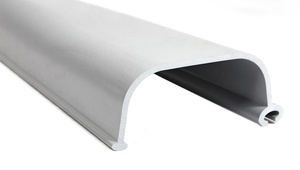
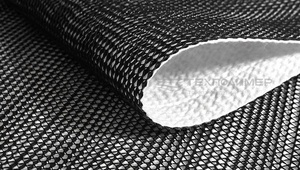
To protect against atmospheric precipitation, external waterproofing of the landfill body is installed—a sealed barrier is created over the waste. For groundwater, an impermeable sheet-pile wall is installed, embedded into the aquiclude. The composition of geosynthetic waterproofing systems and the installation technology for «Geoshpunt» are always tailored to the specific objectives of each site. The barrier may include additional drainage or protective-reinforcing layers; the system may be two or three layers thick; and the «Geoshpunt» made of PVC profile may have different characteristics. The primary objective remains to prevent moisture from reaching the landfill body and thereby stop the formation of new leachate. At the same time, during technical reclamation, after the slopes have been flattened, a drainage system is usually installed around the perimeter of the landfill body to collect and remove residual leachate from the landfill.
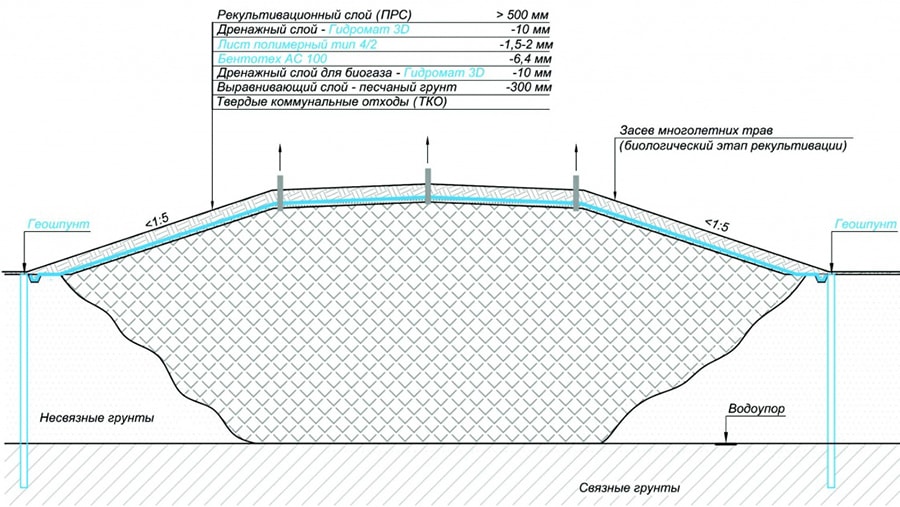
After the sealed barrier and drainage system for collecting residual leachate have been installed, the required soil layers, including a fertile topsoil layer, are placed over the impermeable barrier. Local treatment facilities, often mobile, are provided for leachate treatment, and a drainage system is installed to collect and convey biogas to a flaring unit, either with or without energy recovery.
An important part of reclamation is the construction of slopes in accordance with regulatory gradients and the designated site boundaries. The actual slope angle at closed landfills reaches 40–45 or more, which in some cases results in collapses, landslides and similar incidents. For example, at the Salaryevo landfill, following prolonged rainfall in 2006, approximately 700 thousand tonnes of waste slid down.
Flattening slopes and installing berms requires the removal and relocation of significant volumes of waste, which has a substantial environmental impact. Another approach to creating a stable landfill body is to reinforce the slopes with geosynthetic materials and grids, and to terrace them, with retaining walls and sheet-pile structures installed around the MSW landfill perimeter.
Considerable experience has been accumulated in addressing technical reclamation issues. Work is being carried out as part of the expert council for the reclamation of one of the Russian Federation's most high-profile landfills—the Kuchino landfill in the Balashikha urban district—using modern technologies and scientific knowledge.
The use of modern geosynthetic material systems makes it possible to seal and isolate a waste burial facility and minimise the landfill's impact on the natural environment, bringing it virtually to zero.
Another important aspect is the change in the aesthetic perception of the reclaimed facility. Once the technical and biological reclamation measures have been completed and the landfill body has stabilised, the reclaimed territory can also be used for recreational, environmental protection or sanitary-hygienic purposes.