On 8 September 2022, Russian President Vladimir Putin launched traffic on the first launch complex of the zero stage of the M-12 federal motorway “Moscow – Nizhny Novgorod – Kazan” via videoconference - a bypass of the Moscow Region cities of Balashikha and Noginsk was built to provide access to the M-12 motorway. The high-speed motorway bypassing Balashikha and Noginsk is extremely important, as it redistributes traffic flows and relieves the M-7 “Volga” motorway on approaches to Moscow. All sections of the high-speed toll motorway are scheduled to open by 2024.
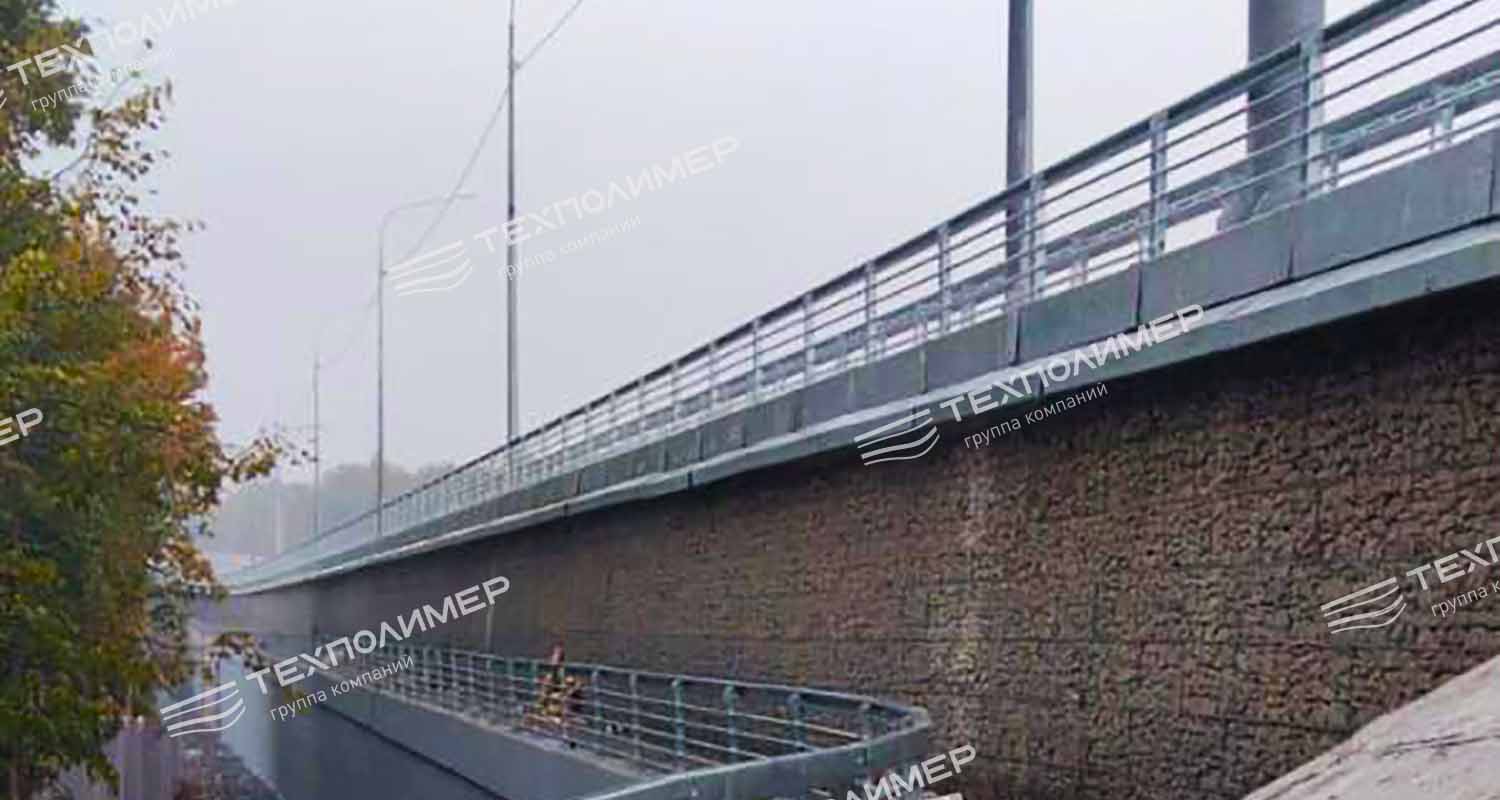
On the M-12 motorway section from the interchange with the A-113 road to the interchange with the A-108 road, the project provided for the construction of gabion retaining walls and flow-directing structures on the approaches to the bridge over the Klyazma River.
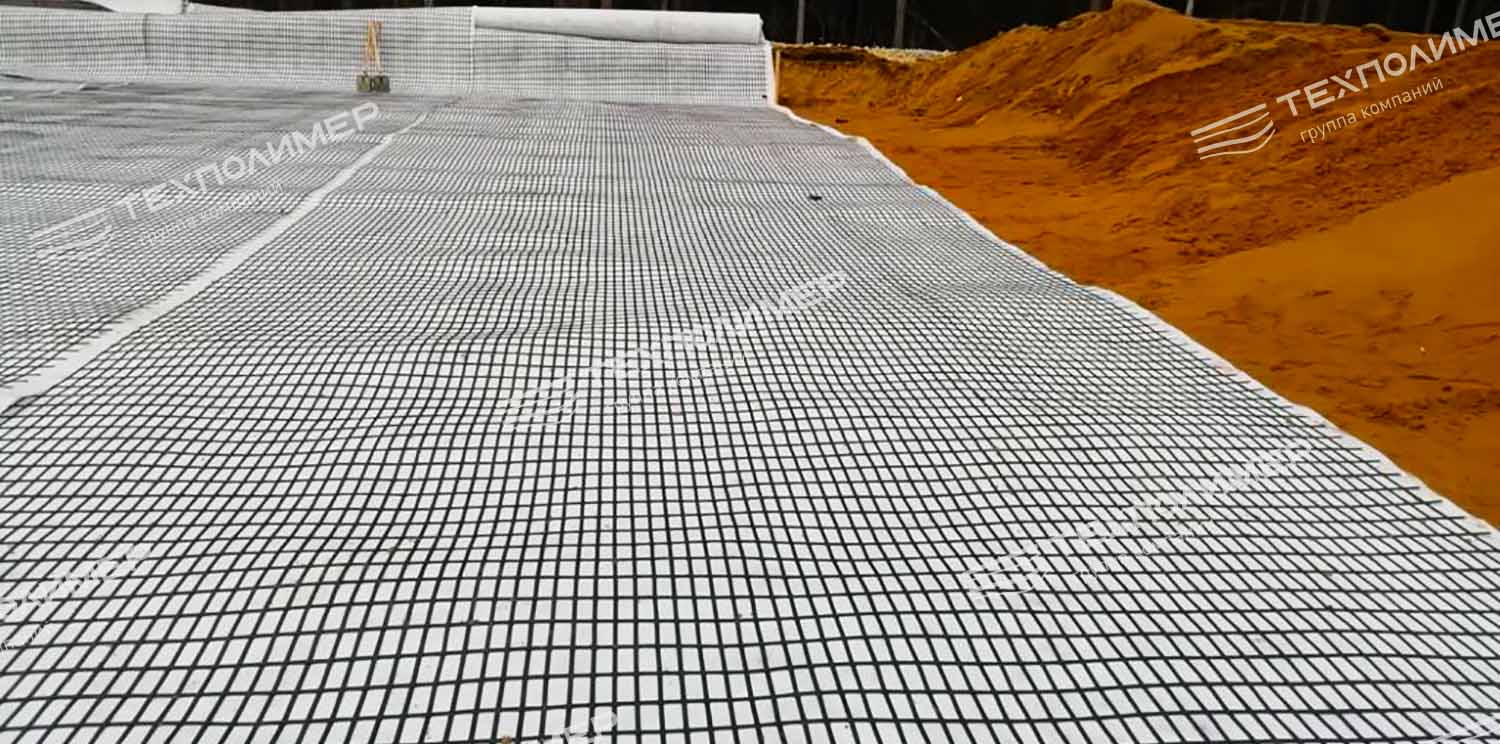
On the approaches to the bridge over the Klyazma River, the retaining walls made of gabion structures were assembled using an innovative technology and a large quantity of geosynthetic materials manufactured by “TEXPOLIMER”. Geosynthetics make it possible to reinforce both the foundation and the body of the road embankment. The construction of a mechanically stabilised earth retaining wall from gabion structures, with horizontal layers of reinforcing geosynthetic materials, makes it possible to compensate for the horizontal earth pressure acting on the retaining wall facing and reduce embankment settlement at pavement level. The use of mechanically stabilised earth systems makes it possible to reduce the quantities of aggregate materials and earthworks, as well as the area of land occupied by the road, which is particularly relevant in the regions of central Russia.
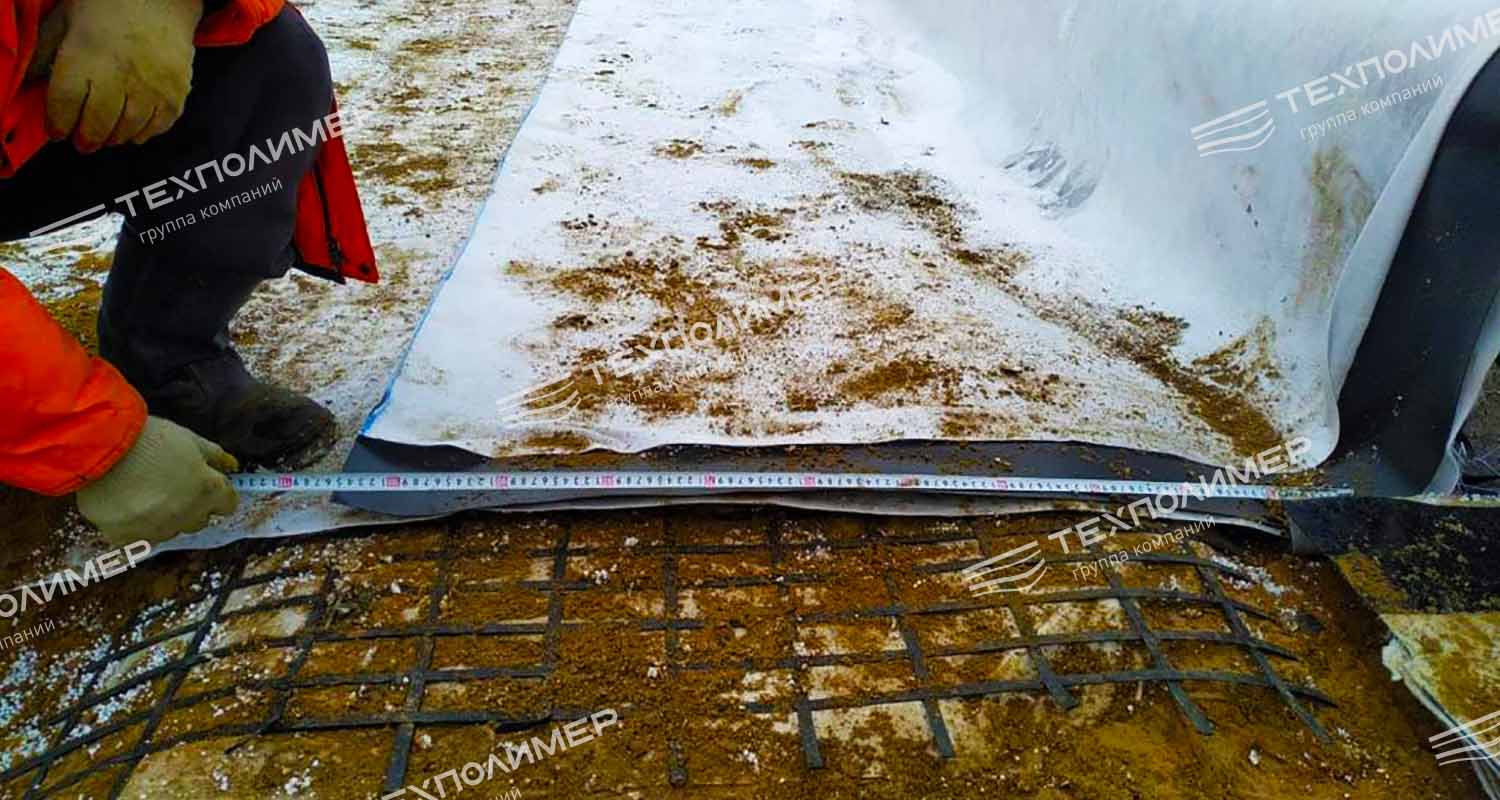
The facing of the mechanically stabilised earth retaining wall (MSE wall) was made of 0.3 m-high mattress gabions and 0.5 m-high box gabions in accordance with GOST 52132-2003. The gabions are connected to one another with galvanised steel wire. In the retaining wall structures, lateral embankment pressure is relieved using half-wraps made of RD-100/M250-50*50 geogrid (STO 30478650-001-2012), a biaxially oriented road geogrid reinforced with carbon spring steel and featuring a protective and drainage coating of nonwoven geotextile with a density of 250 g/sq. m. The facing of the MSE wall, constructed from gabion structures, is connected to the half-wraps using anchor panels made of RD-100-50*50 geogrid. This geogrid is characterised by low deformability and high long-term strength, ensuring performance, integrity and geometric stability throughout its service life.
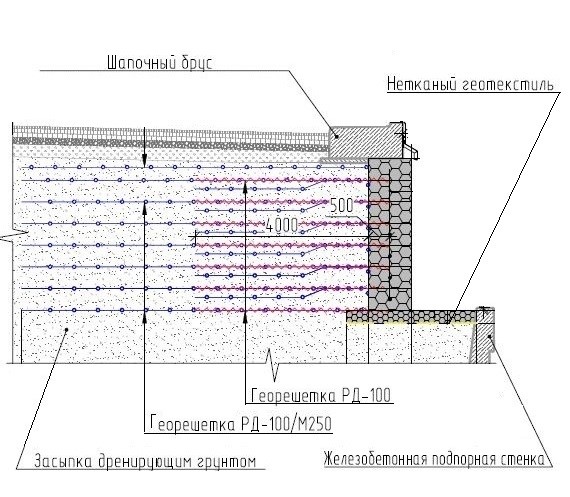
The foundation surface on which the mechanically stabilised earth retaining wall was constructed was prepared in advance: a waterproofing layer of type 5/2 geomembrane (TU 2246-001-56910145-2014) – a geomembrane bonded to geotextile on both sides – was laid on a 10 cm-thick sand foundation. The geomembrane joints were welded using specialised welding equipment. The geomembrane was used to prevent waterlogging of the foundation soils of the mechanically stabilised earth retaining wall and the lower part of the road embankment. Drainage systems comprising perforated corrugated pipes and nonwoven geotextile were used for water removal and drainage. The crushed-stone foundation of the retaining walls and the foundation of the mattress gabions in the upper tier are covered with nonwoven geotextile with a density of 250 g/sq. m.
By 2024, the M-12 Moscow–Kazan motorway will connect approximately 20 regional centres and pass through the Moscow, Vladimir and Nizhny Novgorod regions, and the Republics of Chuvashia and Tatarstan. Approximately 60% of Russia’s population, 70% of its automotive industry, 50% of its aerospace and defence industries, 40% of its metallurgical industry, 30% of its mechanical engineering and instrumentation industries, and 20% of its food-processing and agricultural enterprises will be located within its area of influence.
Photos from the site: