Every spring in our country, the failure of flood protection dams results in the flooding of vast areas occupied by settlements and agricultural land, transport and industrial infrastructure. The period from the initial failure of a hydraulic engineering structure to the flooding of the protected areas is often very short. Preventing such scenarios requires prompt action.
The TEXPOLIMER Engineering Centre has developed effective technical solutions for the emergency construction of rapidly deployable dams using geosynthetics. These structures provide waterproofing for the protective hydraulic engineering structure, protect dam slopes from erosion, and reduce the volume of earthworks.
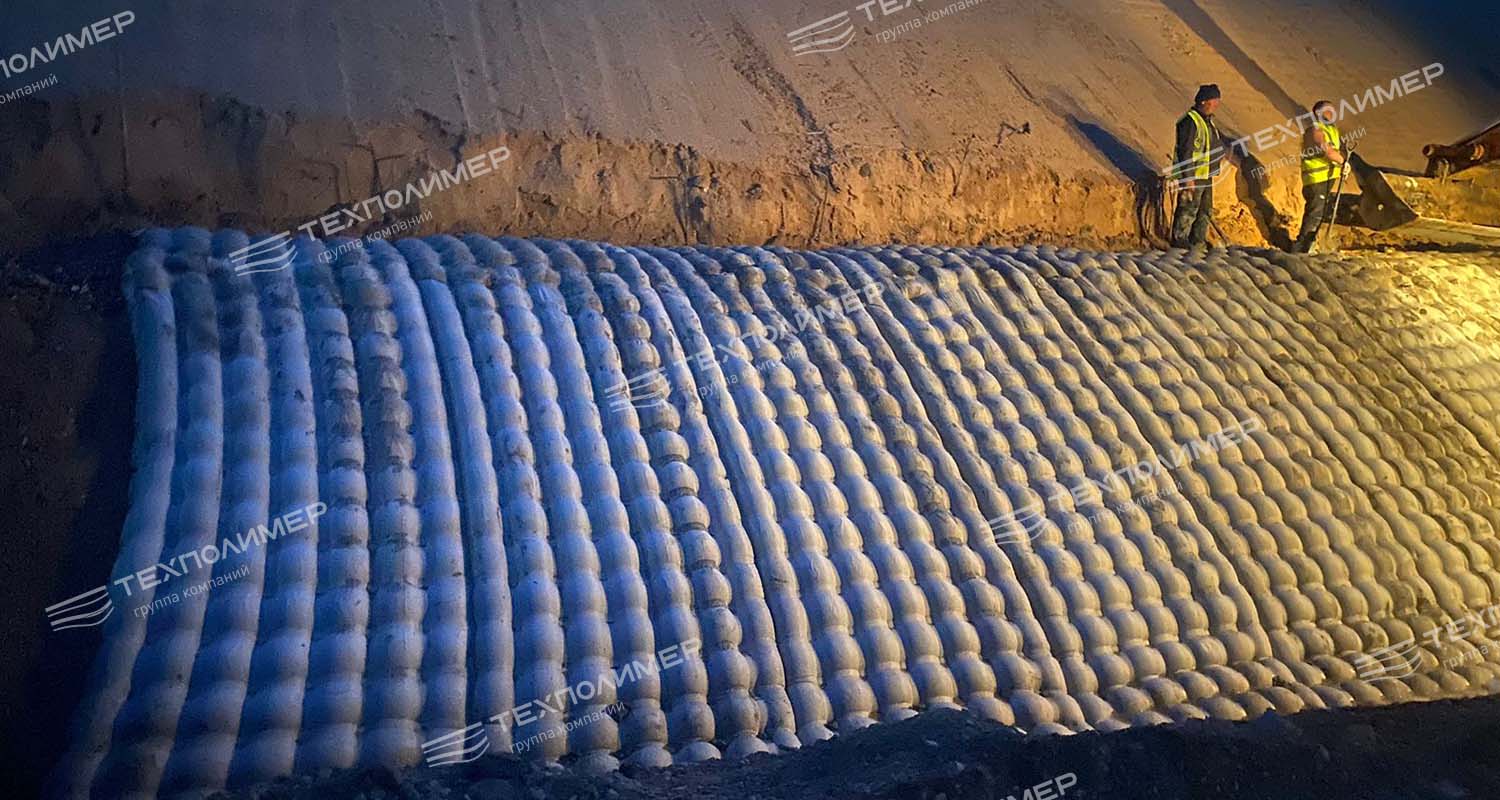
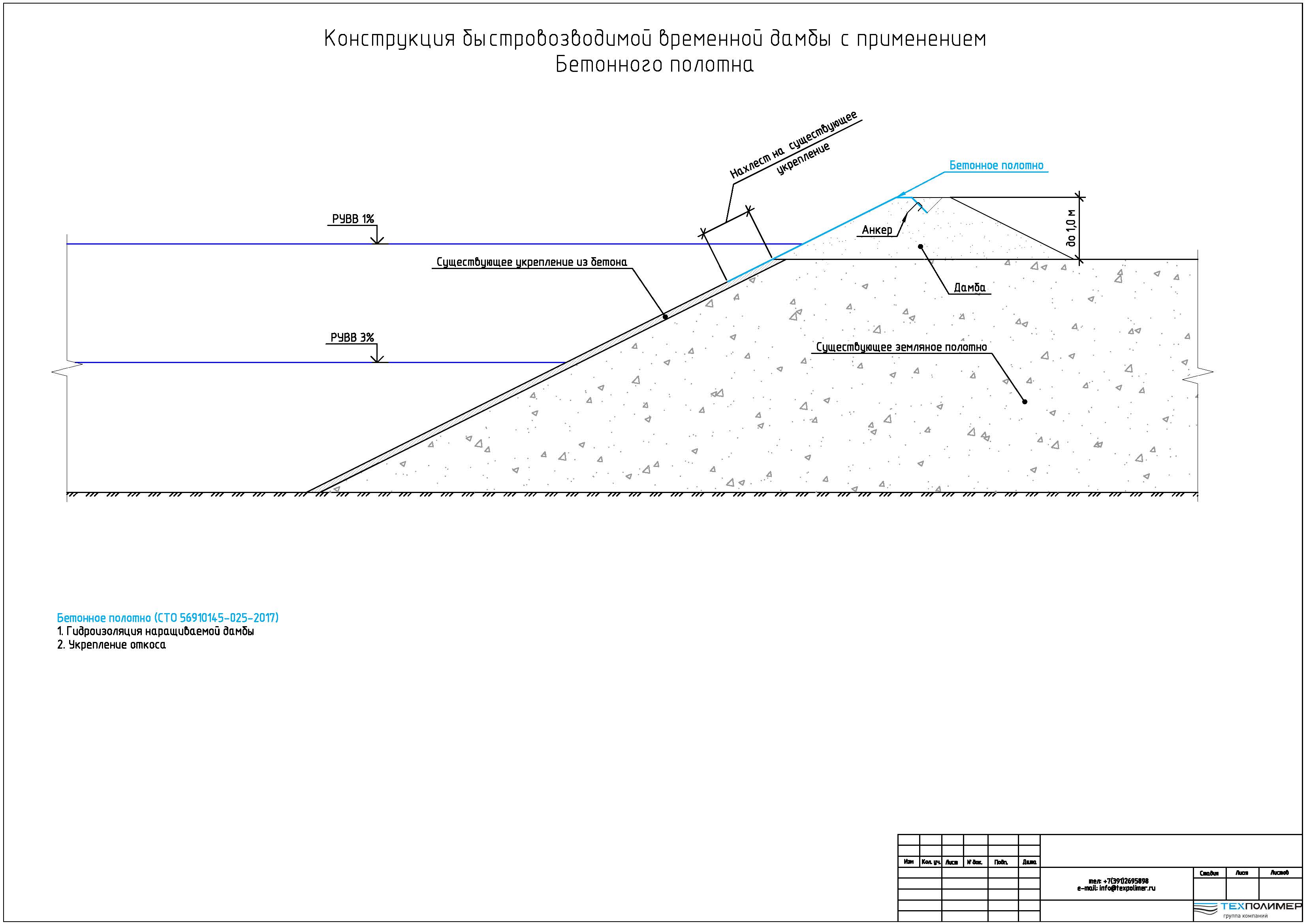
The design of a rapidly deployable temporary dam using concrete canvas (Fig. 1) is used when the dam height needs to be promptly increased by up to 1 metre. The additional fill consists of inert materials, with the side facing the flooded slope lined with concrete canvas STO 56910145-025-2017, secured in an anchor trench with a metal anchor and overlapped with the existing reinforcement.
- the material allows concrete structures to be created without mixing equipment
- the flexibility of the concrete canvas allows steep curves in the structure to be formed easily
Fig. 1:
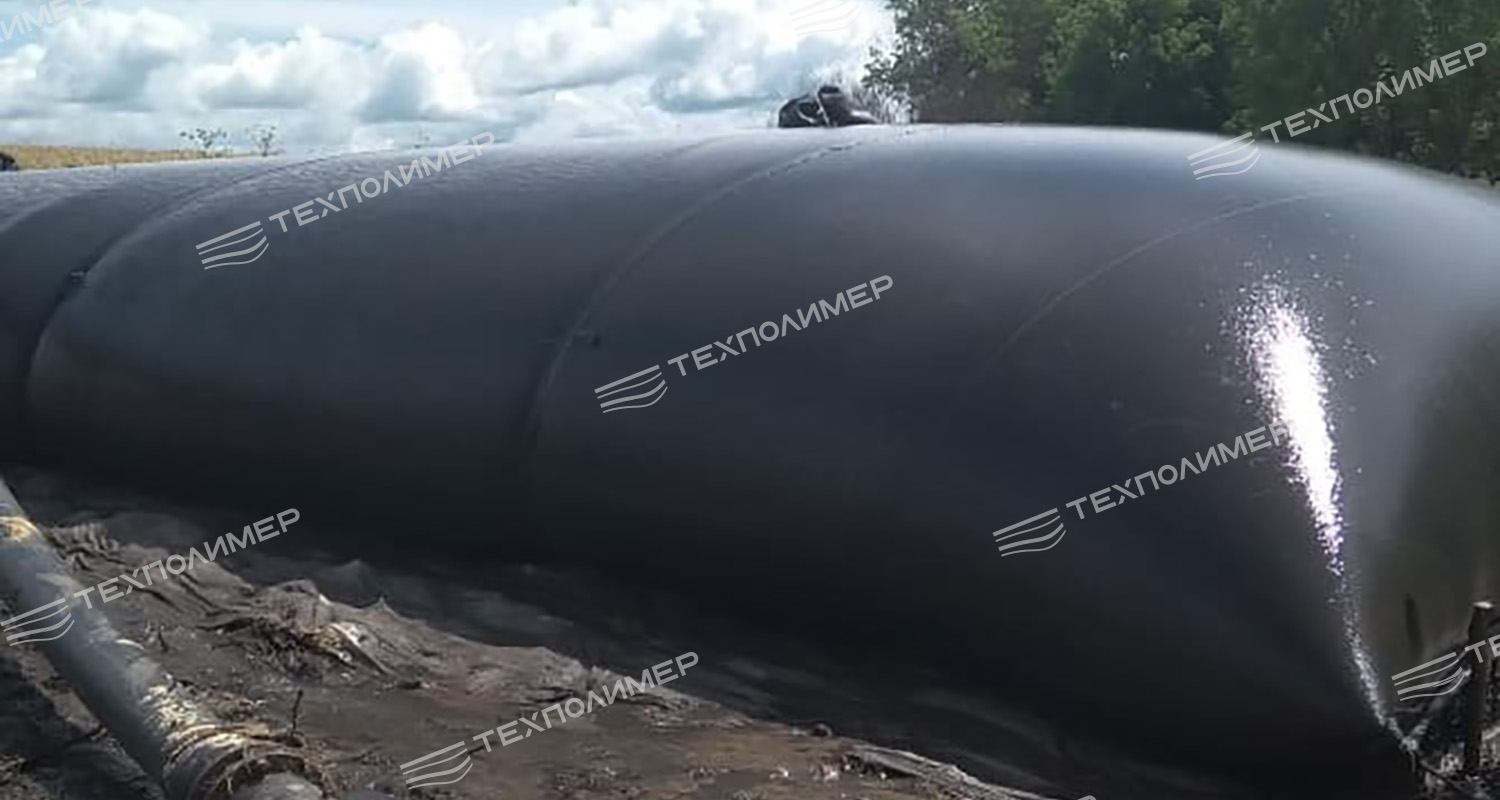
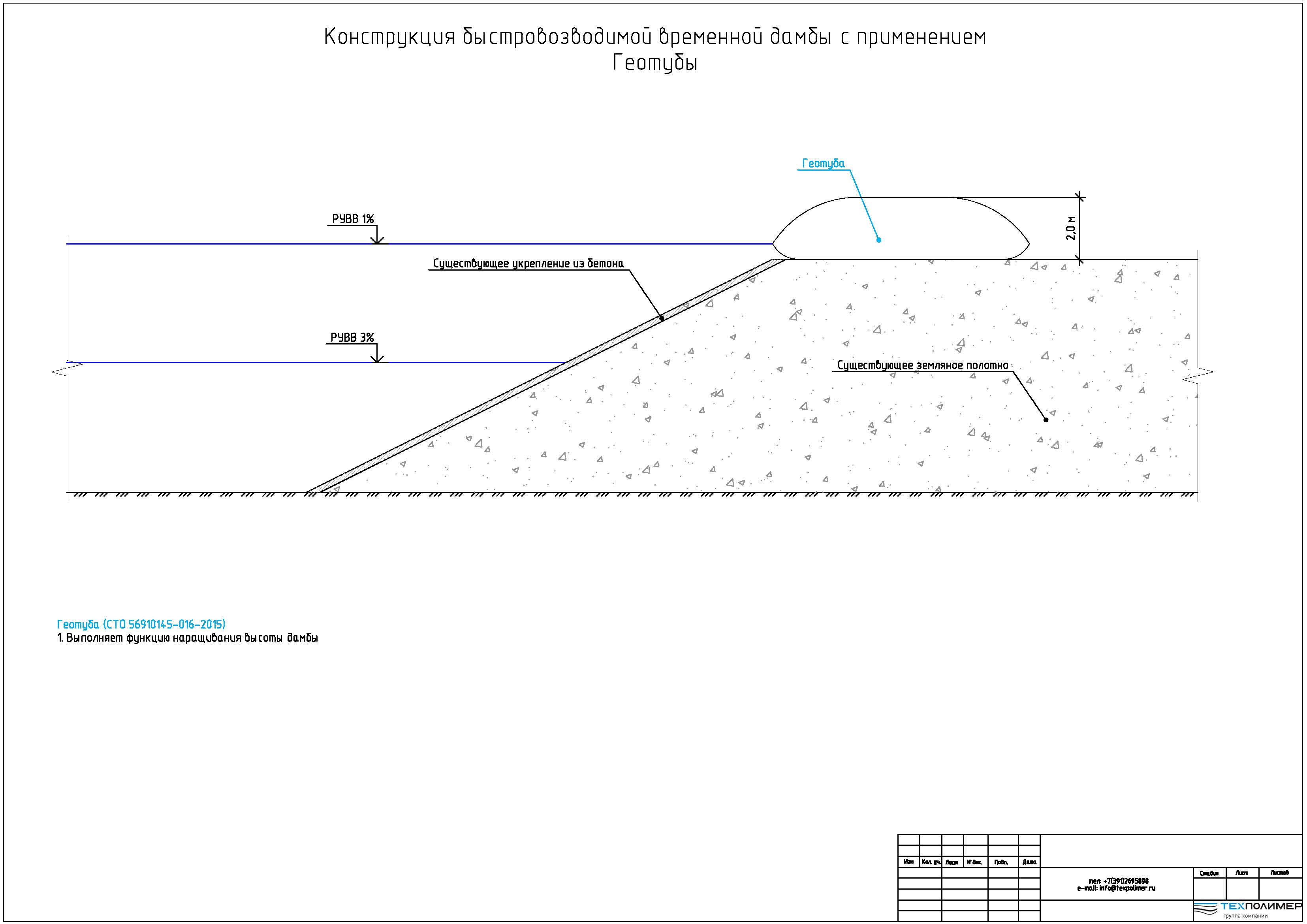
The design of a rapidly deployable temporary dam using a geotube (Fig. 2) is used when the dam height needs to be promptly increased by up to 2 metres. The geotube STO 56910145-016-2015 is filled with soil taken from flooded areas and suspended in water, and has a low filtration coefficient when filled.
Fig. 2:
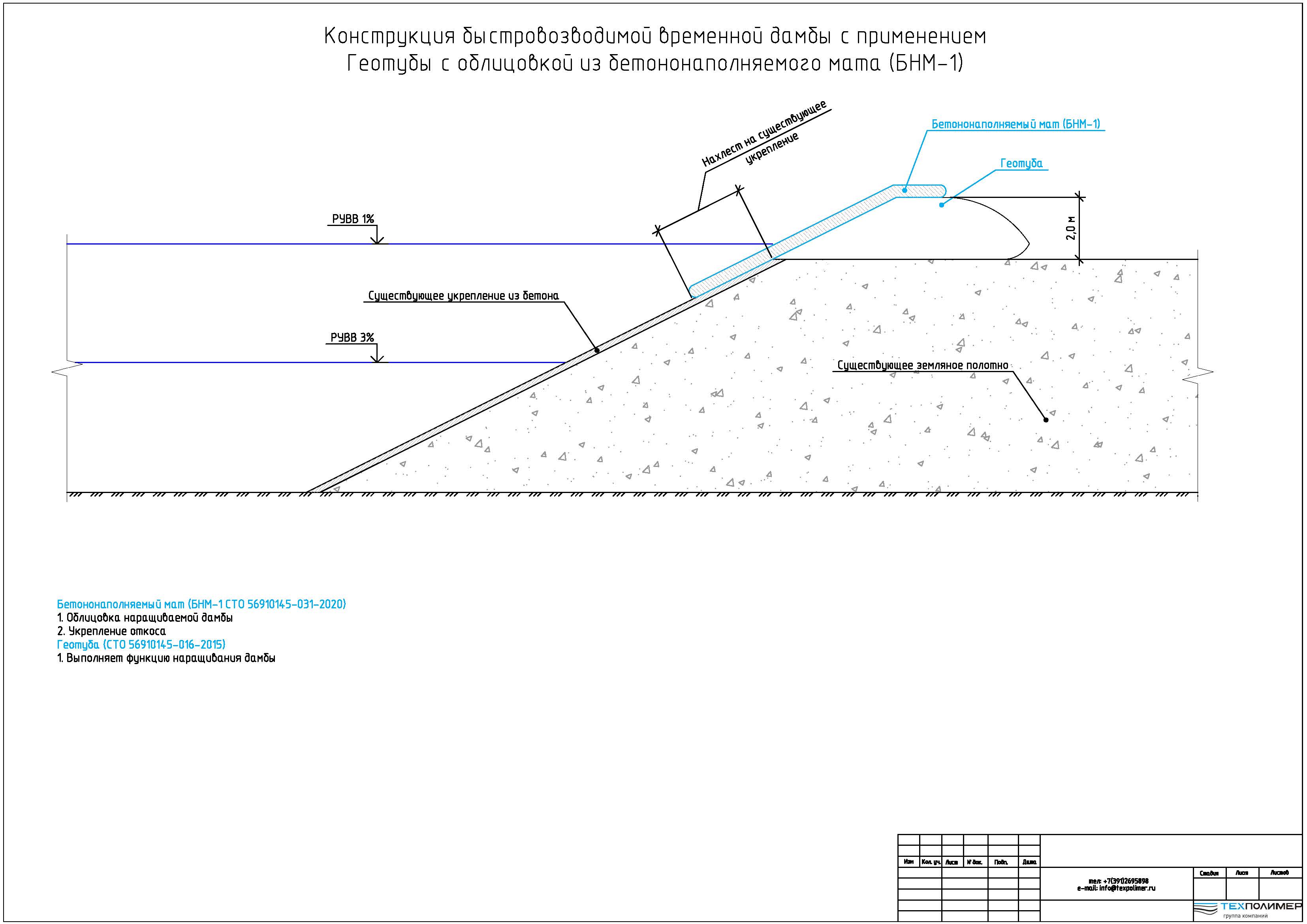
The design of a rapidly deployable temporary dam using a geotube lined with a concrete-filled mat (Fig. 3) is used to reduce filtration through the geotube and lessen wave impact on the geotube.
Concrete-filled mats (БНМ-1) STO 56910145-031-2020 are filled with concrete or cement concrete.
This solution offers several advantages:
- relatively low weight and easy transportation of materials to hard-to-reach areas
- installation below the waterline without prior dewatering
Fig. 3:
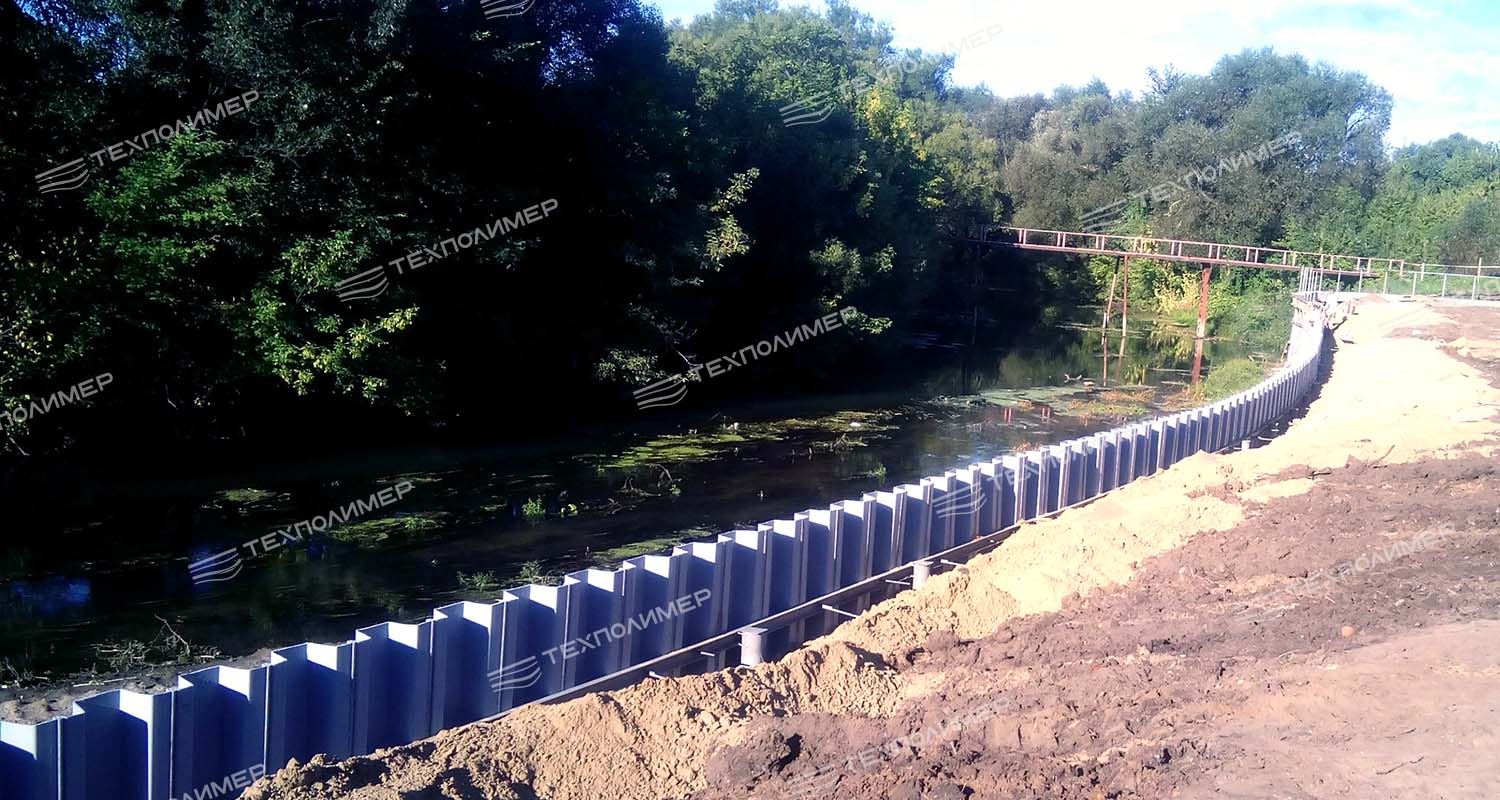
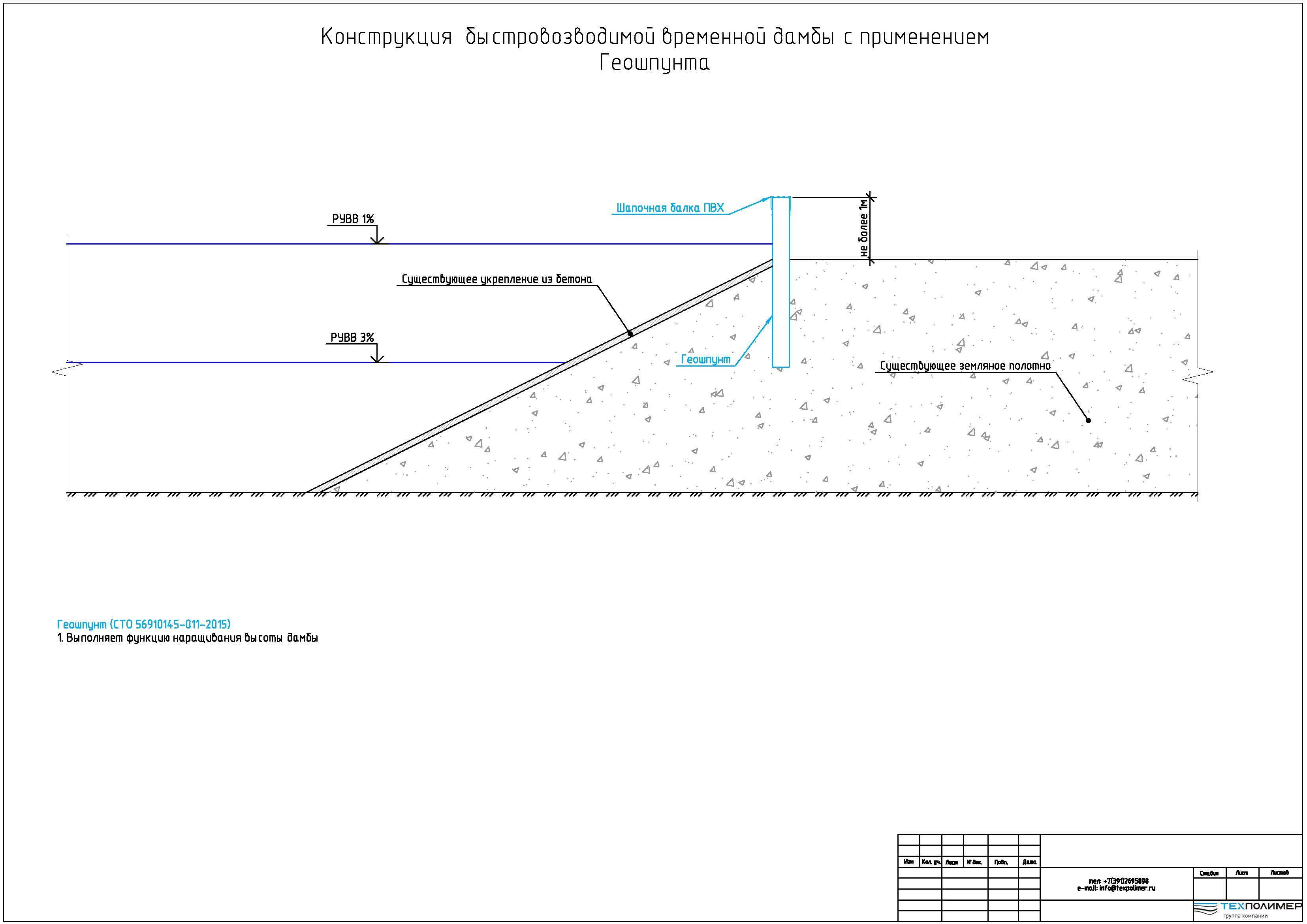
The design of a rapidly deployable temporary dam using geoshoring is used when the dam height needs to be promptly increased by up to 1 metre. The structure is made of freestanding geoshoring STO 56910145-011-2015.
The use of geoshoring reduces material consumption by decreasing the volume of earthworks, including the placement and compaction of a clay seepage-control screen.
Fig. 4:
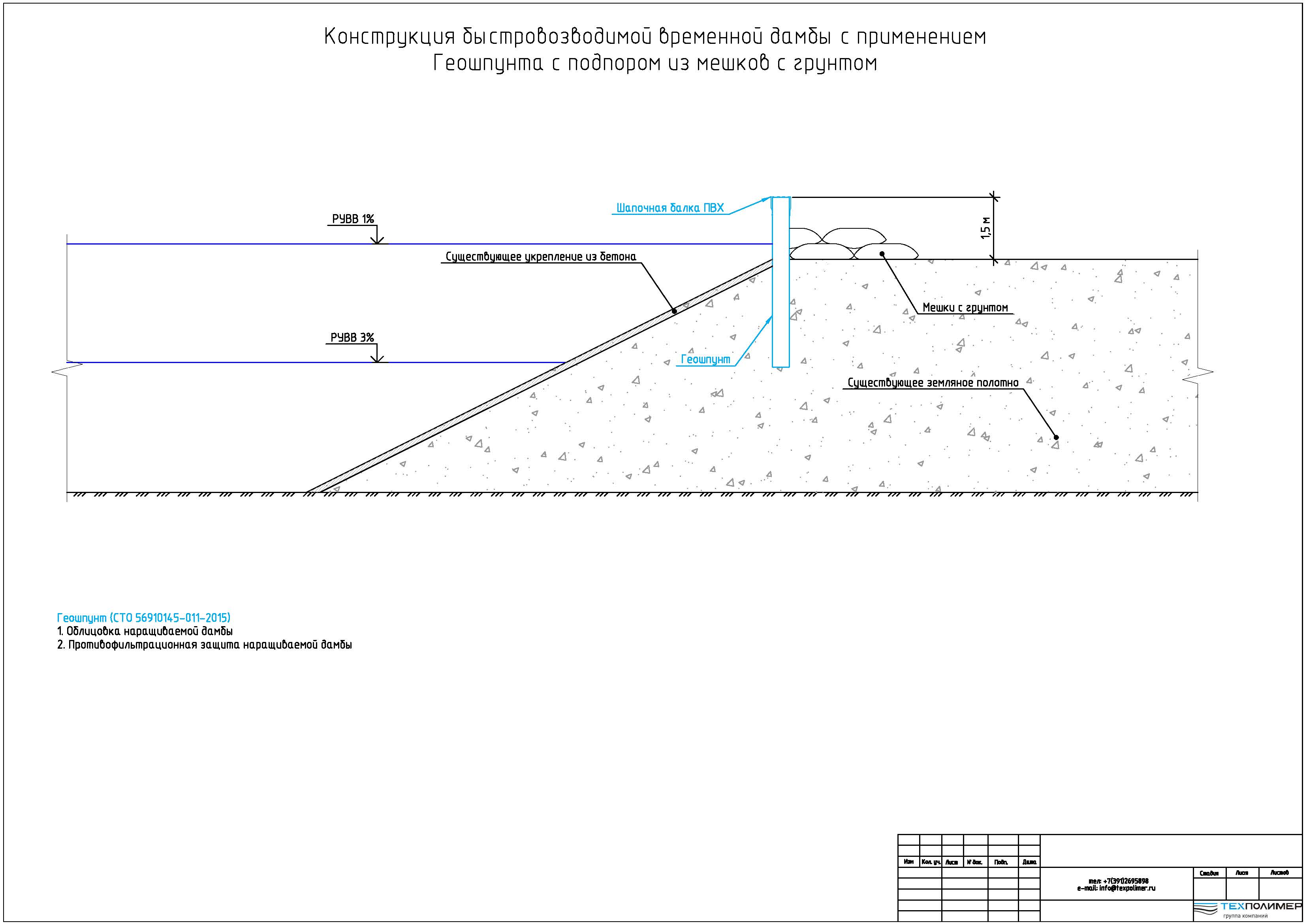
The design of a rapidly deployable temporary dam using geoshoring with support from soil-filled bags (Fig. 5) is used when the dam height needs to be promptly increased by up to 1.5 metres. The structure is made of geoshoring, reinforced on its rear side with soil-filled bags.
Fig. 5:
To prevent harm to people and adjacent areas caused by dam failures, modern methods of engineering protection for hydraulic engineering structures must be used. These methods help to emergency-reinforce or raise flood protection structures while preventing water filtration through the dam body and, consequently, its failure.