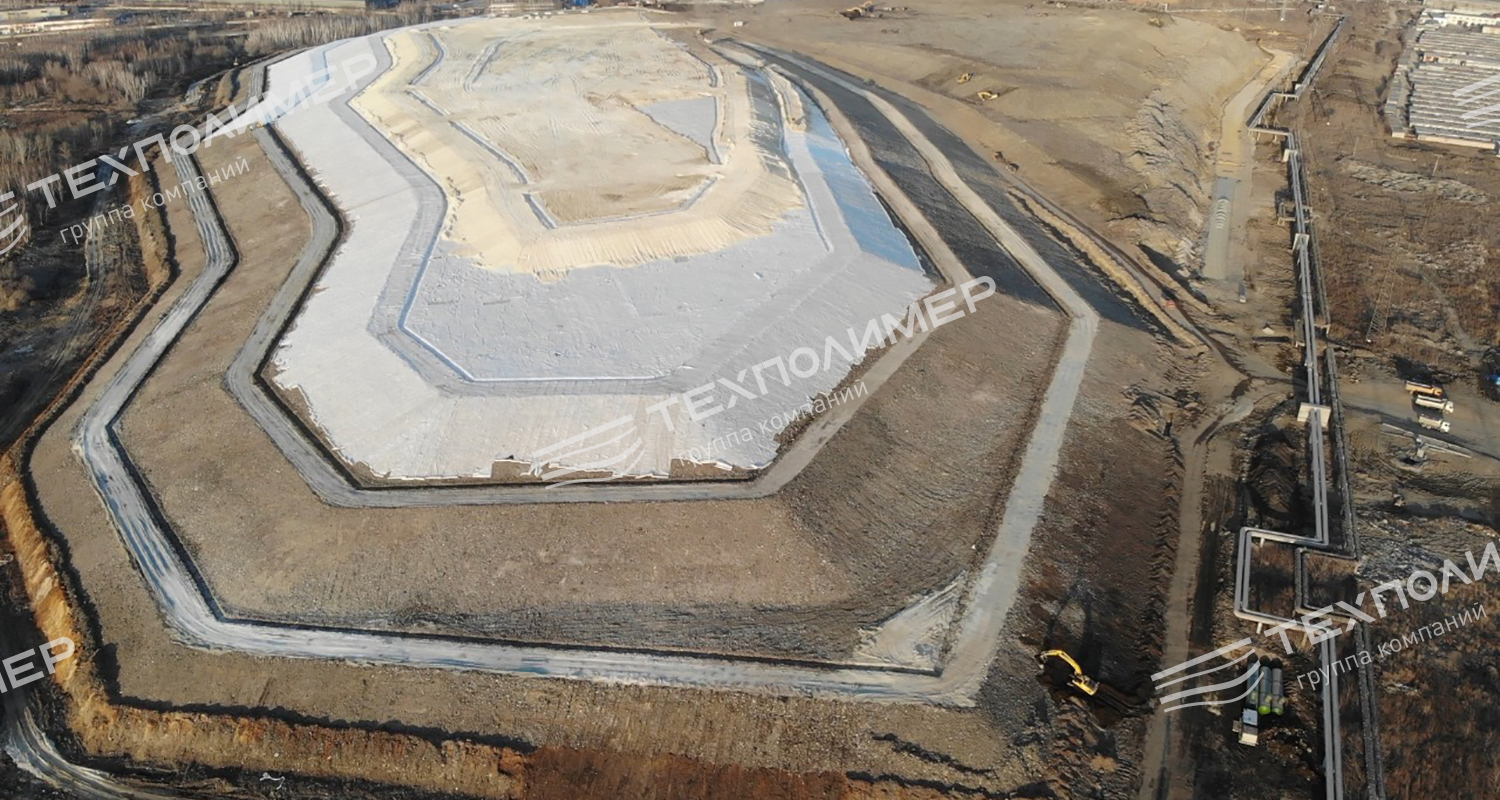
The Chelyabinsk City Landfill is more than 70 years old — during this time, 17.5 million cubic metres of waste have accumulated there, including not only municipal and construction waste, but also industrial waste. The site was officially closed in September 2018, and its remediation began during the same period. The remediation covers an area of 55 hectares, with a maximum height of 40 metres. It is the largest municipal solid waste facility in the country.
At present, remediation of the Chelyabinsk City Landfill is at the technical stage, involving the neutralisation of hazardous chemical processes occurring within the landfill body and the prevention of leachate formation. The remediation is being carried out using the «TEXPOLIMER» system — an effective and safe solution for the containment of waste disposal sites.
The main tasks successfully addressed by the system are:
- prevention of landfill leachate formation
- reduction of biogas generation
- protection of groundwater from contamination
- reduction of pollutant emissions into the atmosphere
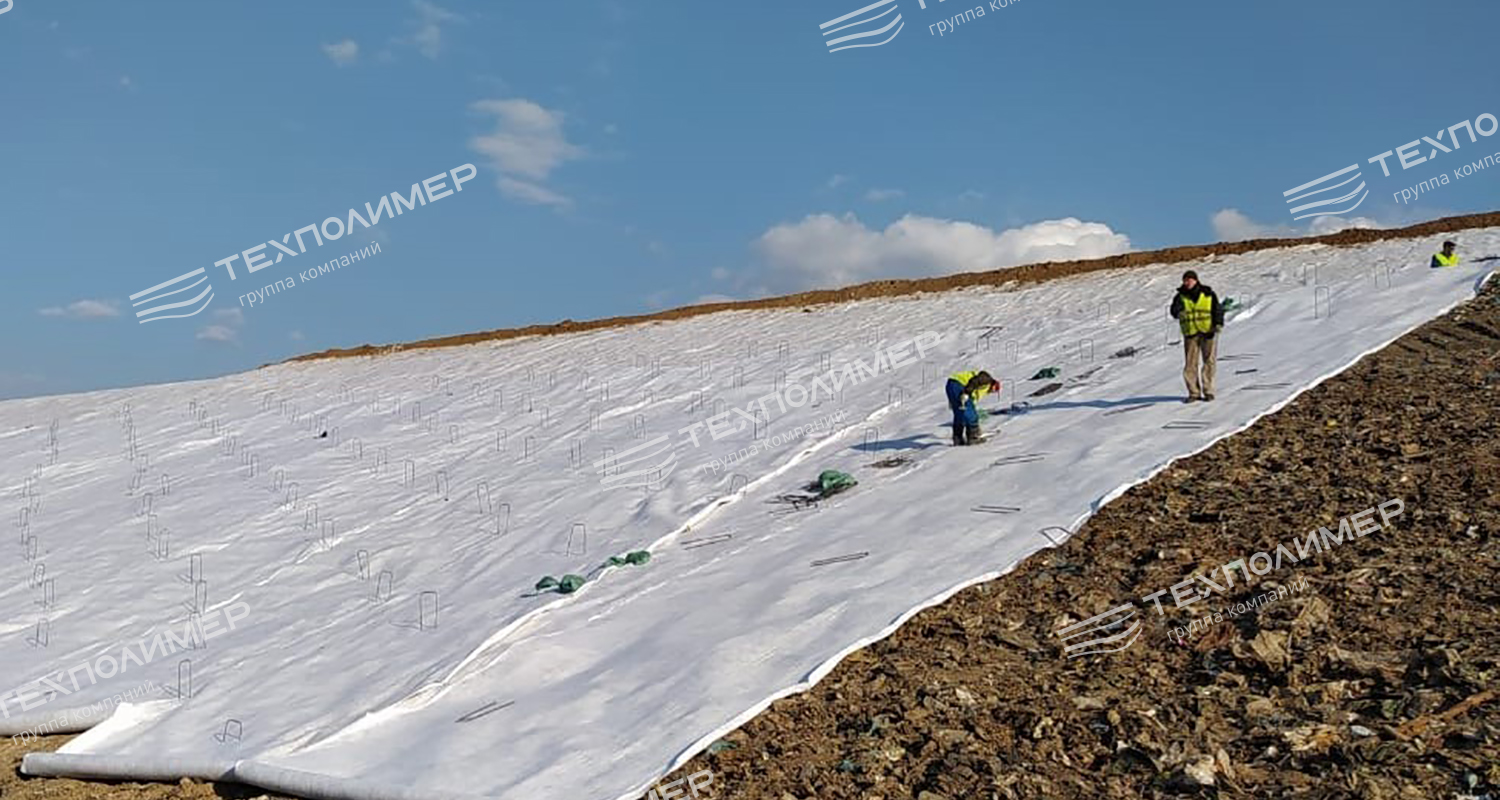
The clear results achieved with the «TEXPOLIMER» remediation system are made possible by the use of high-quality geocomposite materials. As of the end of April 2020, 281 450 m² of «TEXPOLIMER» Hydromat had been installed as part of the construction of the landfill’s protective anti-filtration cover.
At the same time, construction began on a reinforced-soil retaining wall designed to strengthen the landfill slopes and prevent erosion and landslide processes caused by precipitation and melting snow; 2 500 m² of «Stabigrunt» geotextile fabric and 16 508 m² of RD/M Geogrid were installed for its construction. These figures will increase by 2021, and additional materials will be added to the list: geomembrane, Bentotech and geospund.
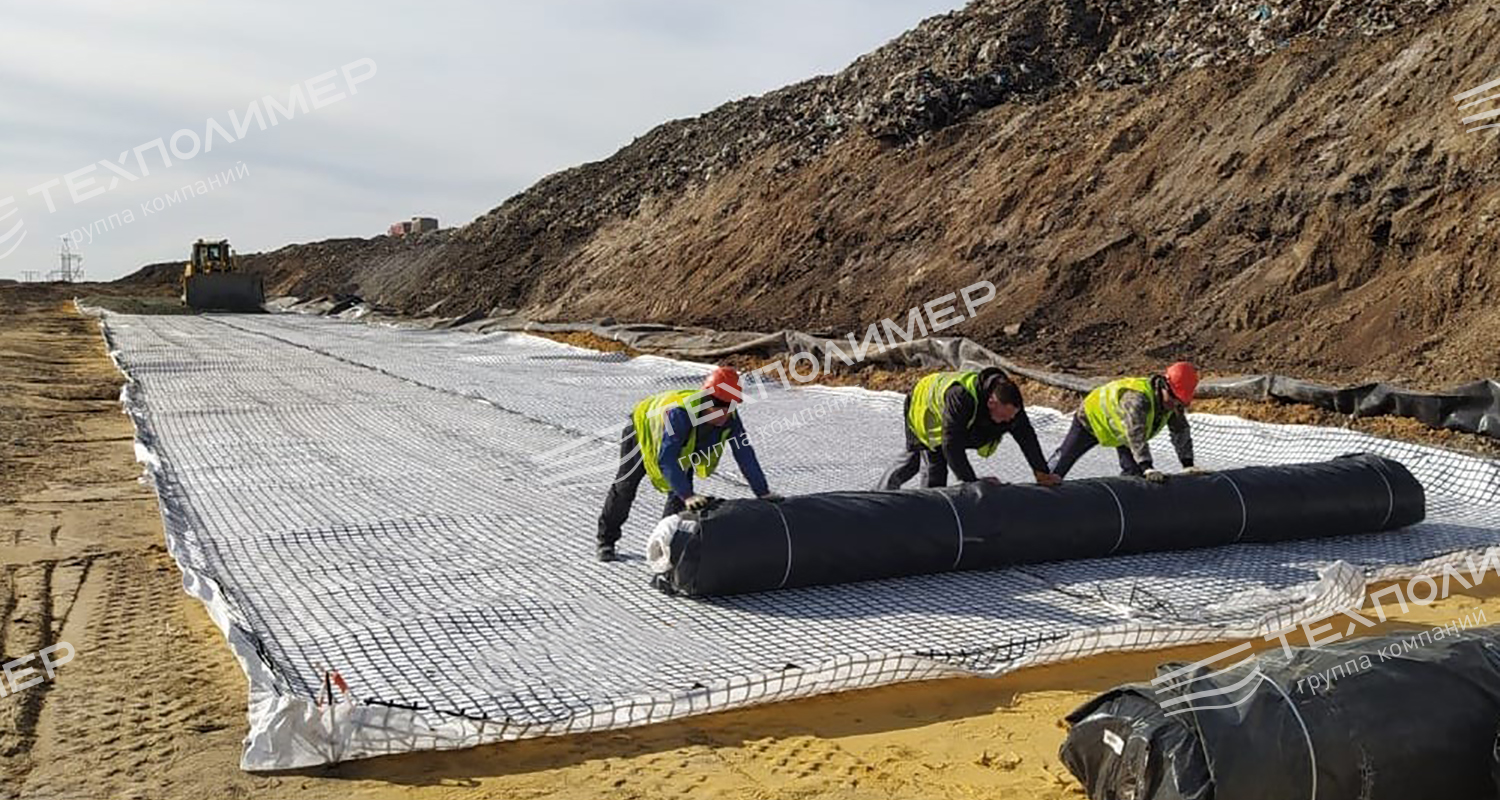
In addition, TEXPOLIMER Group supplies reinforced RD/M Geogrid to the remediation site for the construction of access roads. RD/M Geogrid increases the maximum permissible load on the road base, allowing machinery of various sizes to move conveniently and safely around the landfill without compromising access. As of the end of April 2020, 31 580 m² of the material had been installed.
During construction of the leachate collection prism, 14 400 m² of Geotextile had been installed to prevent leachate from mixing with soil and waste particles from the landfill and entering the prism, as well as 5 263 m² of Geomembrane to prevent liquid from leaking beyond its boundaries.
The technical stage is scheduled for completion in 2021. Once it is complete, the biological stage will begin — the soil will be seeded with grass. It is possible that the landfill site will become a public space in the future.
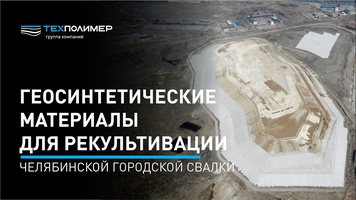
The scope of completed works can be viewed in our video.