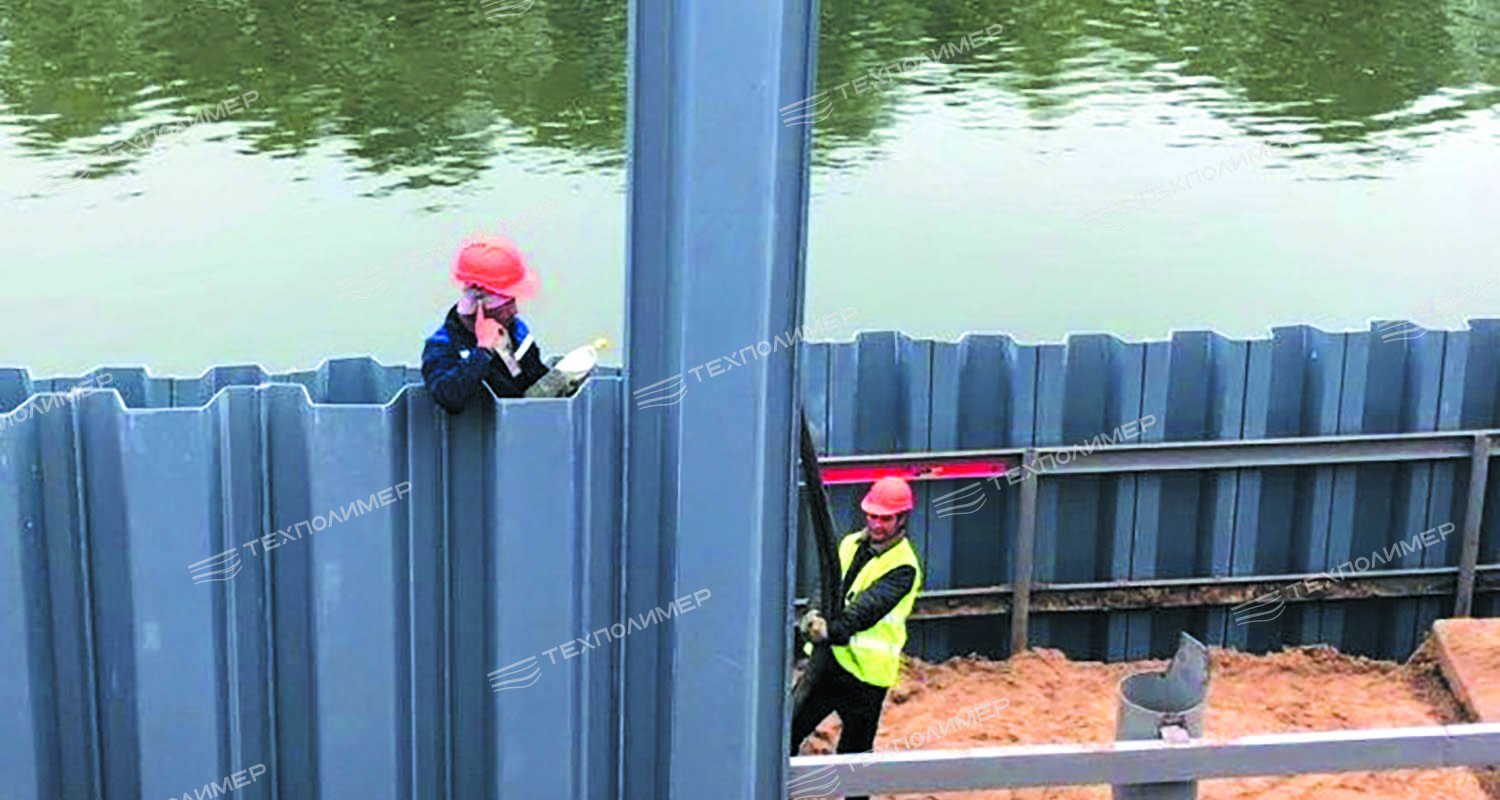
As of 19 April, several regions of the Russian Federation have declared a state of emergency due to flooding. As is known, flood-control dams in Orsk, Orenburg and other populated areas are unable to withstand the “high water”.
The typical design of such dams consists of embankments made of clay, loam and sandy loam soils. The main causes of their failure are the insufficient suffosion resistance of soils in earth structures, their porosity, and non-compliance with regulatory requirements during design and construction.
Specialists from the TEXPOLIMER engineering centre have identified the most effective technical solutions for constructing, strengthening and raising flood-control dams using modern geosynthetic materials. Unlike typical earth structures, the proposed engineering protection options can ensure the static stability of hydraulic structures, watertightness, filtration resistance and safe, trouble-free operation of water-retaining structures under the design loads of the primary and special combinations.
All options for constructing water-retaining structures include access along the dam crest, which will make it possible to:
- carry out routine and scheduled maintenance and repairs of hydraulic structures;
- include hydraulic structures in the road network.
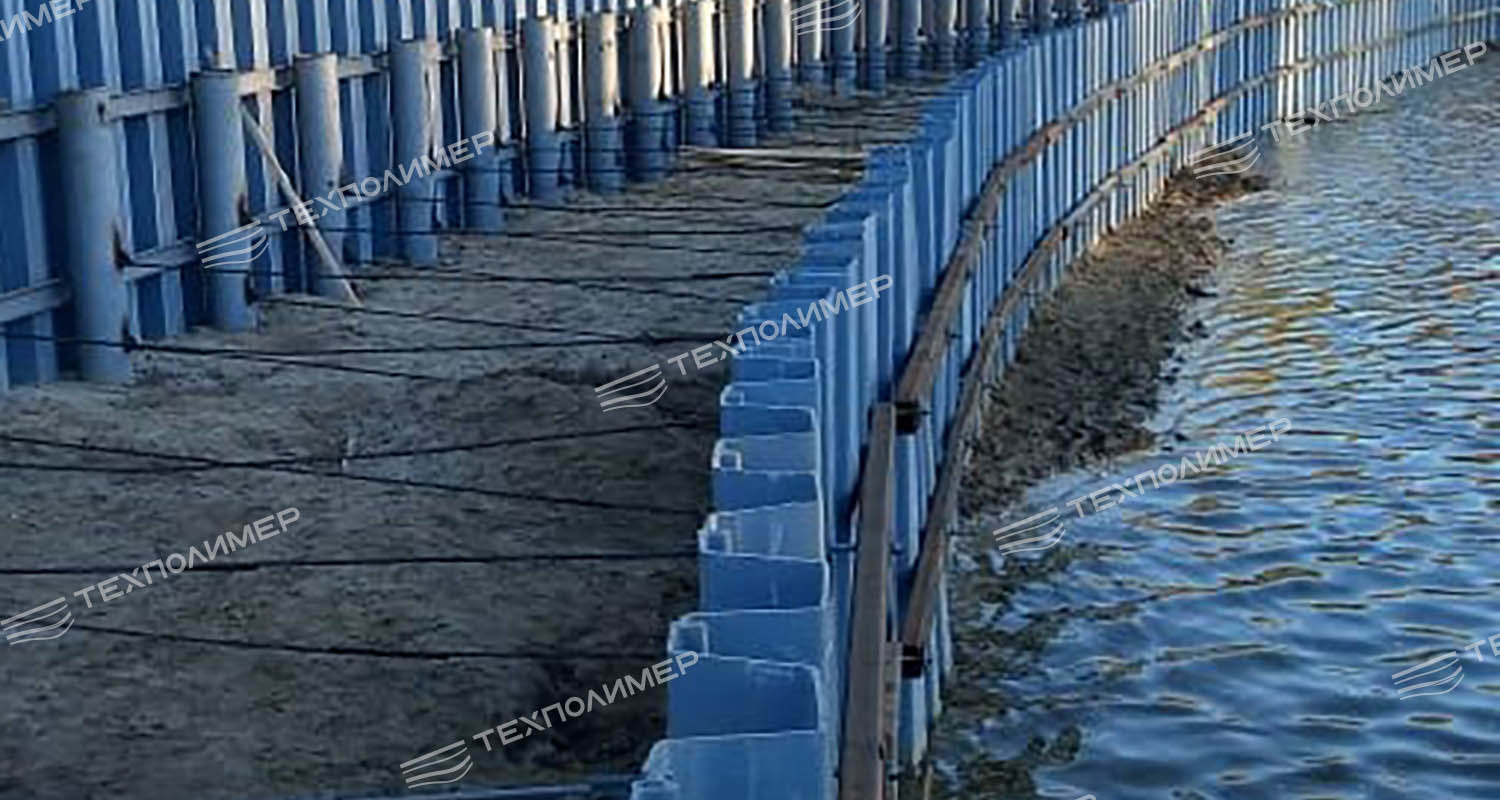
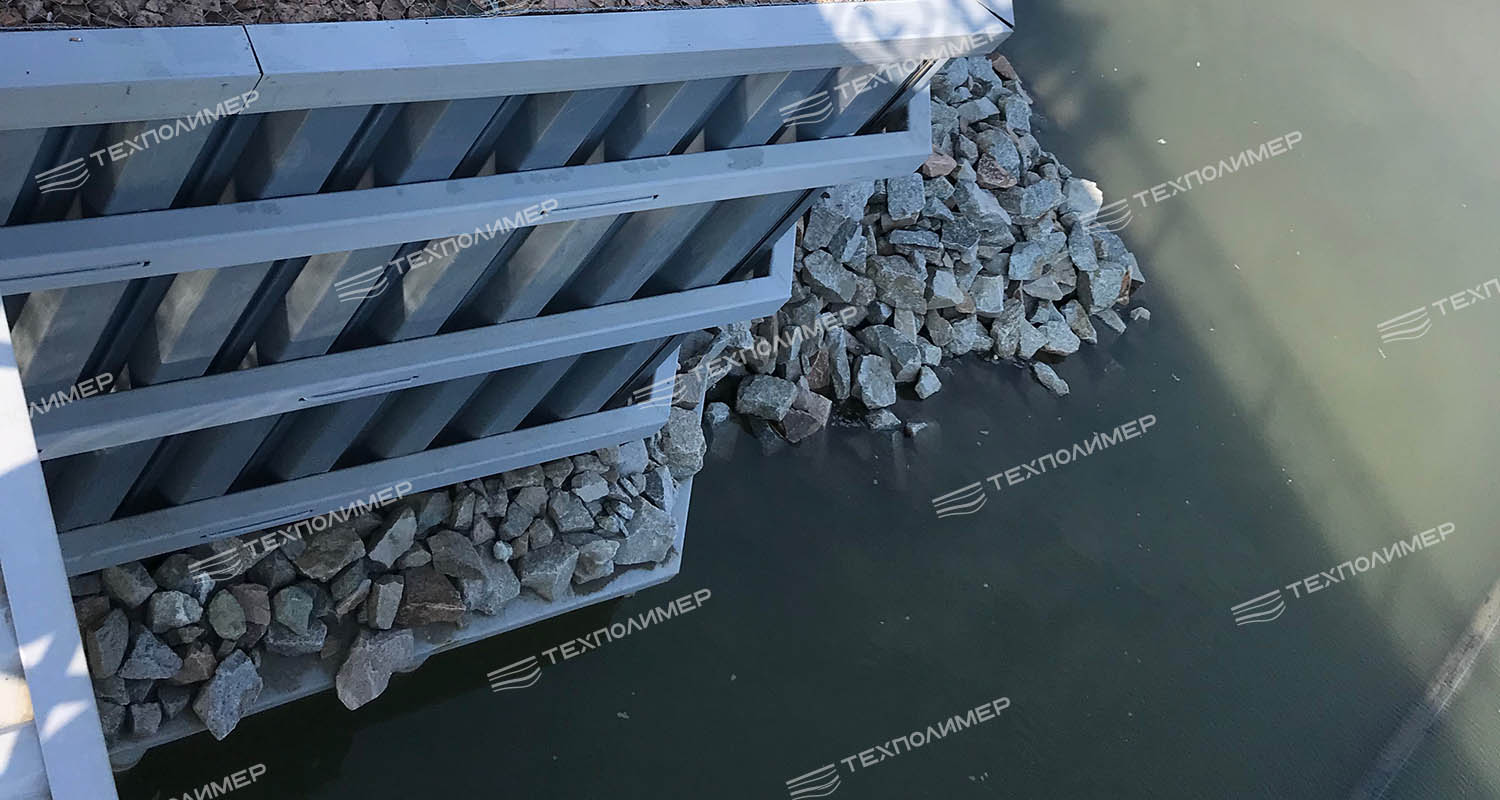
For example, a sheet-pile wall dam design (Fig. 1) makes it possible to operate hydraulic structures in the confined conditions of populated areas. The dam has a reinforced base made of road-reinforcing geogrid RD/M STO 30478650-001-2012 with a protective and drainage layer of nonwoven geotextile STO 56910145-009-2014, ensuring uniform settlement. The dam facing is made of geosheet piling STO 56910145-011-2015, which is fixed into a cast-in-place reinforced-concrete foundation. Distribution belts are installed to ensure structural rigidity. Uniform load distribution and removal of lateral pressure from the facing are achieved by installing half-shells made of woven geotextile STO 56910145-020-2015. The dam body is backfilled with sand. To prevent waterlogging of the dam body, a geomembrane TU 2246-001-56910145-2014 is laid along the top and fixed with capping beams. The submerged-side toe is reinforced with mattress and cushion gabions.
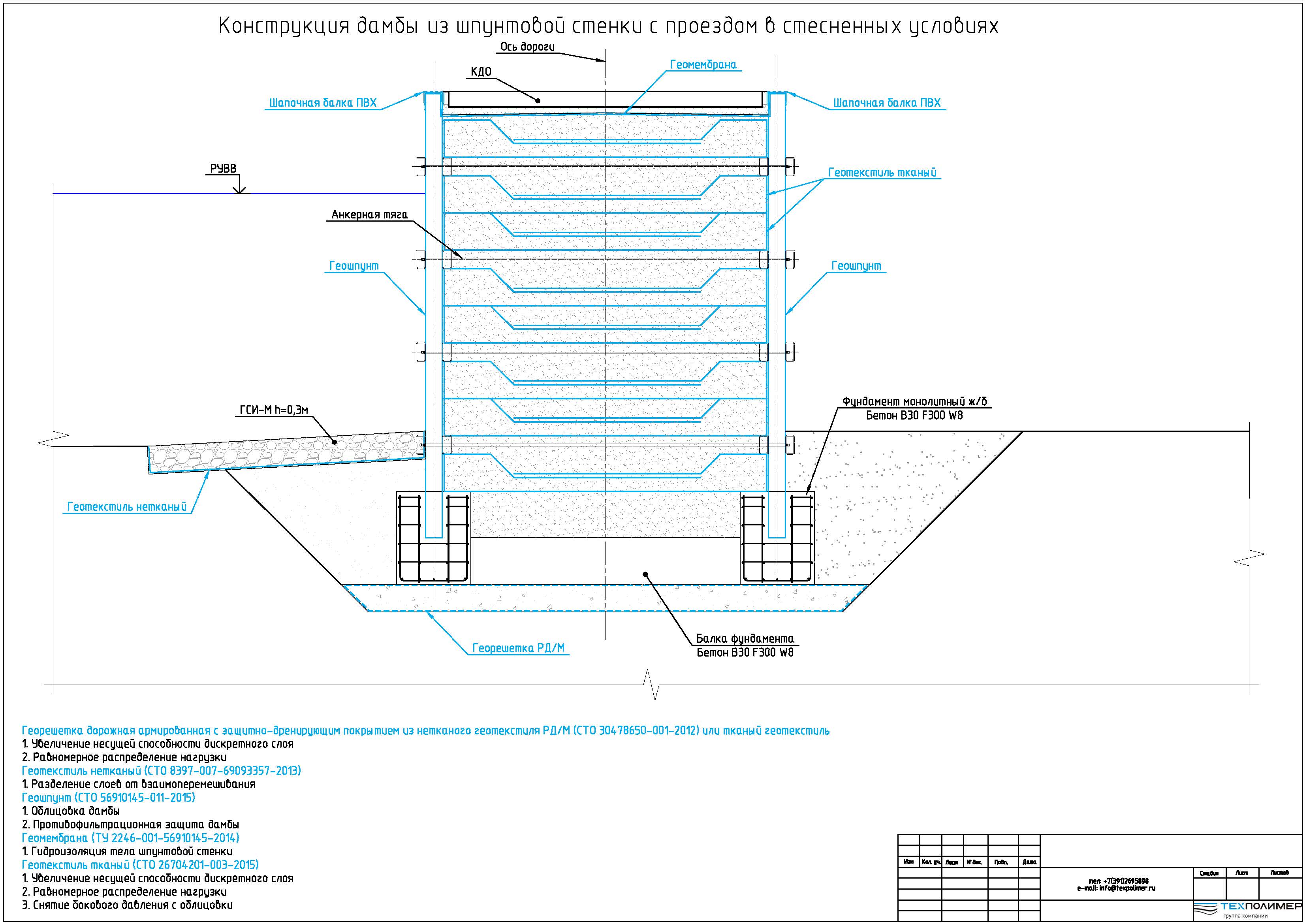 Fig. 1
The next design (Fig. 2) is recommended when reconstructing or raising a dam by up to 1 metre while maintaining the dam’s plan dimensions. The facing of the raised section is made of geosheet piling, providing seepage protection for the dam body. To distribute the load evenly and relieve lateral pressure on the facing, a half-shell made of RD/M geogrid with a protective and drainage layer of nonwoven geotextile is installed. The submerged dam slope is reinforced with concrete-filled mats STO 56910145-031-2020, providing waterproofing and protection against erosion of the foundation.
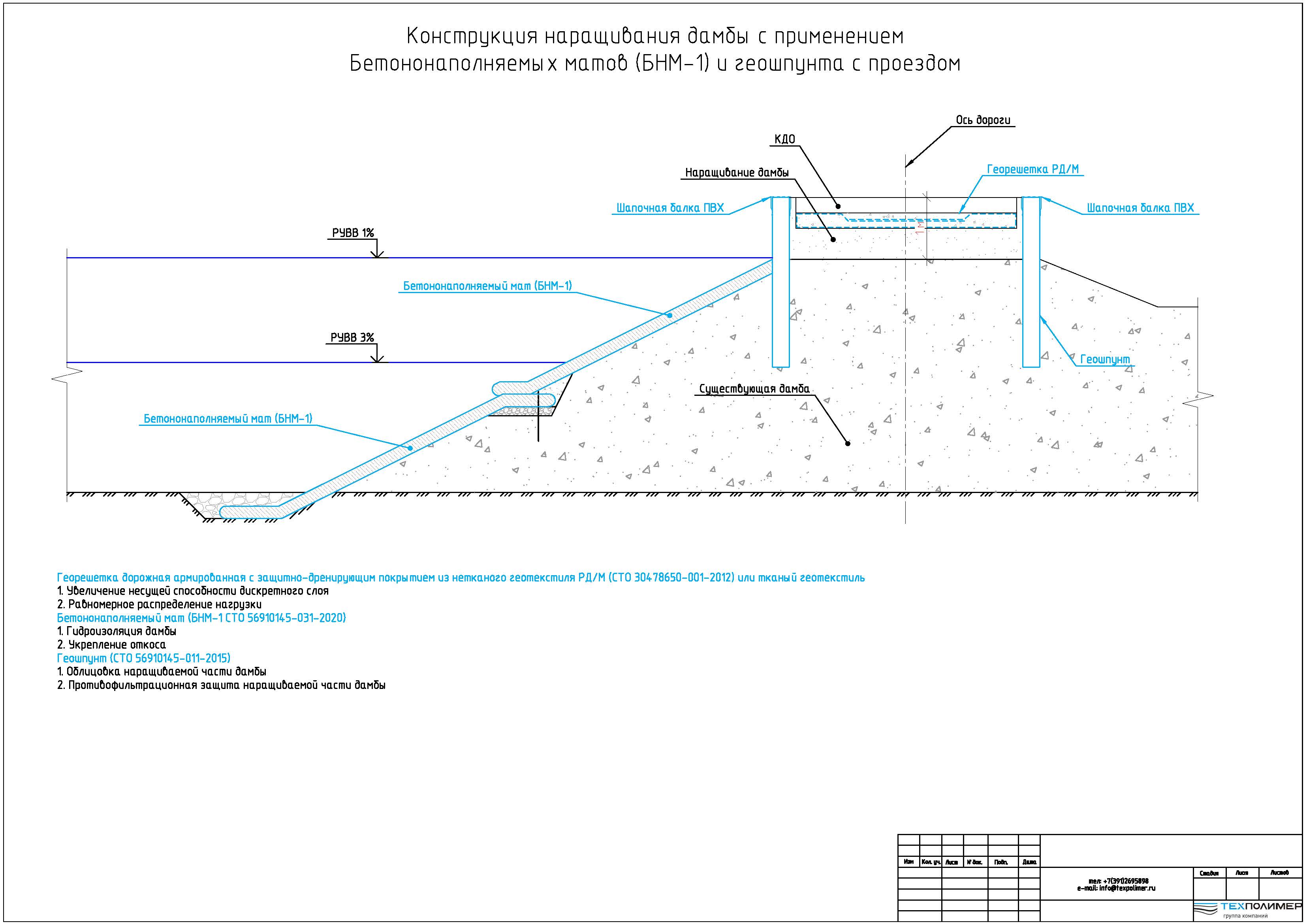 Fig. 2
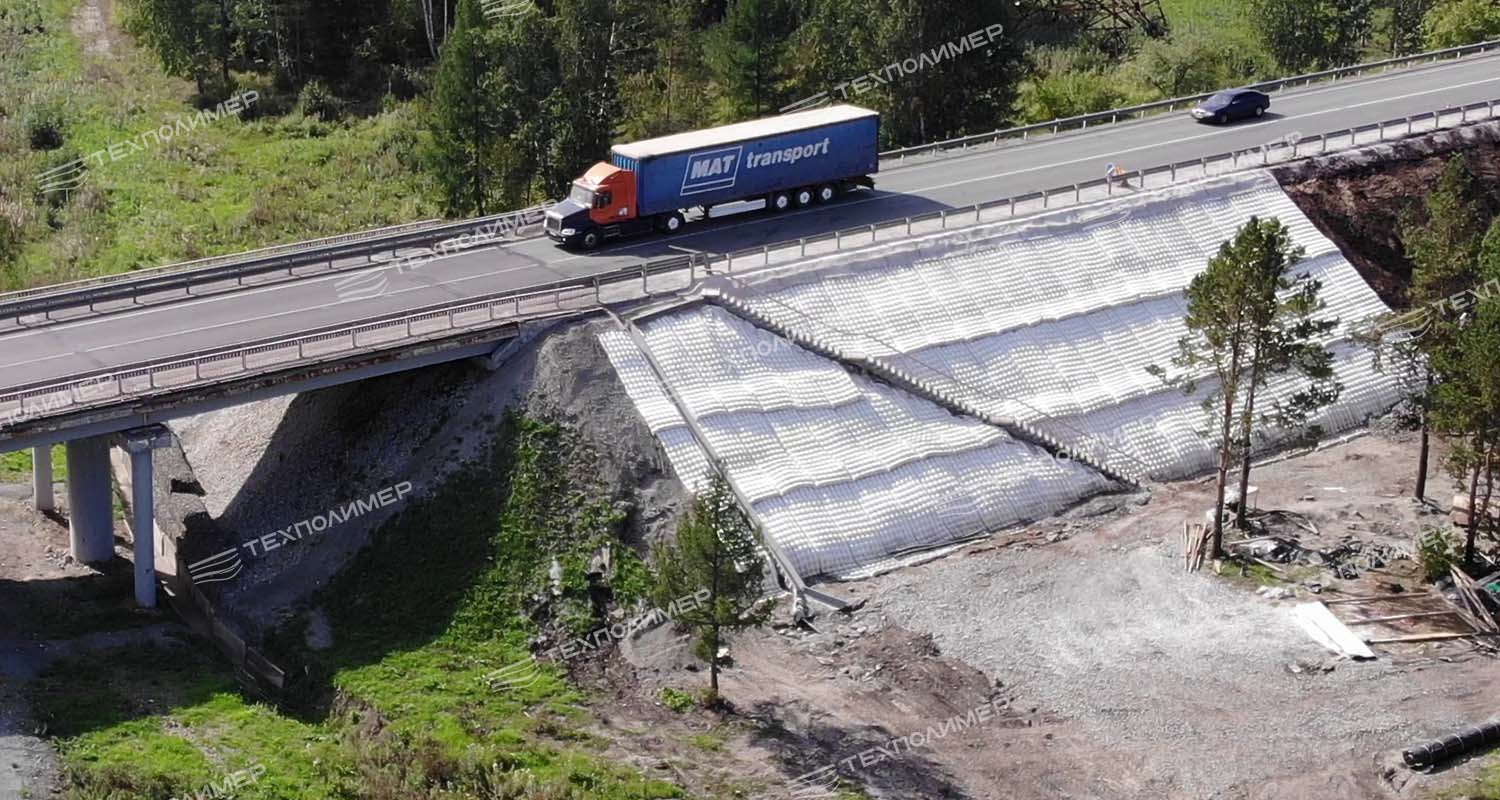
An effective means of protecting dam slopes against erosion and collapse is the installation of slope reinforcement using concrete-filled mats (BNM), extending them into anchor and toe trenches. BNMs are filled with concrete or cement concrete. A filled concrete-filled mat has a low filtration coefficient, which prevents soil washout and reduces seepage through the dam body. To provide access along the dam crest, a half-shell made of road-reinforcing geogrid with a protective and drainage layer of nonwoven geotextile is laid in the base of the KDO to distribute loads evenly and increase the load-bearing capacity of the discrete layer.
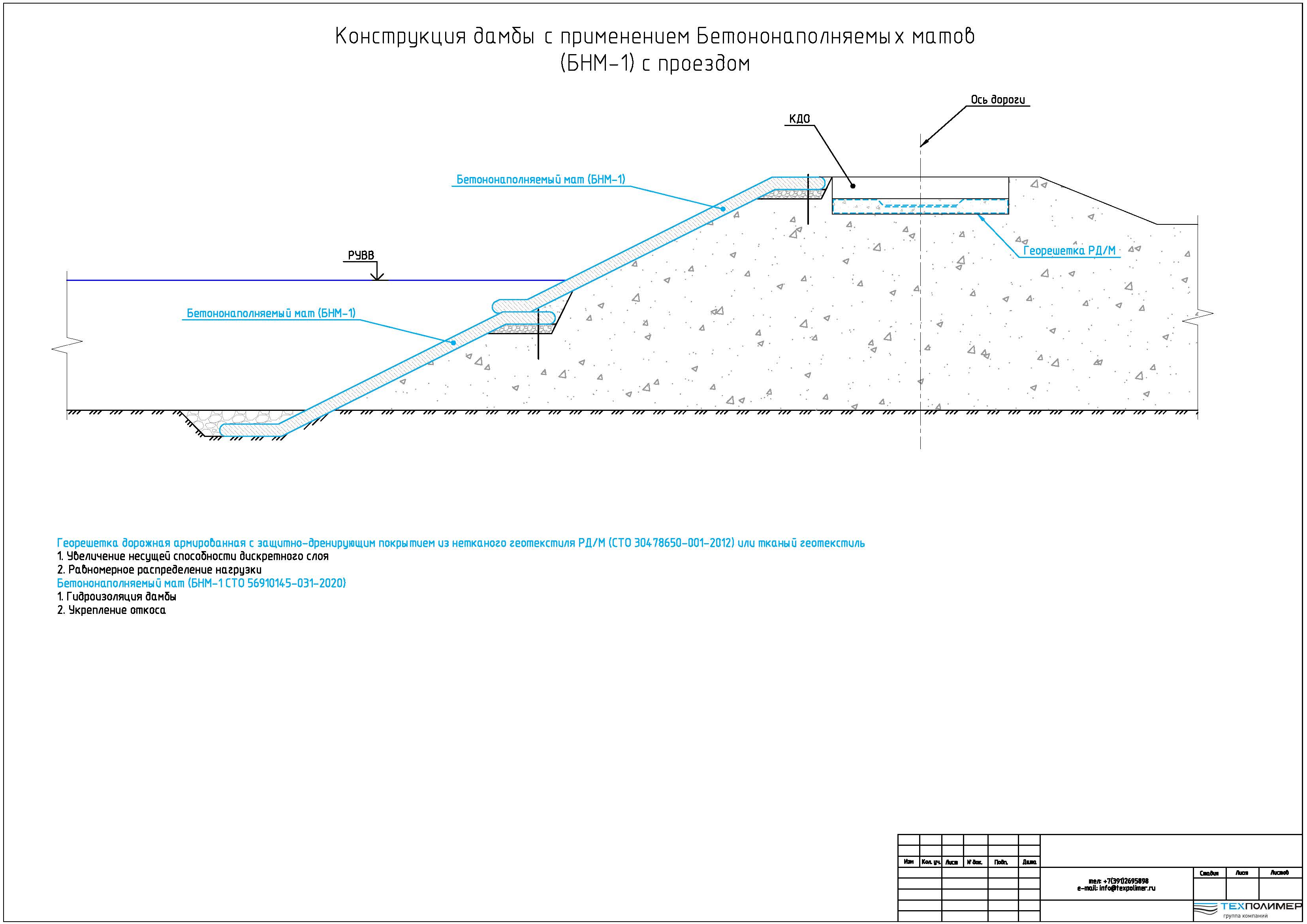 Fig. 3
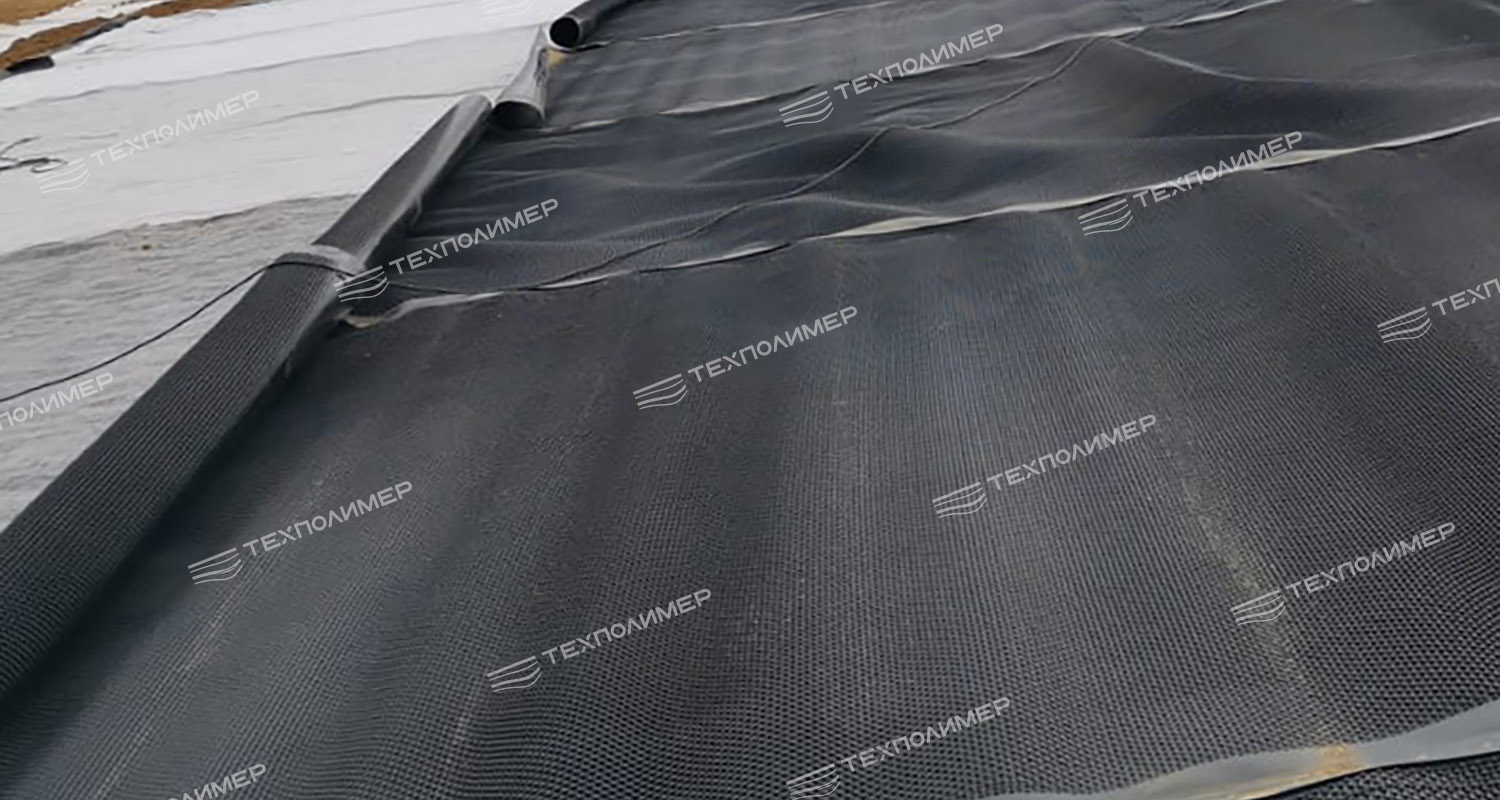
To prevent seepage through the dam body, which consists of inert materials, an impermeable screen (PFE) made of multilayer composites—3DM-5/1 hydromat STO 56910145-005-2011 or 3D hydroxa STO 56910145-032-2019—is installed, extending into anchor and toe trenches. These composites provide waterproofing and simultaneous drainage and also have protective geotextile layers. A protective layer of rock fill is installed over the PFE. To provide access along the dam crest, a half-shell made of road-reinforcing geogrid with a protective and drainage layer of nonwoven geotextile is laid in the base of the KDO to distribute loads evenly and increase the load-bearing capacity of the discrete layer.
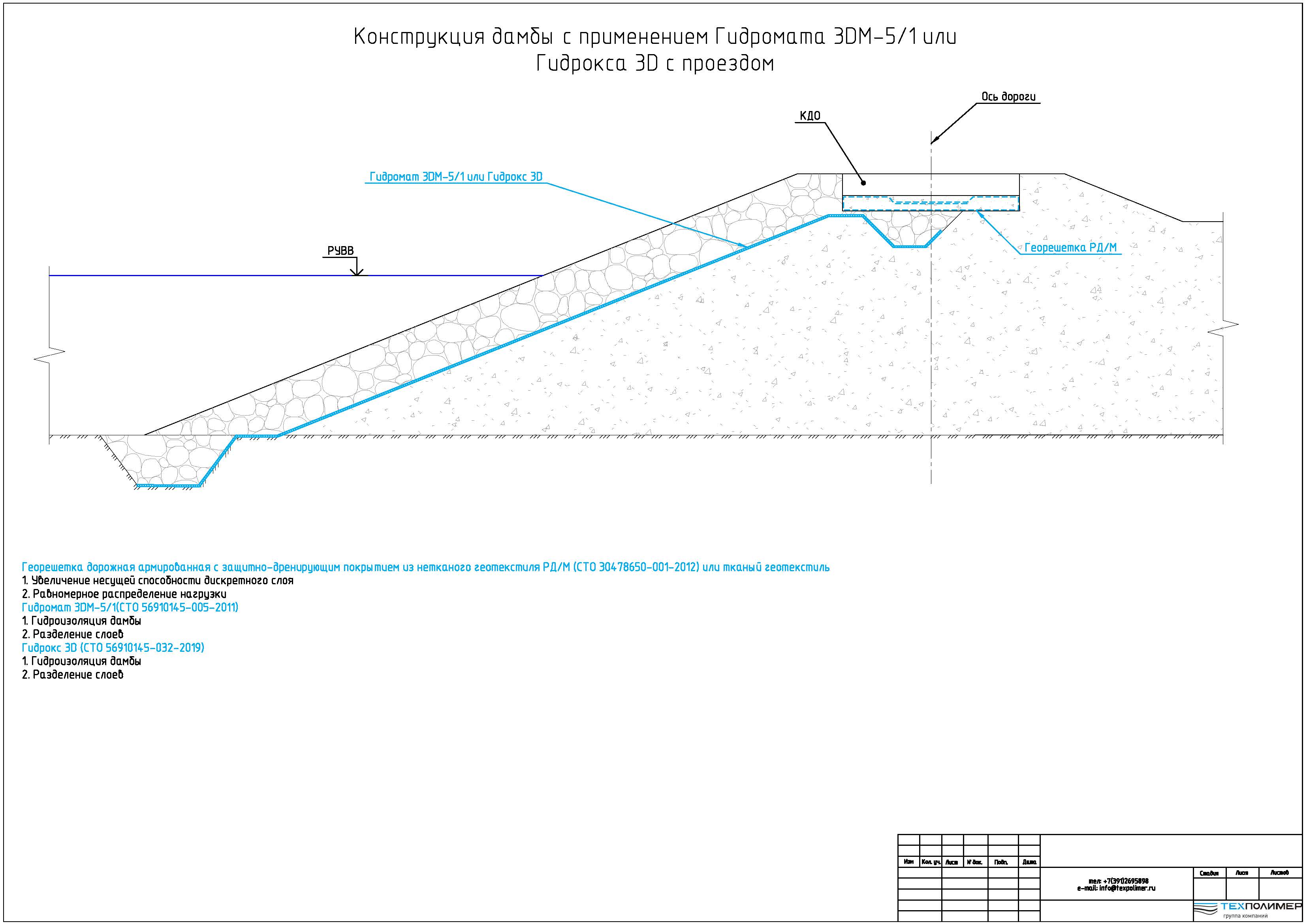 Fig. 4
By using modern engineering protection methods together with scientific and effective flood-risk forecasting, it is possible to prevent the failure of water-retaining structures caused by a breach. This will help avoid natural disasters associated with flooding.