
On 6 August, railway workers in Russia celebrated their professional holiday. The industry is currently undergoing transformation and development. Since 2013, railway workers have been implementing a set of measures under the Russian Federation’s large-scale infrastructure project to develop the Eastern Railway Network, whose main lines are the Baikal-Amur Mainline and the Trans-Siberian Railway, with a total length of approximately 17,000 kilometres.
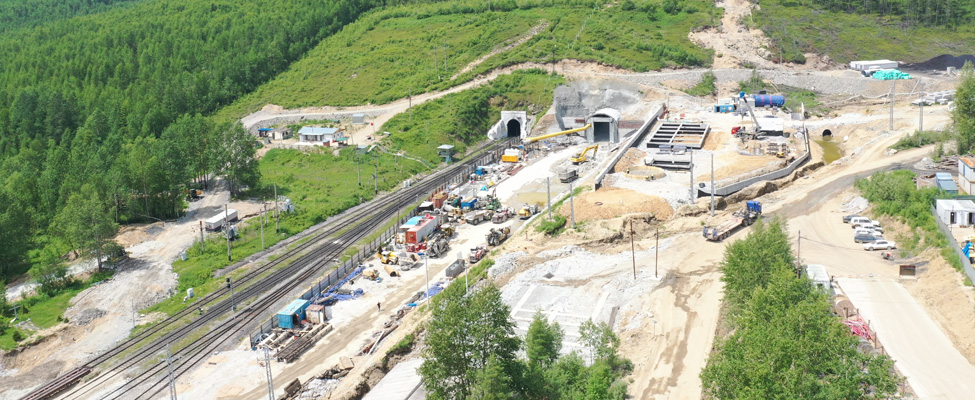
The project takes into account issues arising from dynamic loads and pressure on the embankments and slopes carrying the railway tracks: foundation strength on weak soil, high groundwater levels, erosion of embankment slopes, karst formation and permafrost foundation soils. These typical problems in transport construction are effectively addressed through the use of geosynthetic materials.
These materials include:
These materials have high tensile strength and are resistant to repeated freeze-thaw cycles and mechanical damage.
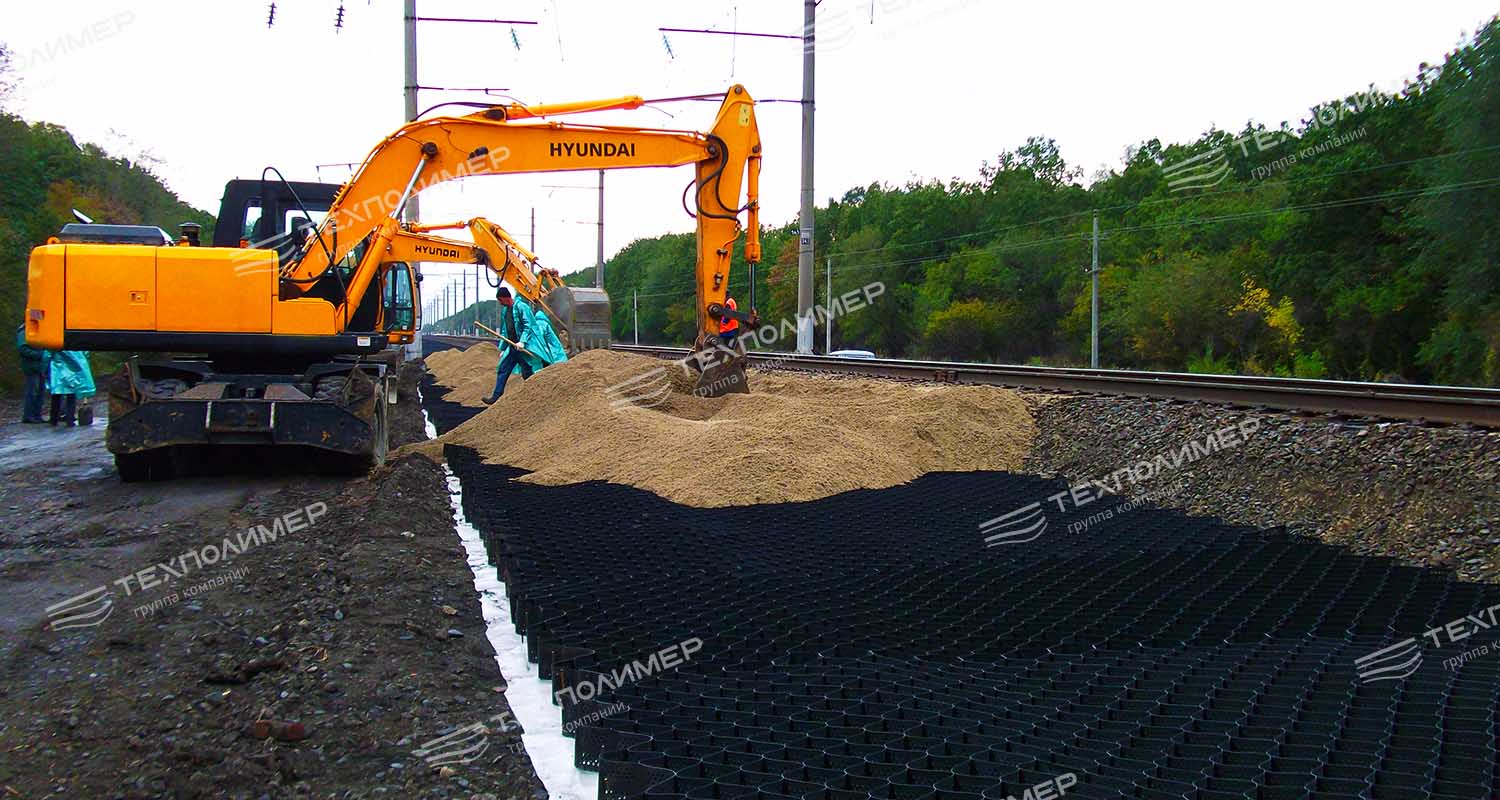
When reinforcing a complex railway foundation, specialists select only high-quality and durable materials. For example, materials used to reinforce the subgrade as a separation layer must not be susceptible to acids, alkalis or naturally occurring bacteria. They must also be resistant to UV radiation. In addition, the service life of the geosynthetic reinforcement layer used to strengthen the main subgrade platform must be at least 50 years.
Geosynthetics also make it possible to significantly reduce construction time, which is highly relevant to the railway industry.
The railway network is being modernised under the national project «Comprehensive Plan for the Modernisation and Expansion of Core Infrastructure».