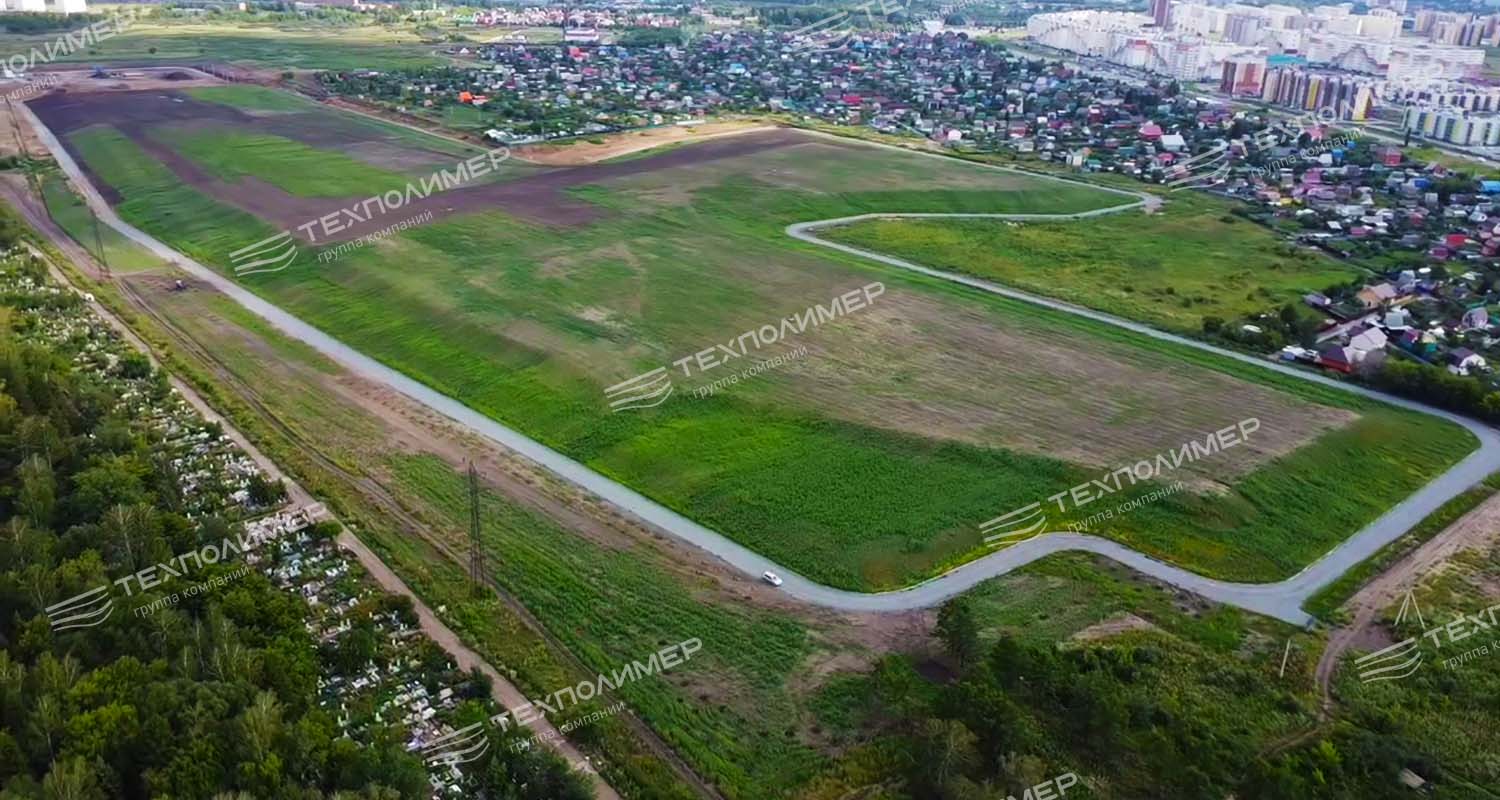
More than 95% of the work to reclaim Omsk Central Landfill has been completed by the contractor. The difference in the condition of the site before reclamation and at its final stage is already clearly visible.
Central Landfill began accepting waste in 1976 and accumulated more than 1 million cubic metres of waste over 10 years across 35 hectares in Omsk’s Central Administrative District. Reclamation of the accumulated environmental damage began in 2022.
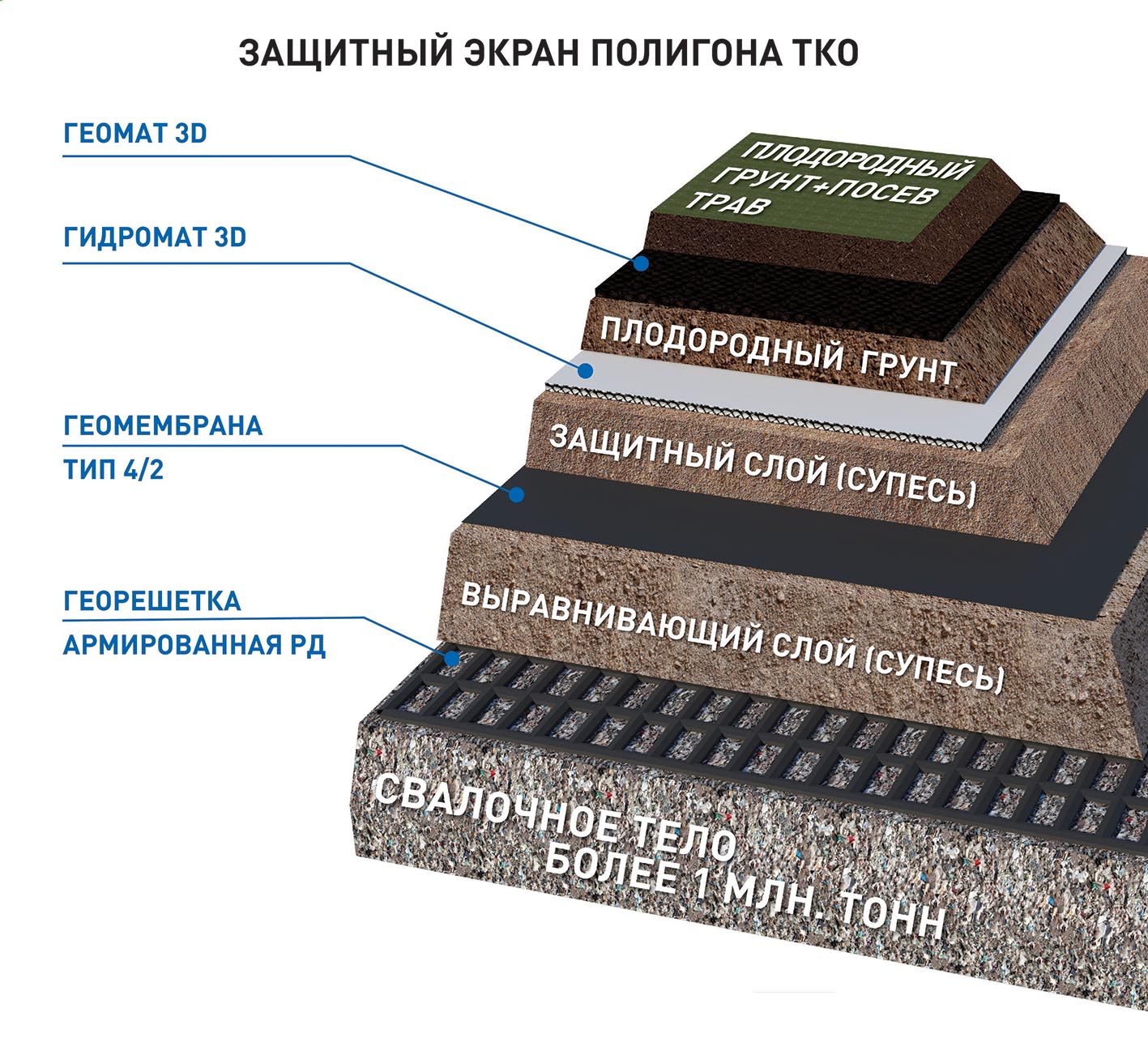
As part of the reclamation, the contractor had to reshape 313,166 cubic metres of waste, flatten the slopes to prevent erosion and landslide processes, and reinforce the entire structure with geosynthetic materials such as reinforced Geogrid to increase the stability of the landfill body. A levelling layer of sandy loam was placed on top.
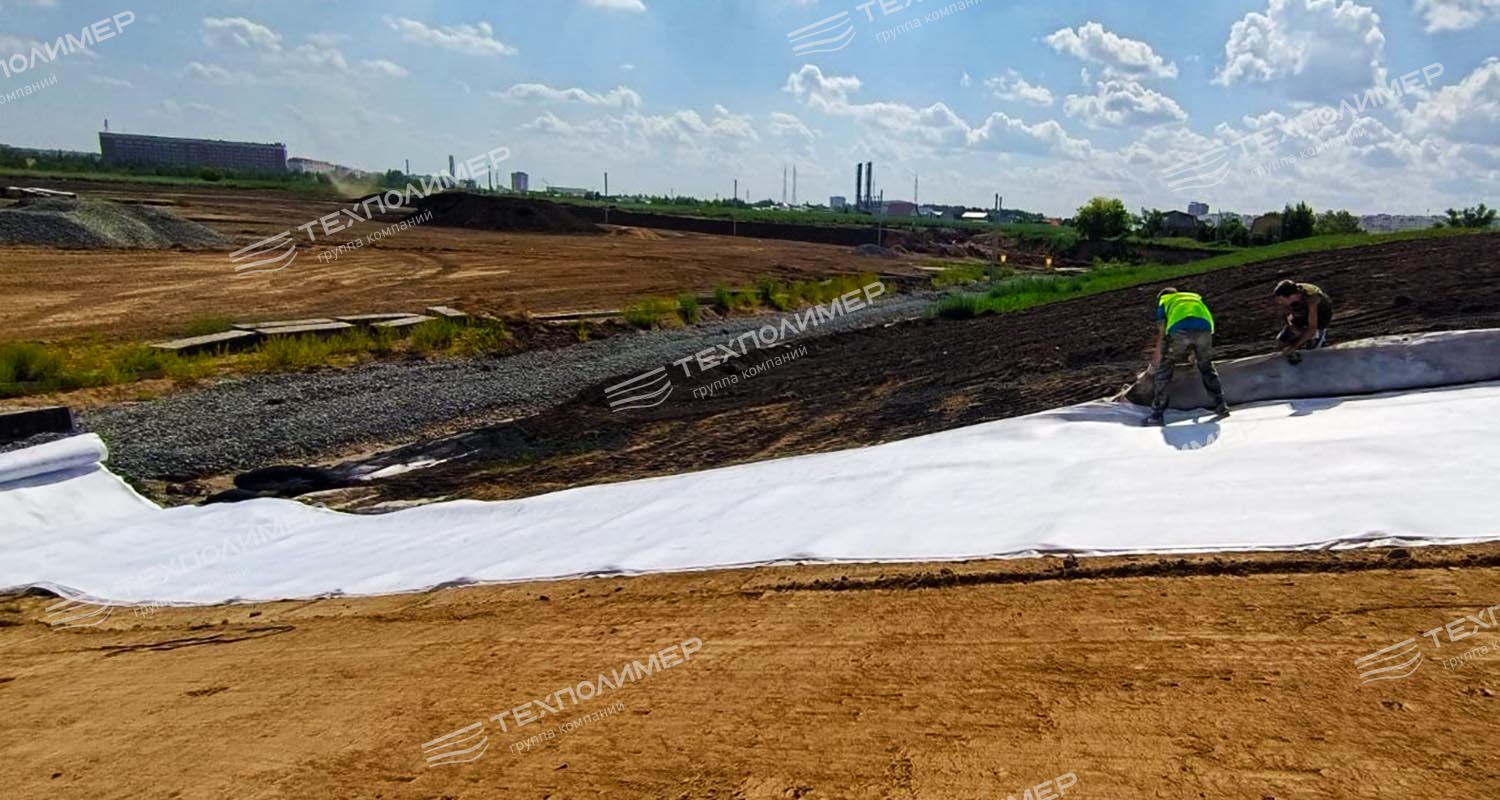
To further protect the waste from precipitation, a technical solution for external waterproofing of the landfill body is being implemented: a sealed barrier is being created over the waste. For this purpose, an insulating layer of geomembrane is installed on the prepared levelling layer, and its seams are welded to provide complete waterproofing. A protective layer of sandy loam is then placed again and covered with a drainage layer of “Hydromat”, which is required to drain rainwater and meltwater from the landfill surface.
One of the technical solutions used in the comprehensive reclamation of the closed landfill is the rapidly assembled polymer underground reservoir “BlokTech”, which is designed to collect stormwater runoff. This technical solution consists of polymer modules assembled like a LEGO construction set.
“This landfill has one distinctive feature,” the contractor says. “Here, a fertile soil layer covered with GEOMAT 3D has been placed above the impermeable barrier. This three-dimensional erosion-control material is made of polymer fibres and helps anchor plant roots and protect the soil from erosion. The erosion-control Geomat is laid on the slope, after which it is filled with soil and anchors the plant roots. At the same time, the material does not interfere with irrigation because it is water-permeable. Creating such a surface helps strengthen the soil and vegetation layer, restore the plant community on the surface, and integrate the site into the surrounding landscape. It should also be noted that all geosynthetic materials used for the reclamation of Central Landfill are manufactured in Russia.”
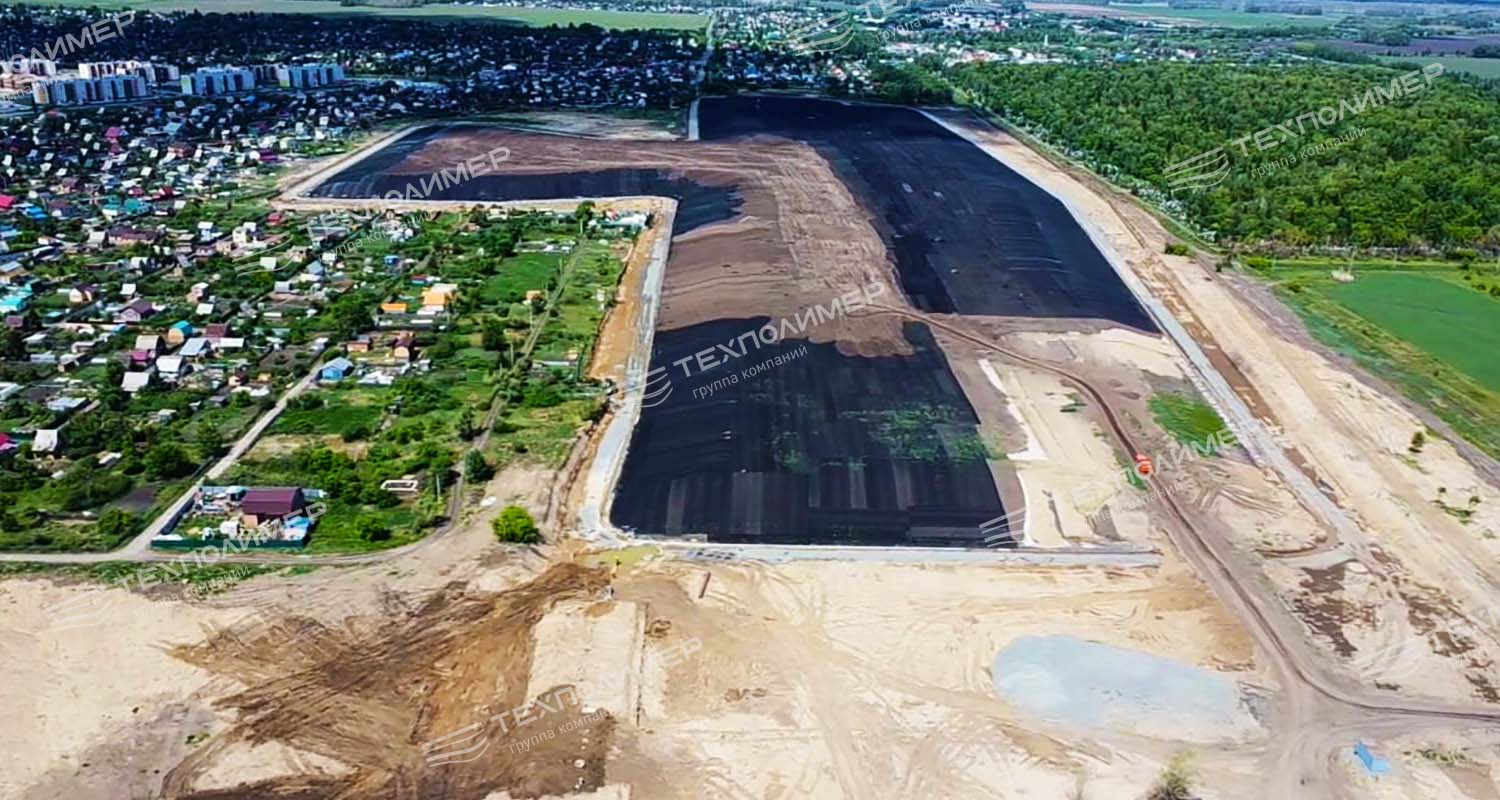
Reclamation of the closed landfill in the Central Administrative District began in April 2022 as part of the national Ecology project, and although the work is still ongoing, the site already resembles a green hill.