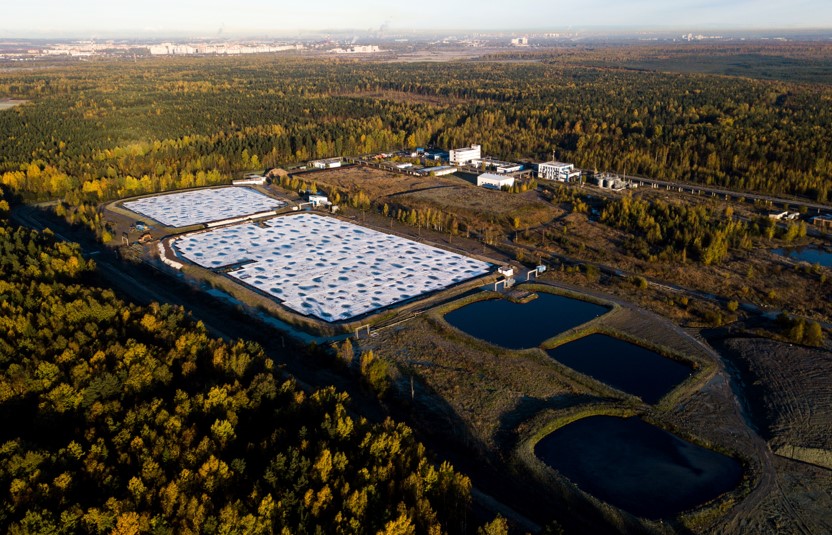
Following the review by Glavgosekspertiza of Russia, a positive conclusion was issued for the design and cost estimate documentation for the design of works to eliminate accumulated environmental damage at the «Krasny Bor» toxic industrial waste landfill.
The landfill remediation works are being carried out under the federal project «Clean Country» of the national project «Ecology».
The remediation project consists of 2 stages:
- The first is the construction of a cut-off barrier to protect the environment from the ingress of pollutants.
- The second is the processing of the contents of the landfill's open storage cells and remediation of the area, as well as the construction of technological waste management infrastructure required to eliminate accumulated environmental damage.
Each stage involves the use of modern geosynthetic materials, which will enable the project to be implemented efficiently and promptly. Geosynthetics have long become an alternative to inert materials and continue to strengthen their position. Their clear advantages include increased strength and durability, convenient transportation and installation, clear and understandable properties, environmental performance and an acceptable cost. The use of geosynthetic materials reduces costs and project timelines and delivers a high-quality result.
About the landfill.
The «Krasny Bor» landfill is located in the Tosnensky District of the Leningrad Region and covers an area of 67.4 ha. Of this area, the waste storage zone covers 46.7 ha and has been in operation since 1969. Industrial toxic waste, excluding radioactive waste, of hazard classes I-IV was placed on its territory. In 2014, waste acceptance at the landfill was discontinued. During the 45 years of the landfill's operation, approximately 1.7 million tonnes of waste were buried there.
The start of the landfill remediation works is scheduled for 2022. Following implementation of the project, the site occupied by the «Krasny Bor» toxic industrial waste landfill will become an area with restored land designated for environmental protection.