On 13 September, Viktor Kudryashov, together with Andrey Shamin, Minister of Industry and Trade of the Samara Region, visited the site of the former Srednevolzhsky Chemical Plant in Chapayevsk as part of an on-site meeting. It is the largest site of accumulated environmental damage.
For several decades, chemical production waste (liquid, solid and paste-like) has been contaminating the surrounding area — the soil, surface and groundwater, and the atmosphere of Chapayevsk. Facilities that are sources of contamination with toxic compounds remain on the plant site, including arsenic, mercury, heavy metal salts and persistent organic pollutants.
To minimise the environmental impact, a set of measures is being implemented to conserve the most hazardous facility at the former Srednevolzhsky Chemical Plant – sludge pond Sh2, located near the Chapayevka River.
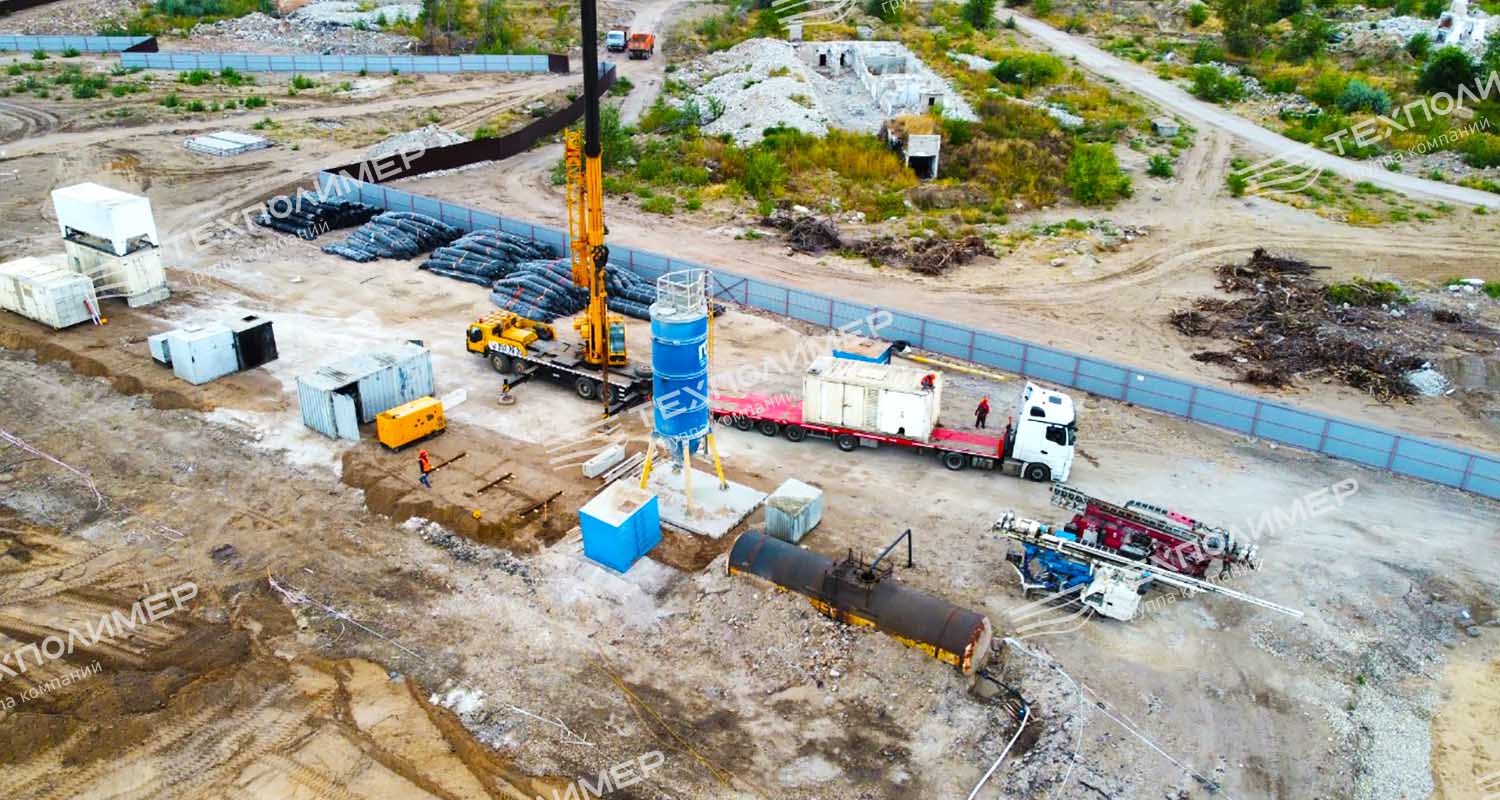
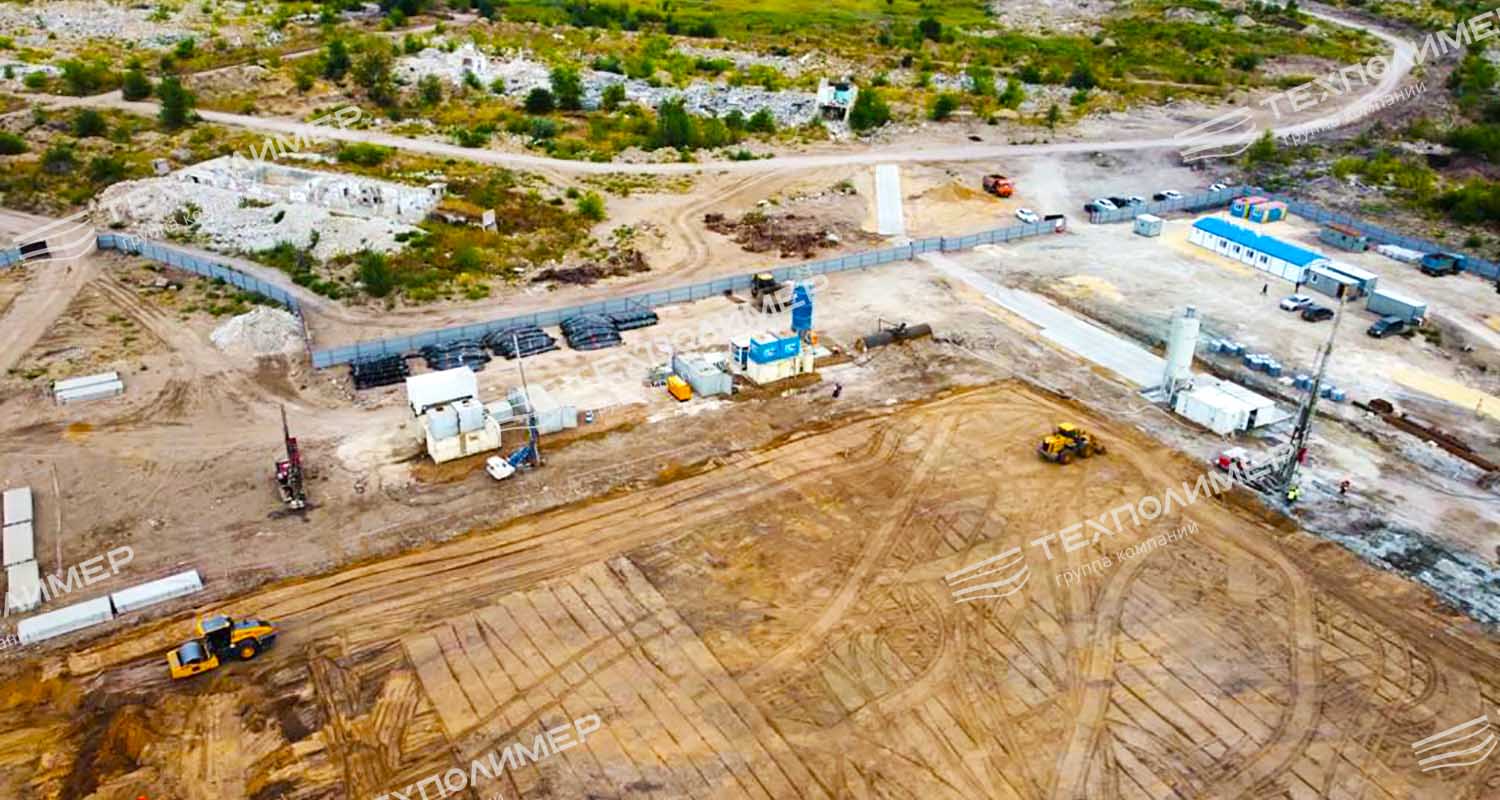
Large-scale construction work began at the end of May this year. Measures to isolate (conserve) the Sh2 sludge settling pond, covering 4.5 ha, are being carried out in two consecutive stages: technical and biological.
To date, work at the Sh2 sludge settling pond site has included site grading, placing additional soil in the sludge settling pond area and shaping the terrain. Additional jetting units have been mobilised to prepare for the installation of a soil-cement belt for the cut-off curtain. Work is under way to install the soil-cement belt for the cut-off curtain.
Viktor Kudryashov assessed the scale of the work under way and inspected the construction of the cut-off wall, which will surround the sludge settling pond and eliminate the risk of toxic substances entering the Chapayevka River.
The technical stage includes the installation of a multifunctional cut-off liner to protect the buried waste from precipitation and provide the required level of environmental protection against the harmful effects of waste decomposition products. This involves using a thin polymer sheet that is uniform across its entire area — geomembrane “TEXPOLIMER”, 1.5 mm thick, with a textured surface on both sides. The sheets are welded with an overlap to form a continuous watertight and gas-tight cover over the entire landfill body. The filtration coefficient of the screen made from this polymer geomembrane is zero. The material is resistant to petroleum products, oils, acids, alkalis, corrosion and low temperatures.
As a duplicate layer of cut-off protection for the landfill body against precipitation in the event of geomembrane damage, the design provides for the installation of a waterproof bentonite mat Bentotech ASL-100. In terms of their waterproofing properties, bentonite mats are equivalent to a one-metre-thick clay waterproofing layer, while requiring lower material and installation costs.
Local subsidence that may occur as the sludge settling pond body settles will be contained using reinforced geogrid RD-60/M. The geogrid makes it possible to reduce the thickness of structural layers, thereby reducing the costs of traditional materials.