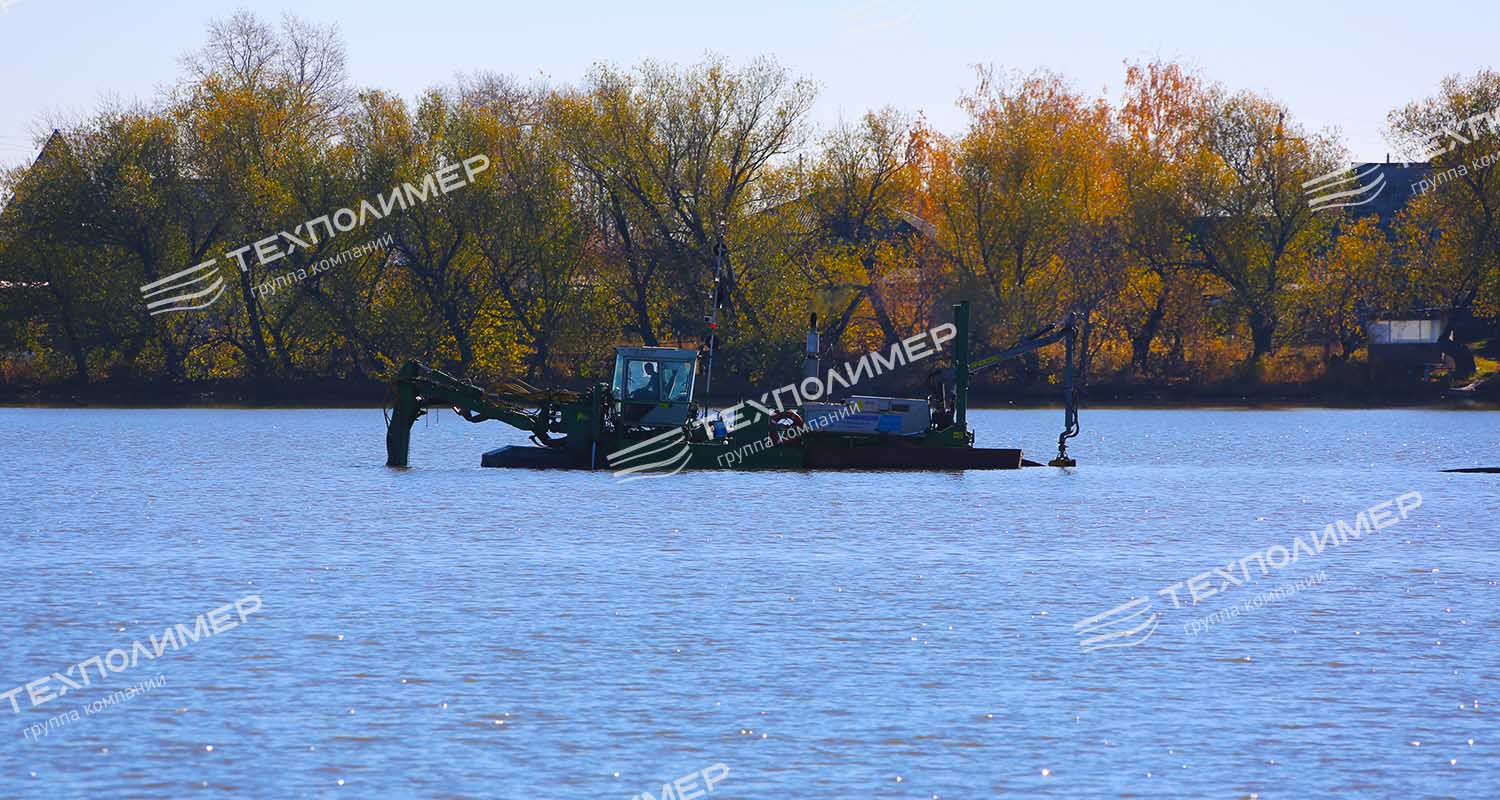
In August 2022, the Ministry of Natural Resources and Environmental Protection of Altai Krai appointed the general contractor to carry out works under the project “Clearing Lake Zavyalovo in the village of Zavyalovo, Zavyalovsky District, Altai Krai.” The contractor JSC “SIBGIDROMEKHSTROY” is performing the gravity dewatering of sediments and sludge.
The project involves clearing the lake to eliminate the threat of ecosystem degradation, improve water quality, and preserve its potential for water management use. The planned measures will reduce the negative processes currently observed in the lake (siltation, overgrowth, and shallowing), restore natural water exchange, and preserve the possibility of using the water body for the community’s economic needs and recreation.
The clearing of Lake Zavyalovo in the village of Zavyalovo is being carried out in three stages over a total area of 82.8 ha, involving the removal of 326 813.5 m3 of soil. The works will take 25 months, including a technological break, with a budget of 241 million roubles.
A solution was found for carrying out the works in the water protection zone
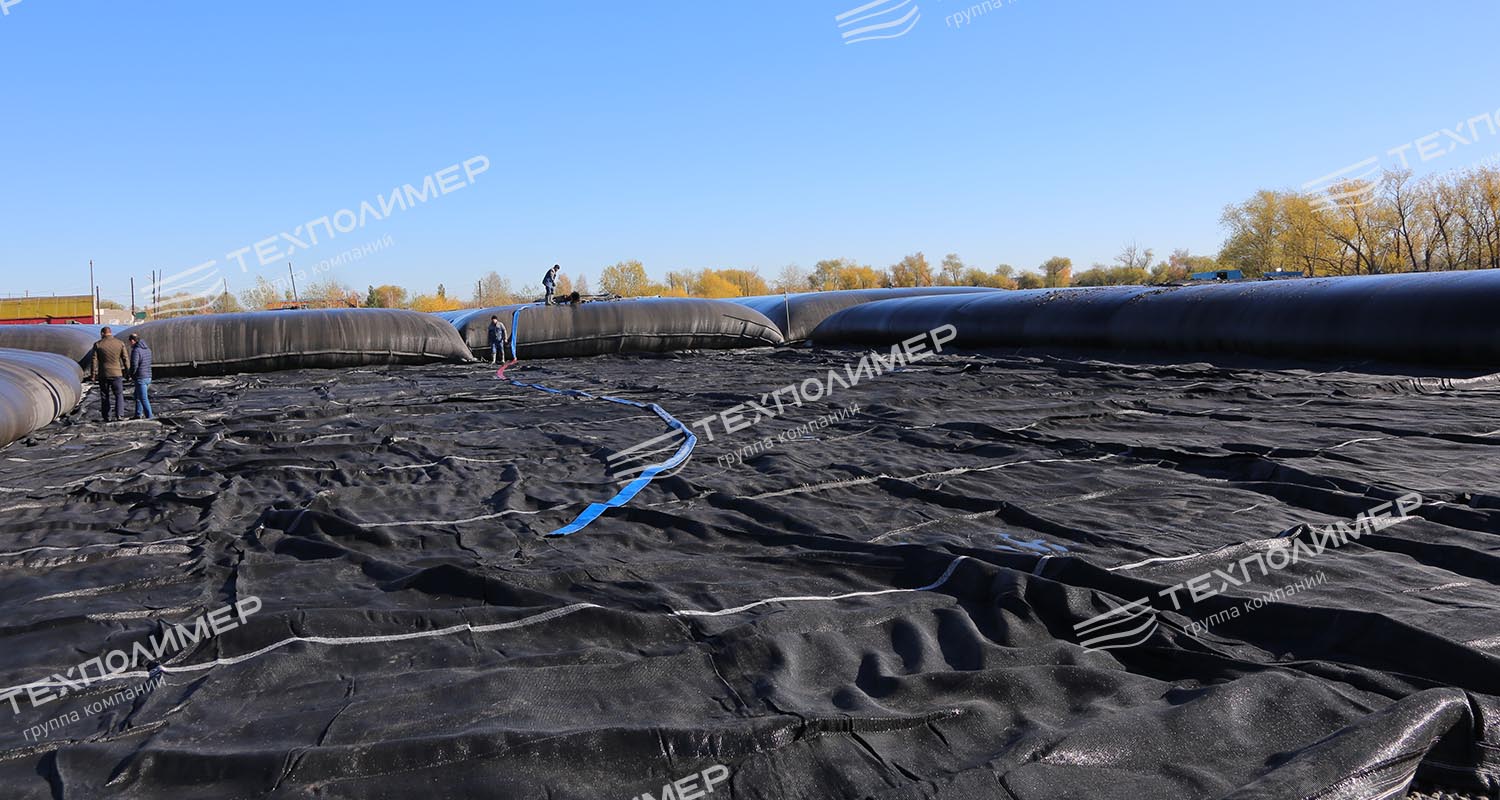
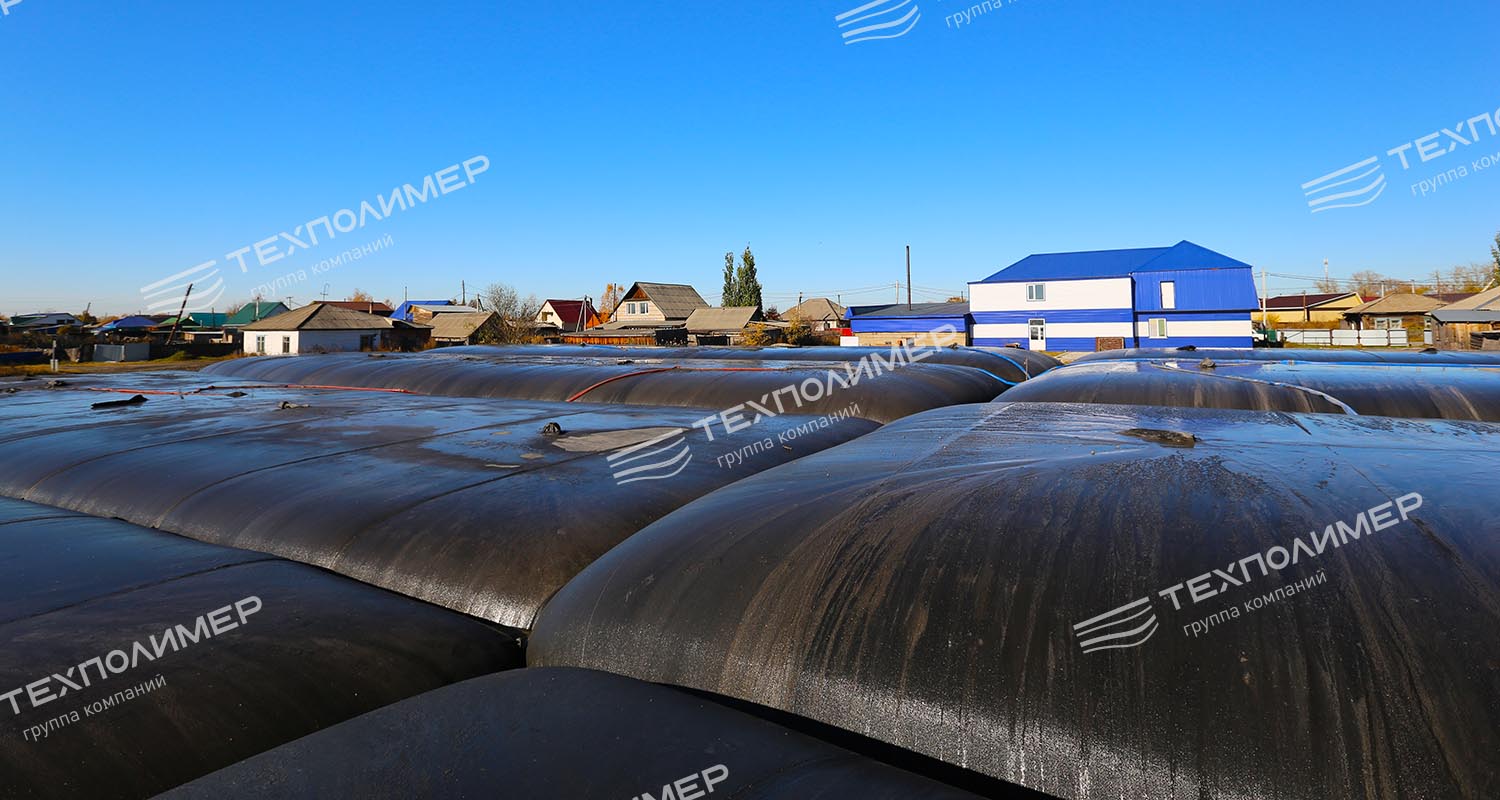
The preparatory period has now been completed, and full-scale work is underway to clear the bottom using hydromechanisation equipment and “TEXPOLIMER” geotubes (STO 56910145-016-2015).
According to the project, part of the work (reclamation area No. 1) must be carried out in the lake’s water protection zone and coastal protection strip. Activities in this zone are restricted by the legislation of the Russian Federation, and dredged soils cannot be placed on reclamation area No. 1. However, in compliance with water protection requirements, the soil can be stored in geotubes.
Storing soil in geotubes is an economical and environmentally friendly dewatering method
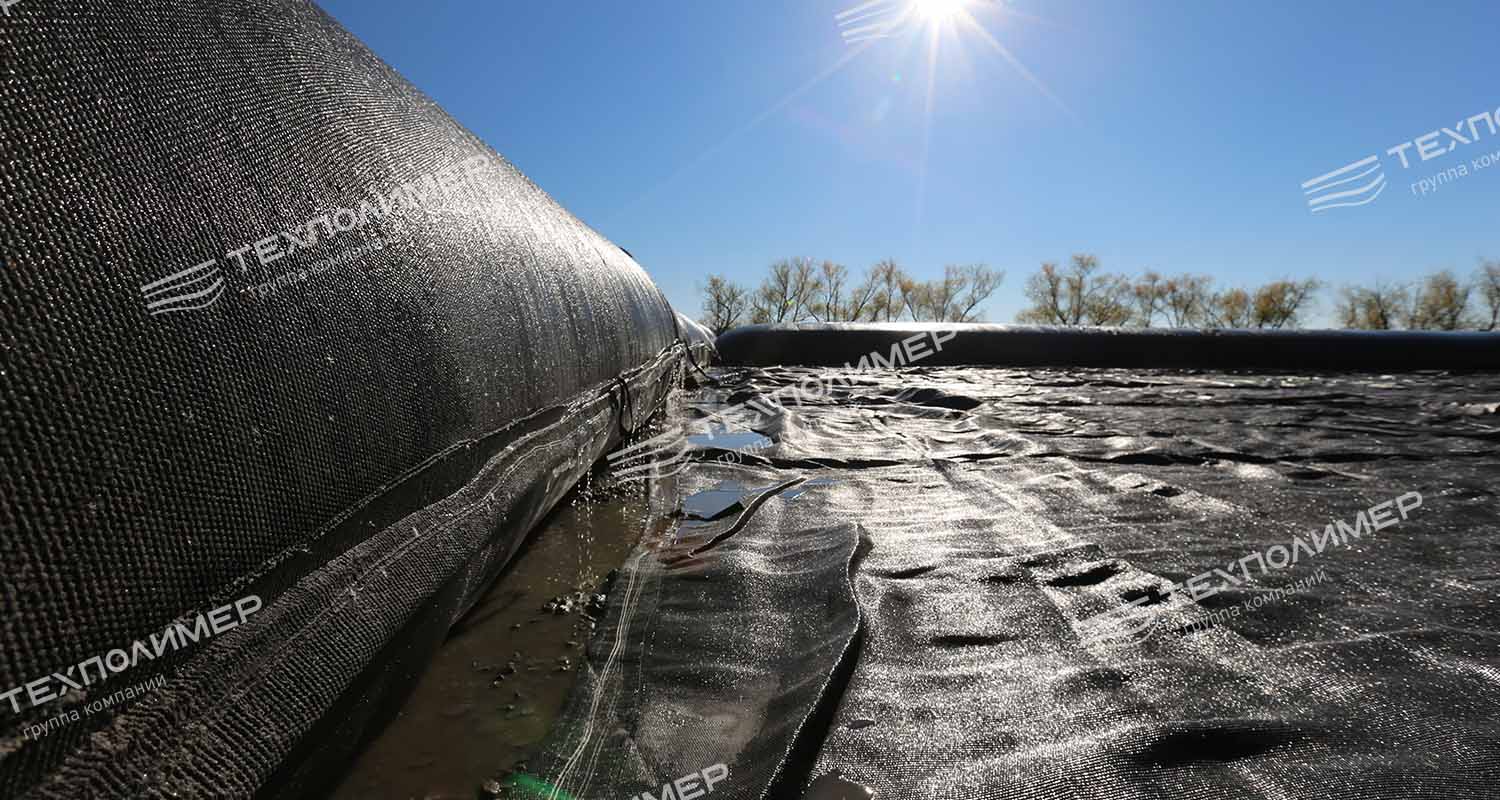
The dredger pumps bottom sediments together with water directly into the geotubes. Thanks to their design and special pore system, the geotubes retain sludge particles inside the container and drain free water from it; the water flows back into the lake.
The filled geotubes form highly strong and stable structures that will be used as protective reinforced-soil structures. At the same time, the dewatered soils can be stored in these geotubes indefinitely, as they will not become wet or be washed out by precipitation, floods, or other phenomena and, most importantly, will be completely safe for the environment. Therefore, after the work is completed, during the reclamation of reclamation area No. 1, the geotubes will remain in place, and the previously excavated topsoil will be placed over them and perennial grasses will be sown. The dewatered bottom soil from reclamation areas Nos. 2 and 3 will be used to meet municipal needs for road-related activities.