
With the support of the Foundation for Infrastructure and Educational Programmes of the ROSNANO Group (Moscow), a professional development programme was developed for road industry specialists on the use of composite (geosynthetic) materials in road structures.
Specialists from the Siberian State Automobile and Highway University (SibADI) (Omsk) developed a 120-hour programme. The customer and technology partner was the TEXPOLIMER Group of Companies (Krasnoyarsk), ROSNANO reported.
The construction industry is the main area of application for geosynthetic materials. Their first use in Russia dates back to the 1980s, but a strong production base covering all major types of geosynthetics emerged only in recent years. Meanwhile, it is in Russia, with its challenging natural and climatic conditions, that geocomposites can demonstrate their advantages to the greatest extent.
“Geosynthetics can perform a vast number of functions in road structures, not only auxiliary functions—reinforcing asphalt or crushed stone—but also independent ones, such as providing drainage instead of sand; polymer sheet piles are used for bank protection works; and mobile road pavements are available”, said Grigory Levashov, head of the programme development team and Director of the Technology Transfer Centre at SibADI.Grigory Levashov.
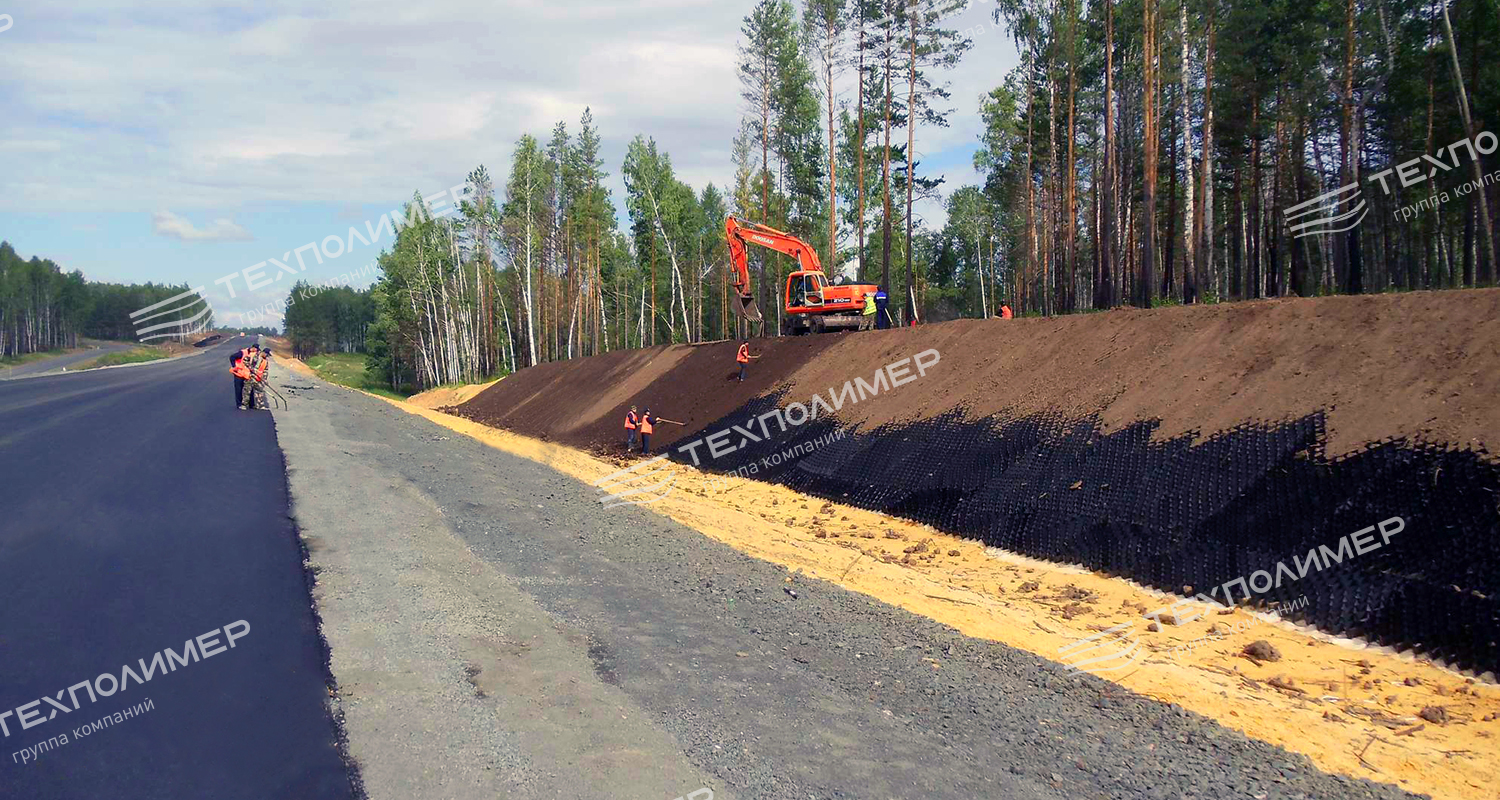
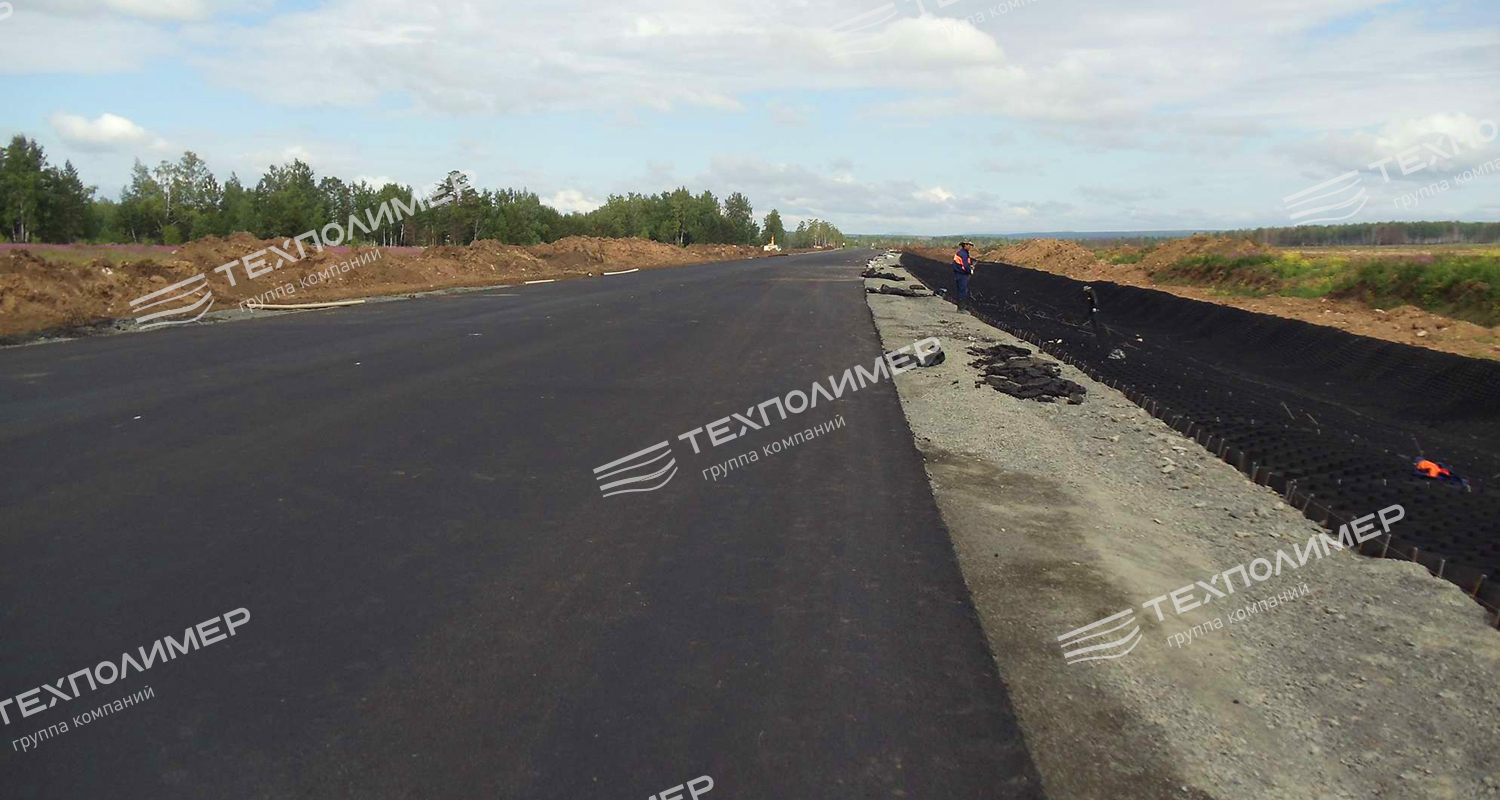
Geosynthetics make materials suitable for construction that were previously avoided, such as substandard soils and industrial waste.
As a result, modern technologies using geosynthetic materials make it possible to build high-quality roads on weak subgrades, subsiding soils and permafrost soils. “At the same time, the use of geosynthetics produces a significant economic effect: road construction rates increase by up to 50%, while construction costs decrease by up to 30%. At the same time, the strength of structural elements increases without increasing material consumption”, Levashov noted.
“The most important factor attracting people to a new product is its economics. This section of the educational programme must be very clear to specialists, even those without an economics background”, recommended Stanislav Nisimov, Director of the Foundation’s Department of Educational Programmes and Professional Qualifications.Stanislav Nisimov.
Several types of composite materials with similar functions are currently available on the market. For example, geomembranes, bentonite-filled mats and lightweight covering materials can be used for waterproofing. A similar situation exists with erosion-control products for slopes. Each type of innovative product, even from the same manufacturer, may have different grades, manufacturing technologies and applications.
“A road engineer needs to understand all of this. A survey conducted at 14 road industry organisations showed that the importance of geosynthetic skills is rated very highly, while the current level of knowledge is extremely low. No one taught designers how to use geosynthetics”, Grigory Levashov explained.Grigory Levashov.
A modular educational programme was therefore developed for specialists from customer services responsible for the construction and repair of roads, road construction organisations and design organisations.
Upon completing the programme, participants will be able to design road elements (the roadbed, pavement structures, drainage facilities and ice crossings) using geosynthetic materials; perform stability and strength calculations for road structural elements incorporating geosynthetics; prepare construction organisation plans and calculate the technical and economic indicators for constructing road elements; assess the compliance of geosynthetic materials with design documentation requirements; and control the quality of road construction involving such elements.
The programme authors worked with the State Company Avtodor and studied all the regulations under which it introduces innovations in construction. The company built pilot and experimental sites on the Central Ring Road in Moscow Region to test the use of geosynthetics; the results obtained were used in the new educational programme. The results of the Federal Road Transport Agency’s implementation of new materials and construction technologies on the federal road network were also analysed.
With the participation of CJSC Stroyservis, the largest road organisation in Western Siberia, the technology and procedure for quality control of road construction works were developed. As a result, an agreement was reached to establish a basic department at SibADI that will be able to use Stroyservis’s laboratory and technical facilities to train specialists not only for this company but also for other interested enterprises.
SibADI is confident that the programme will be in high demand. Agreements have already been signed with six organisations, which have sent 28 specialists to study on all three tracks—for customers, designers and contractors. Another 30 applications have been received for the next stage. Distance learning has begun. Although the programme was not intended for geosynthetic manufacturers, the customer, TEXPOLIMER, would like to send some of its specialists for training.
“There is currently a broad range of geosynthetic products and a large body of regulatory documentation. However, there is a significant gap between what exists on paper and what people know, said Alexey Adyakimov, head of the transport infrastructure division at TEXPOLIMER.Alexey Adyakimov. — There is a great deal of counterfeit geosynthetic products on the market, making it difficult for responsible manufacturers to operate.
We want customers and contractors to be able to assess the quality of materials supplied to construction sites competently. It is important to communicate to the road industry that the use of innovative materials does not increase construction costs, but reduces construction time and improves quality.”
On behalf of the author team, Grigory Levashov thanked the Foundation for its assistance in creating the educational programme. “The Foundation’s training, methodological and educational support, and correspondence seminar helped revolutionise our thinking. We will now fundamentally change our approach to developing professional development programmes for specialists. Special thanks for the skills in creating distance-learning modules”, he said.
The TEXPOLIMER Group of Companies has been operating since 1994 and is the largest Russian manufacturer of geosynthetic materials. The company develops and manufactures a wide range of next-generation geocomposite materials, including geomembranes, road geogrids, drainage mats, reinforcement grids, bentonite mats and others.
Source: https://plastinfo.ru/information/news/46046_07.08.2020/